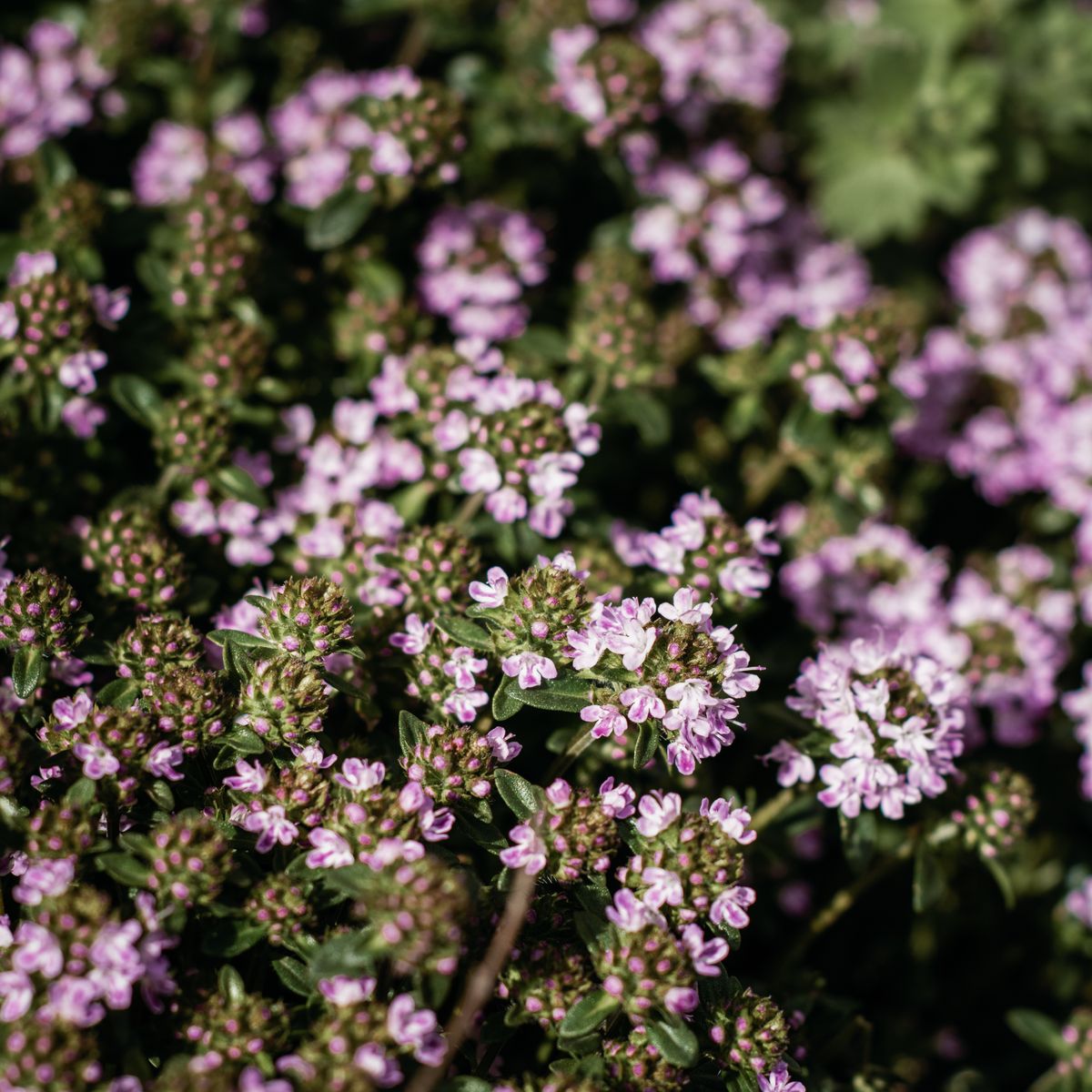
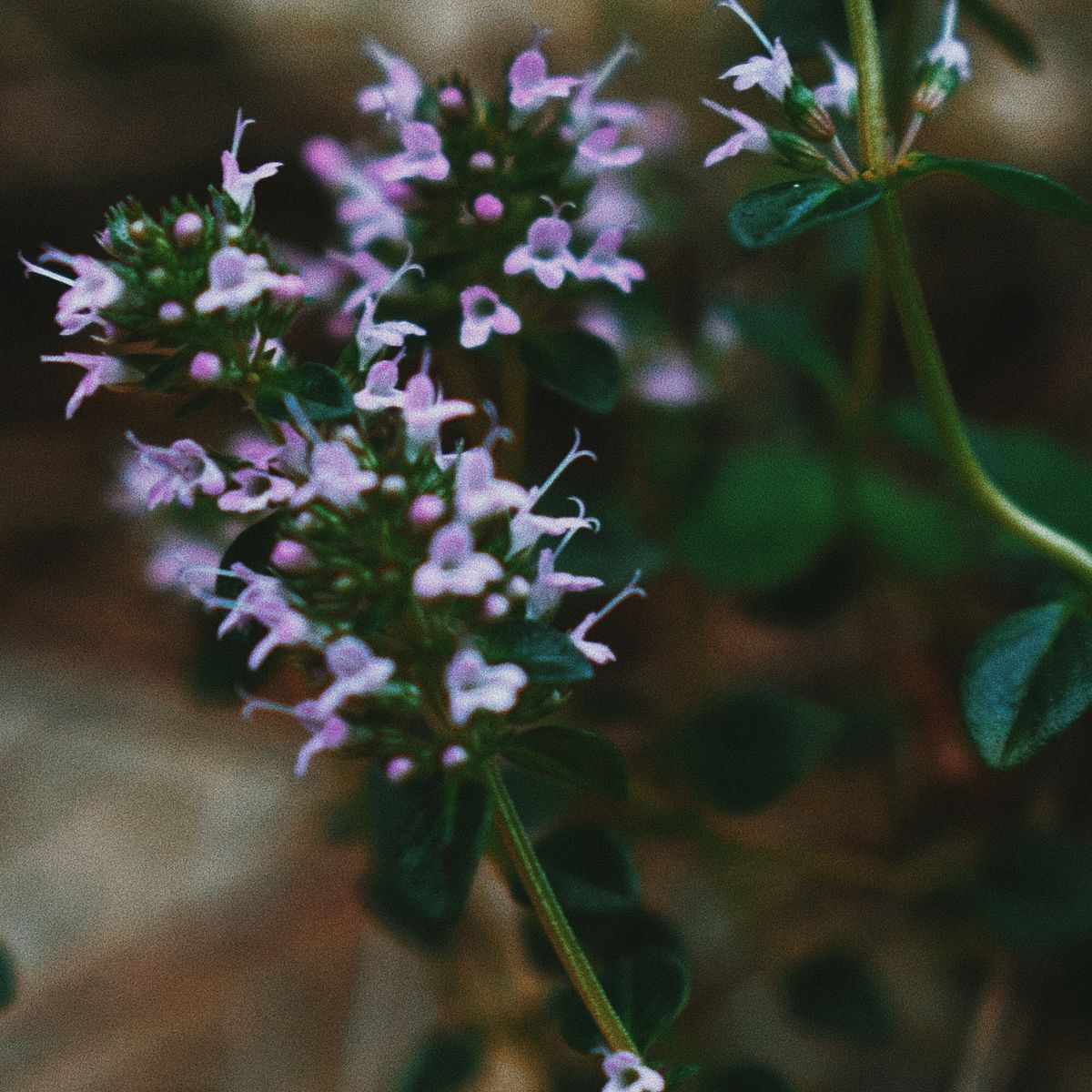
Thym, feuilles vertes en gros plan

Robust and fragrant, the Mediterranean courage shrub

Thyme: Origin, History, Symbolism, and Tradition

Thyme is a Mediterranean shrub with small, highly fragrant leaves, traditionally associated with courage and vitality.

Thyme at a glance

Botanical family Lamiaceae
Botanical name Thymus vulgaris
Part used Leaves and flowering tops
Main active compounds Thymol, carvacrol
Color / appearance Small grayish-green leaves, low shrub
Main origin Mediterranean basin

History

Thyme has been used since ancient Egypt, where it was part of the embalming process. The Greeks associated it with courage: the word is thought to come from the Greek "thymos" (courage, vital energy). Medieval knights sometimes wore a sprig embroidered on their clothes as a symbol of bravery before going into battle.

Thym frais dans un jardin

Virtues & Symbolism according to Tradition

Traditional Mental Uses

Traditionally, thyme is associated with courage and vitality. It is believed to have the ability to strengthen determination and support moments that require energy and confidence.

Traditional Physical Uses

Internal dimension (tradition)

In traditional representations of the energy body, thyme is associated with the throat chakra, a symbol of courage and expression.

Associated element(s)

In botanical traditions, thyme is associated with the element of Fire, echoing its historical link with courage.

Associations

Thyme is traditionally combined in different ways depending on the desired effect:

For vitality and courage:
– Rosemary: a classic Mediterranean duo
– Ginger: for an extra boost of vitality

For winter comfort:
– Cinnamon: spicy warmth
– Lemon: complementary freshness

Symbolism

  • Courage
  • Vitality
  • Determination
  • Protection

Traditions

Do not confuse with

Common thyme is sometimes confused with wild thyme (Thymus serpyllum), a closely related but distinct species with a milder fragrance and smaller leaves, growing as a creeping plant rather than an upright shrub.

Best Provenances

Provence and Spain remain historical benchmarks for quality thyme.

Frequently Asked Questions

Why is thyme associated with courage?

This association dates back to ancient Greece, where the word "thymos" referred to courage and vital energy, a possible origin for the plant's name.

Did knights really wear thyme?

According to medieval tradition, a sprig of embroidered thyme was sometimes given to knights as a symbol of bravery before they went into battle.

What's the difference between thyme and wild thyme?

Wild thyme is a close but distinct species, with a milder fragrance and creeping growth, unlike common thyme which grows as an upright shrub.

When to harvest thyme?

Ideally before full bloom, when its essential oil content is highest.

Fleurs de thym violettesThym en fleurs, gros planFleurs de thym violettesThym en fleurs, gros plan

Did you know?

In ancient Egypt, thyme was among the many plants used in the embalming process, valued for its potent fragrance and its empirically recognized preservative properties.

Sources & references

Information gathered from general botany books and resources on traditional Mediterranean plants.

The information presented here is for cultural and traditional purposes only. It does not constitute medical advice or a guarantee of therapeutic effect. In case of physical or psychological distress, consult a healthcare professional. This is especially important during pregnancy, breastfeeding, ongoing medical treatment, or for use in children.