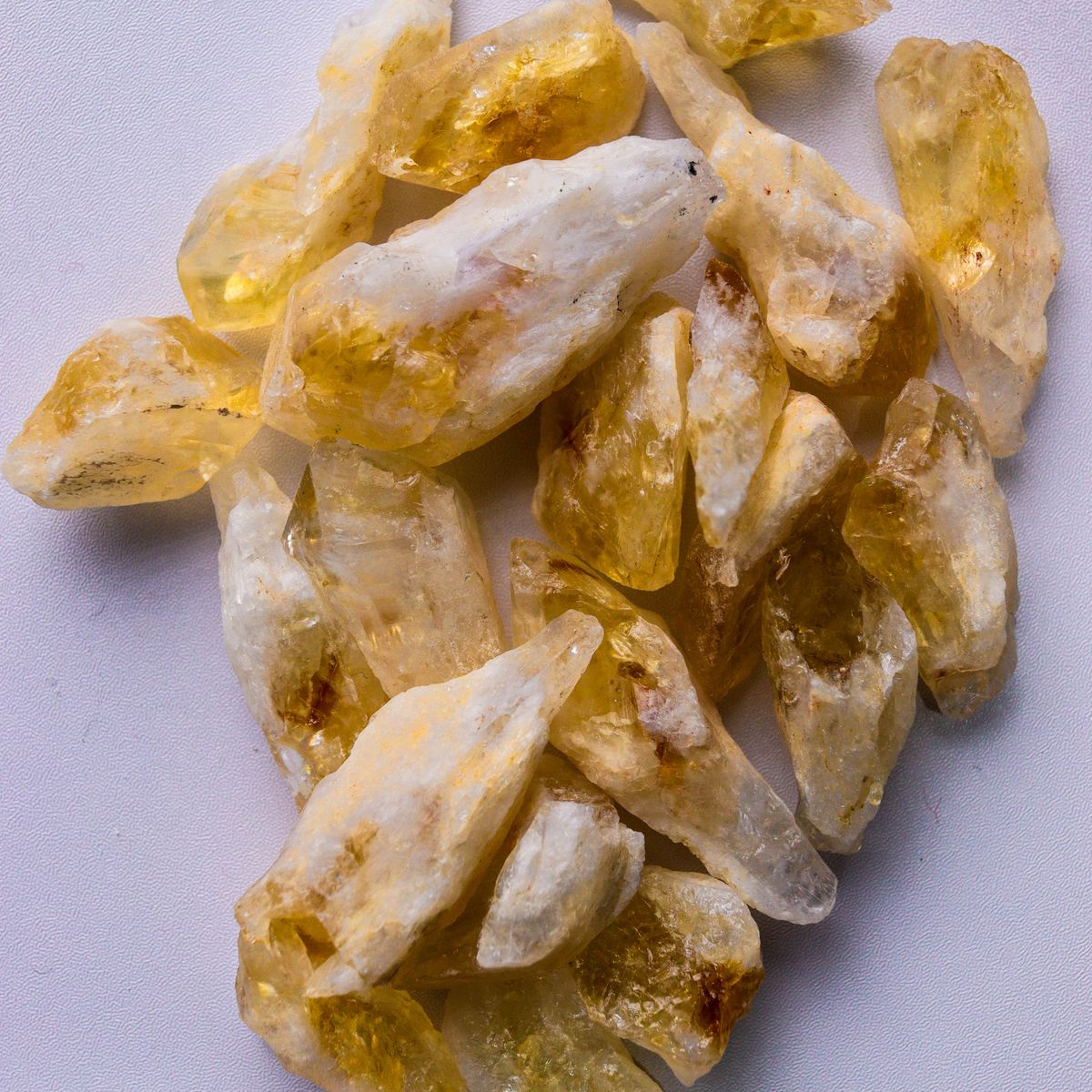
Cristaux de citrine brute sur fond clair

Golden and radiant, the stone of abundance

Citrine: origin, history, symbolism, and tradition

Citrine is a variety of quartz recognizable by its yellow to orange hue. Its color, reminiscent of the sun and gold, has long earned it a reputation as a lucky stone associated with prosperity.

Citrine at a glance

Mineral Group Quartz
Composition Silicon dioxide, traces of iron
Hardness 7 on the Mohs scale
Crystal System Trigonal
Colors Pale yellow to amber, orange-brown
Main Origin Brazil, Madagascar, Zambia, United States

History of the stone

The name "citrine" appeared in French in the 14th century, derived from "citron" in reference to its hue. In ancient Greece and Rome, it was worn as a protective talisman during travels. In Scotland, it traditionally adorned ceremonial daggers (sgian-dubh) and Celtic jewelry. It experienced a major resurgence in popularity during the Art Deco period of the 1920s-1930s, becoming one of the star gemstones in jewelry of the time.

Origin & Composition

Citrine is a variety of quartz whose yellow to orange color comes from traces of ferric iron present in the crystal lattice. Natural citrine is actually quite rare: the vast majority of commercial citrine comes from amethyst or smoky quartz heated to high temperatures, a common and accepted heat treatment in the gemstone trade for decades.

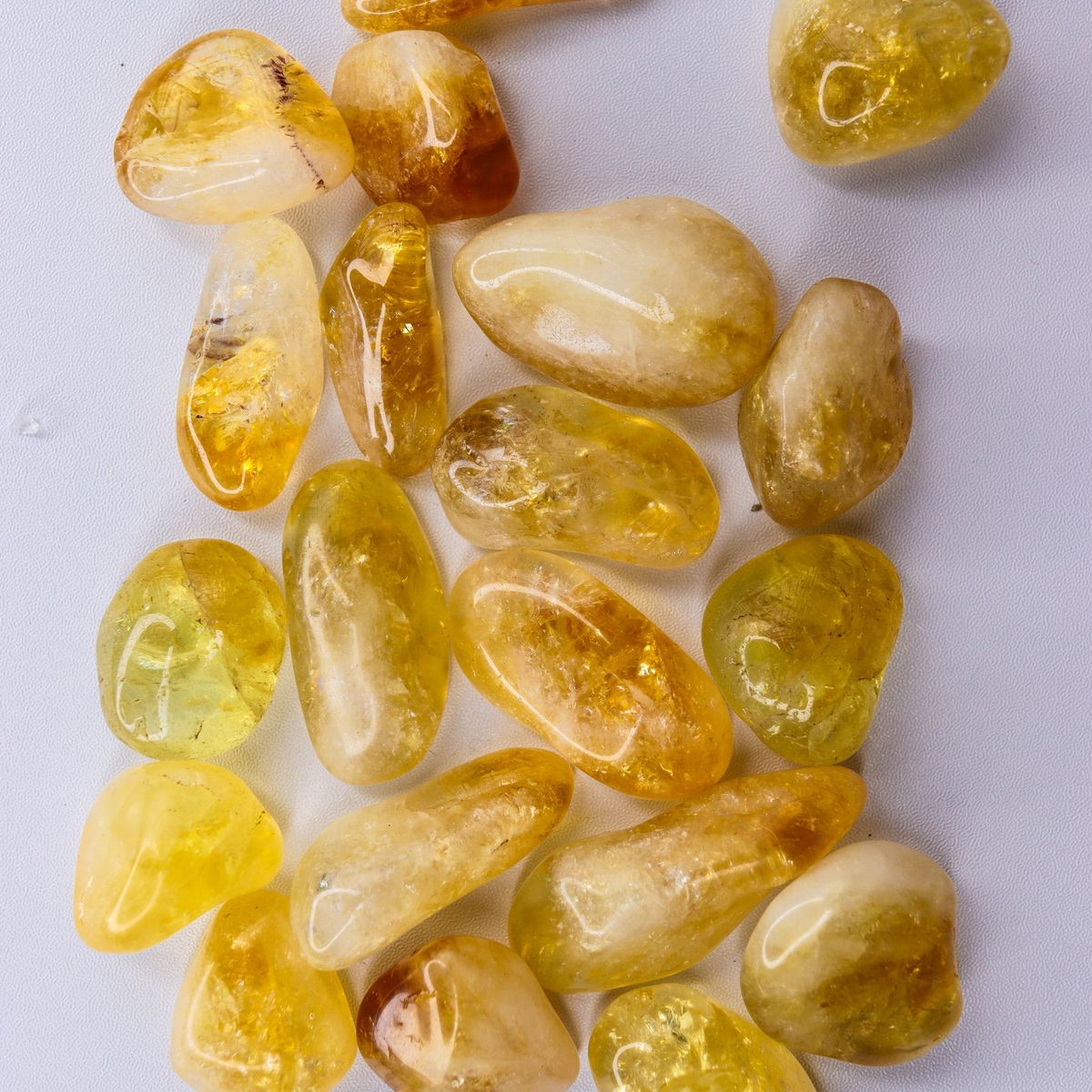
Cristal de citrine poli sur fond clair

Virtues & Symbolism According to Tradition

Traditional Mental Uses

Traditionally, citrine is associated with the joy of life, self-confidence, and creativity. It is believed to have the ability to encourage optimism, support motivation in professional and personal projects, and dispel doubts that hinder action. Some traditions also recommend it for stimulating creative inspiration and daily enthusiasm.

Traditional physical uses

Internal dimension (tradition)

In traditional representations of the energetic body, citrine is associated with the solar plexus chakra, a symbol of personal confidence, self-assertion, and the will to act.

Associated astrological sign(s)

In some Western traditions, citrine is sometimes associated with the zodiac signs of Leo and Gemini—a symbolic association to be taken as a nod rather than a rule.

Stone associations

Citrine is traditionally combined in different ways depending on the desired effect:

For abundance and prosperity:
– Aventurine: a traditional duo associated with luck and opportunity
– Pyrite: a symbolic reinforcement of material abundance and success

For self-confidence and assertiveness:
– Tiger's Eye: traditional association with courage and determination
– Carnelian: reinforces vitality and boldness in action

Interview

Physical cleaning: a rinse with clear water and a soft cloth are sufficient. Avoid prolonged exposure to direct sunlight, which can gradually alter the color, especially for heat-treated stones. With a hardness of 7 on the Mohs scale, citrine is well-suited for everyday use in jewelry.

Symbolism

  • Joy of living
  • Prosperity
  • Self-confidence
  • Creativity

Traditions

Do not confuse with

The vast majority of citrine sold commercially is actually heated amethyst or smoky quartz—true untreated natural citrine remains rare. It is generally distinguished by a paler, lemon-yellow hue, whereas heated citrine often displays a more intense, orange-brown color with reddish undertones.

Top provenances

Brazil is the main global producer, primarily of heated citrine. Zambia and Madagascar produce natural, untreated citrine, which is rarer and sought after by collectors.

Frequently Asked Questions

Is the citrine sold commercially always natural?

No, the vast majority of citrine on the market is actually amethyst or smoky quartz heated to artificially obtain its yellow-orange hue; untreated natural citrine remains rare.

How to distinguish natural citrine from heat-treated citrine?

Natural citrine generally has a paler, lemon-yellow hue, whereas heated citrine often displays a more intense, orange-brown color with reddish reflections.

Why is citrine associated with abundance?

Its golden color, reminiscent of the sun and harvests, has earned it, in many popular traditions, a reputation as a lucky stone associated with prosperity and material success.

Does citrine fear the sun?

Yes, prolonged exposure to direct light can gradually alter its color, especially for heat-treated stones.

Cristaux de citrine brute sur fond clairCollection de citrines jaunes polies sur fond clairCristaux de citrine brute sur fond clairCollection de citrines jaunes polies sur fond clair

Did you know?

The term "citrine" appeared in French as early as the 14th century to describe its lemon-like hue, long before modern gemology distinguished the heat treatment processes now used to produce it commercially.

Sources & References

Information cross-referenced from general gemology works and Earth sciences museum resources (Muséum national d'Histoire naturelle, reference works in mineralogy).

The information presented here is for cultural, historical, and decorative purposes only. It does not constitute medical advice or a guarantee of therapeutic effect. In case of physical or psychological distress, consult a healthcare professional.