Iridescent and mysterious, the stone of intuition

Labradorite: Origin, History, Symbolism, and Tradition

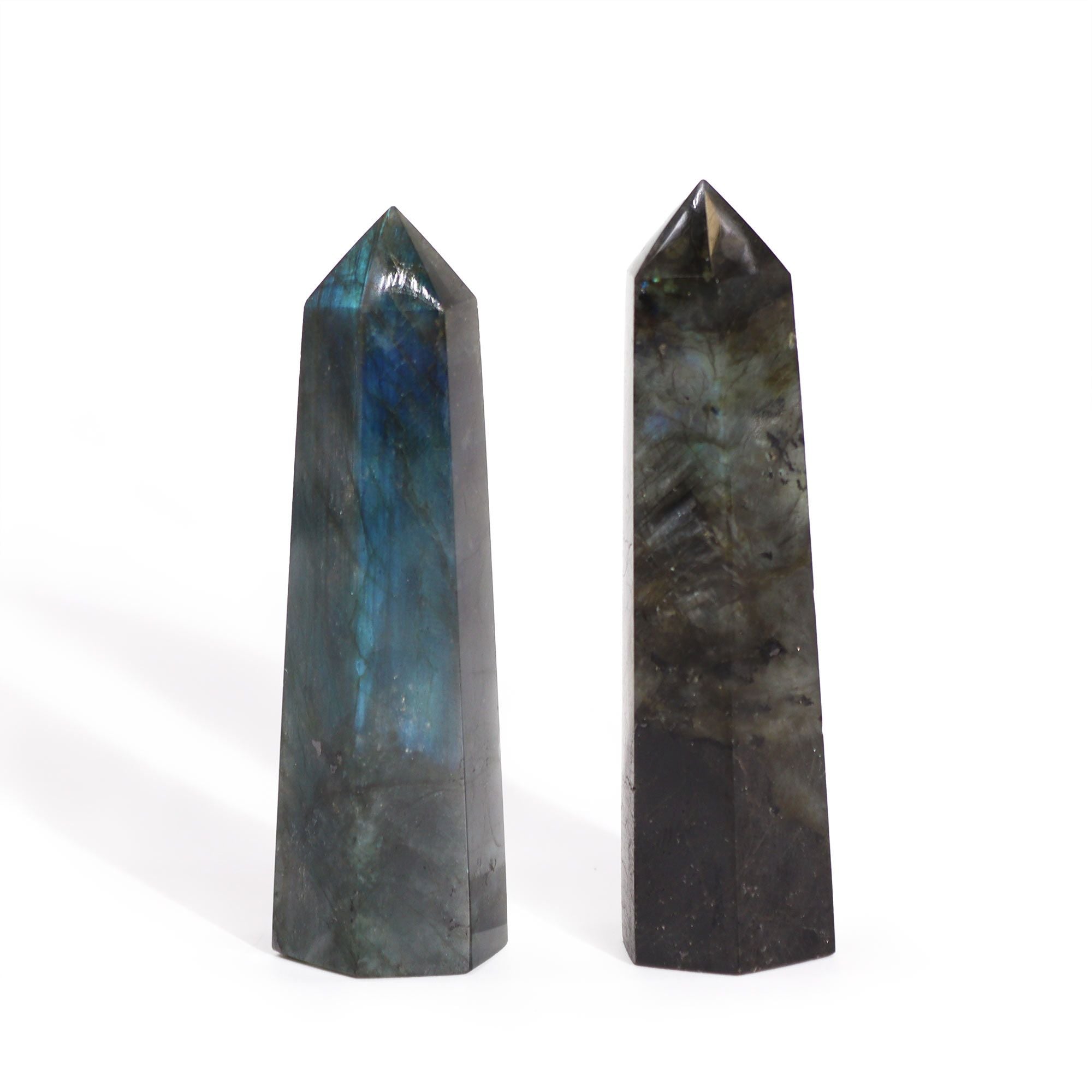
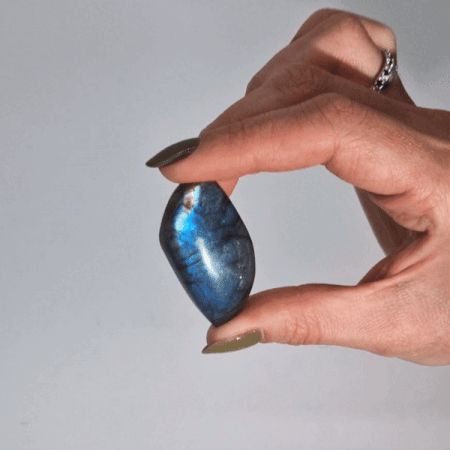
Labradorite is a gray-blue feldspar recognizable by its labradorescence: changing colored reflections (blue, green, gold) that appear depending on the angle of the light.

Labradorite at a glance

Mineral Group Feldspar (Plagioclase)
Composition Aluminum, calcium and sodium silicate
Hardness 6 to 6.5 on the Mohs scale
Crystal System Triclinic
Colors Grey-blue with multicolored labradorescence
Main Origin Canada, Madagascar, Finland

History of the stone

Labradorite owes its name to the Labrador Peninsula in Canada, where it was discovered and described in 1770 by Moravian missionaries. According to an Inuit legend, the lights of the aurora borealis were trapped in the rock by a warrior who, by striking it with his spear, released most of them while leaving the rest imprisoned in the mineral – giving rise to labradorescence. Finland has also been producing a highly prized variety called spectrolite since the 20th century, with particularly intense colors.

Origin & Composition

Labradorite is a variety of plagioclase feldspar that exhibits the optical phenomenon of labradorescence, due to internal lamellae that diffract light and create iridescent reflections that change color depending on the viewing angle. It forms in igneous rocks, particularly within gabbro deposits.

Virtues & Symbolism According to Tradition

Traditional Mental Uses

Traditionally, labradorite is associated with intuition, protection, and transformation. Considered a stone of transition, it is believed to help with significant life changes, enhance intuitive perception when facing difficult decisions, and support confidence during times of uncertainty.

Traditional physical uses

Internal dimension (tradition)

In traditional representations of the energy body, labradorite is associated with the third eye chakra, a symbol of intuition and heightened perception.

Associated astrological sign(s)

In some Western traditions, labradorite is sometimes associated with the zodiac signs of Scorpio and Sagittarius — a symbolic association to be taken as a nod rather than a rule.

Stone associations

Labradorite is traditionally combined in different ways depending on the desired effect:

For intuition:
– Amethyst: traditional duo associated with mental clarity and perception
– Lapis lazuli: ancient reinforcement of inner wisdom

For protection:
– Obsidian: traditional association with symbolic protection
– Black tourmaline: reinforces grounding against external energies

Interview

Physical cleaning: a rinse with clear water and a soft cloth are sufficient. With a hardness of 6 to 6.5 on the Mohs scale, labradorite remains sensitive to impacts, which can crack the internal lamellae responsible for its labradorescence — handle with a little care.

Symbolism

  • Intuition
  • Protection
  • Transformation
  • Perception

Traditions

Do not confuse with

Labradorite is sometimes confused with moonstone, both belonging to the feldspar family. It is distinguished by its vibrant colored reflections (blue, green, gold), whereas moonstone has a softer, milky luster, called adularescence.

Top provenances

Madagascar now accounts for most of the production, Canada retains the historic Labrador deposit, and Finland produces spectrolite with particularly intense colors.

Frequently Asked Questions

Where does the name "labradorite" come from?

It was named after the Labrador Peninsula in Canada, where it was discovered and described in 1770 by Moravian missionaries.

What is labradorescence?

This is the stone's characteristic optical phenomenon, due to internal lamellae that diffract light and create changing colored reflections depending on the viewing angle.

How to differentiate labradorite and moonstone?

Labradorite exhibits vibrant colorful flashes (blue, green, gold), while moonstone has a softer, milky luster called adularescence.

What is spectrolite?

It is a variety of labradorite extracted in Finland, known for its particularly intense and varied colors.

Did you know?

According to Inuit legend, the lights of the aurora borealis were trapped in Labrador rock by a warrior who, by striking it with his spear, released most of them while leaving the rest imprisoned in the mineral.

Sources & References

Information cross-referenced from general gemology works and Earth sciences museum resources (Muséum national d'Histoire naturelle, reference works in mineralogy).

The information presented here is for cultural, historical, and decorative purposes only. It does not constitute medical advice or a guarantee of therapeutic effect. In case of physical or psychological distress, consult a healthcare professional.