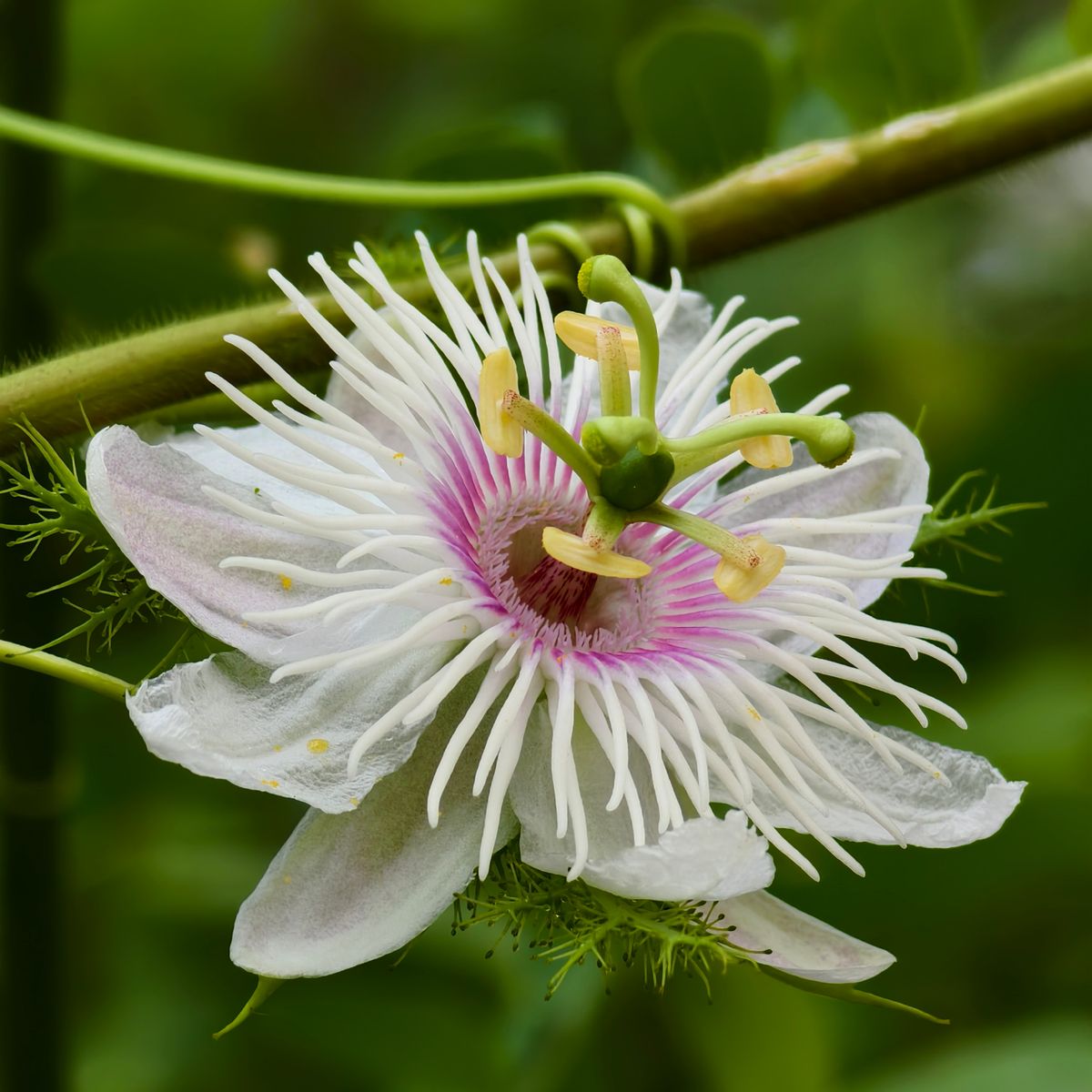
Passiflore, fleur en gros plan

Violet and complex, the liana of deep appeasement

Passionflower: origins, history, symbolism, and tradition

Passionflower is an American climbing vine with a complex purple flower, traditionally steeped in the evening to aid sleep.

Passionflower at a glance

Botanical family Passifloraceae
Botanical name Passiflora incarnata
Part used Aerial parts (leaves, stems, flowers)
Main active compounds Flavonoids (vitexin)
Color / appearance Complex purple flowers, climbing plant
Main origin North and South America

History

The passionflower was named by Spanish missionaries in the 16th century in South America, who saw symbols of Christ's Passion in the complex structure of its flower: the filamentous corona evoking the crown of thorns, the five stamens the five wounds. The indigenous peoples of America were already using the plant long before the arrival of Europeans.

Passiflora incarnata en pleine floraison

Virtues & Symbolism according to Tradition

Traditional Mental Uses

Traditionally, passionflower is associated with profound soothing and peace of mind. It is believed to have the ability to calm intrusive thoughts and promote more restful sleep.

Traditional Physical Uses

Internal dimension (tradition)

In traditional representations of the energy body, passionflower is associated with the crown chakra, a symbol of inner peace and letting go.

Associated element(s)

In botanical traditions, passionflower is associated with the element of Water, echoing its soothing gentleness.

Associations

Passionflower is traditionally combined in different ways depending on the desired effect:

For evening relaxation:
– Hawthorn: traditional duo for heart and sleep
– Valerian: soothing reinforcement

For serenity:
– Chamomile: complementary gentleness
– Lemon balm: complementary calm

Symbolism

  • Deep appeasement
  • Tranquillity
  • Letting go
  • Inner peace

Traditions

Do not confuse with

Edible passion fruit (passionfruit) and medicinal passionflower belong to the same botanical genus but are not the same species; it is the incarnata variety, with its flowers and leaves, that is traditionally used in soothing infusions.

Best Provenances

The United States (Southeast) remains the historical benchmark for wild medicinal passionflower.

Frequently Asked Questions

Why is this plant called "passion flower"?

Spanish missionaries in the 16th century saw symbols of Christ's Passion in the complex structure of its flower, notably the filamentous corona evoking the crown of thorns.

Does passion fruit come from the same plant?

It comes from a species close to the same botanical genus, but it's not generally the variety used in soothing herbal teas.

Since when has passionflower been used?

Indigenous peoples of America were already using it long before the arrival of Europeans in the 16th century.

How to identify medicinal passionflower?
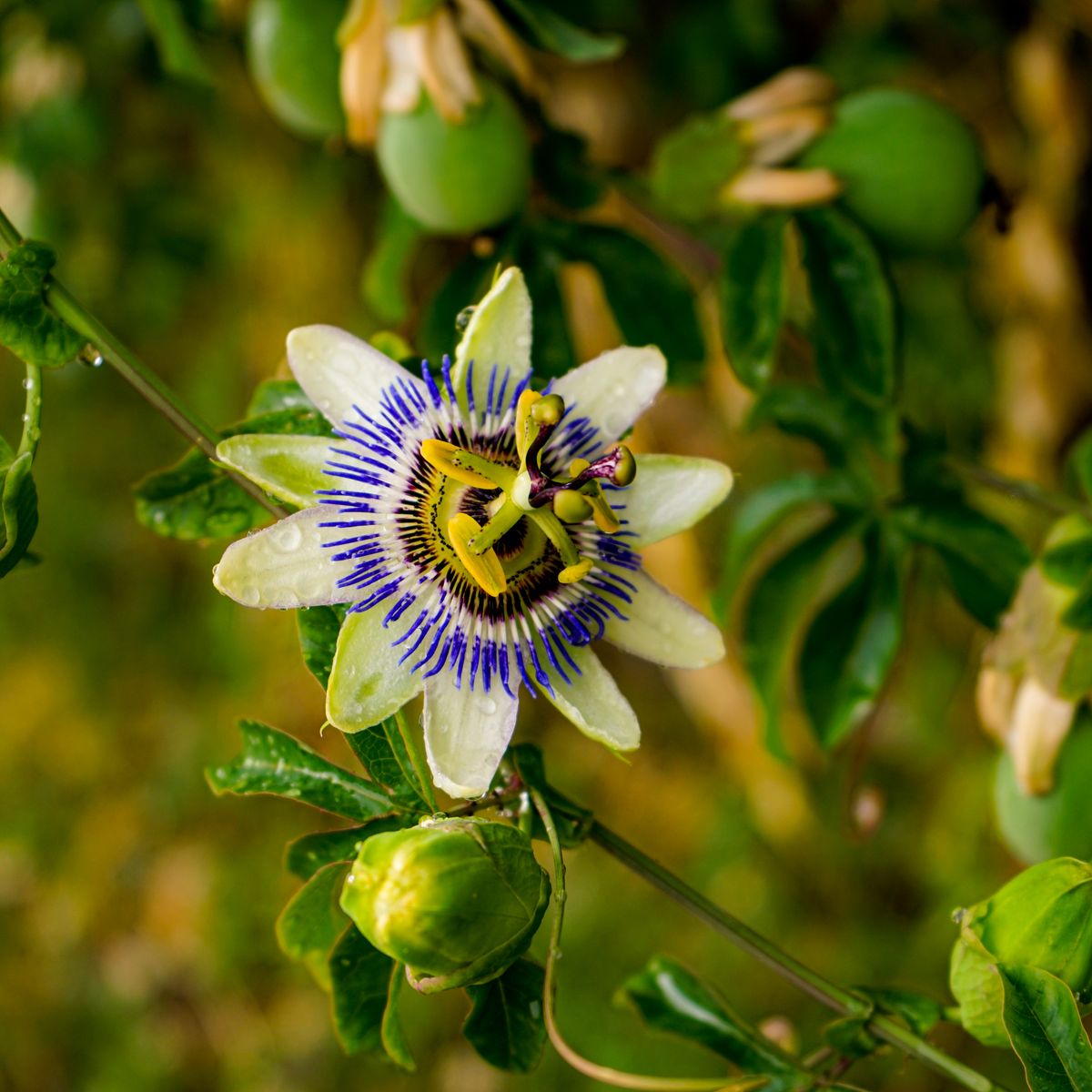
It is distinguished by its complex purple flowers with a filamentous crown and its climbing vine nature.

Fleur de passiflore et bourgeonsPassiflora incarnata, gros planFleur de passiflore et bourgeonsPassiflora incarnata, gros plan

Did you know?

Each part of the passionflower was interpreted by Spanish missionaries as a distinct symbol of Christ's crucifixion, down to the tendrils that recalled the whips of the Passion.

Sources & references

Information cross-referenced from general botany works and resources on traditional American plants.

The information presented here is for cultural and traditional purposes only. It does not constitute medical advice or a guarantee of therapeutic effect. In case of physical or psychological distress, consult a healthcare professional. This is especially important during pregnancy, breastfeeding, ongoing medical treatment, or for use in children.