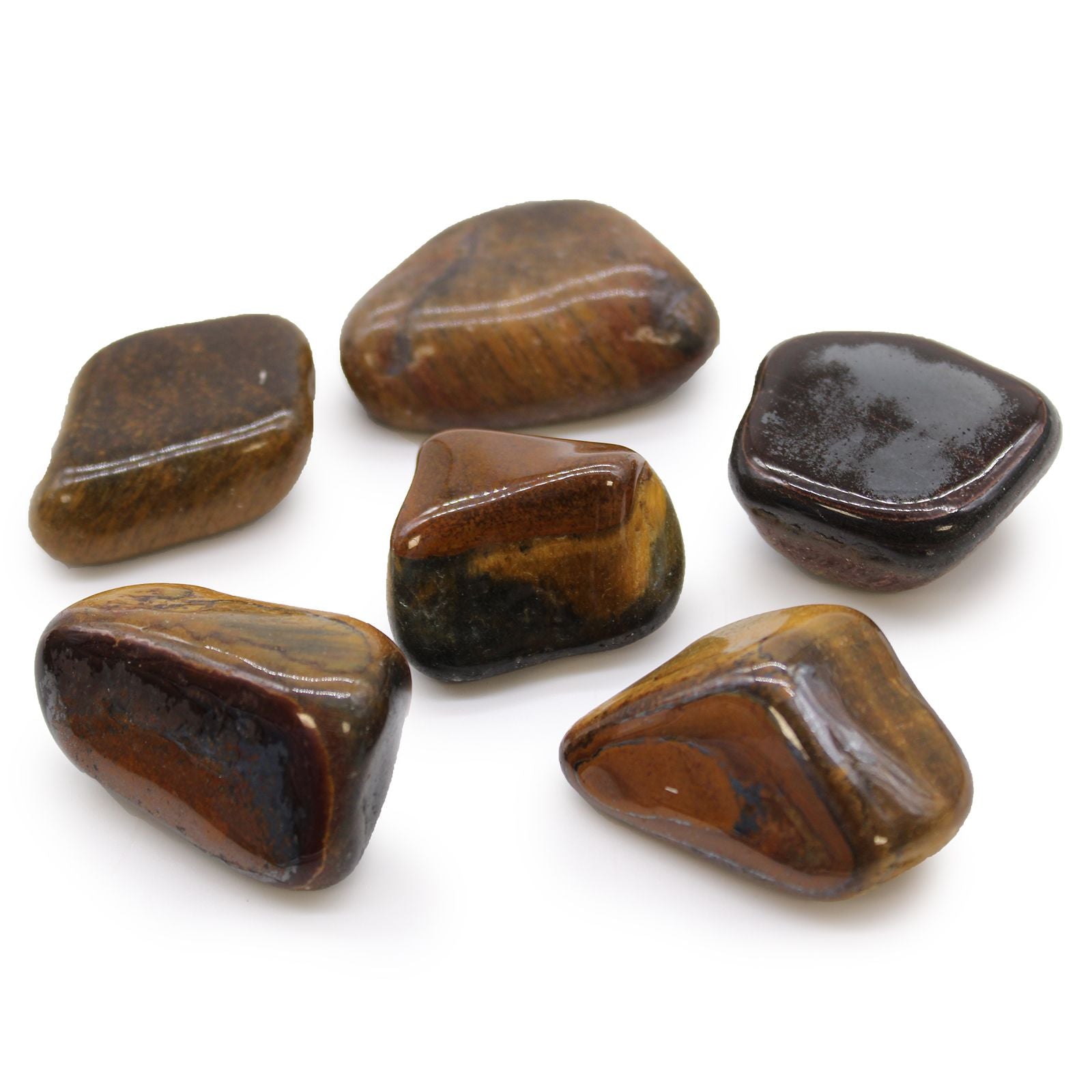
Golden and shimmering, stone of courage and action

Tiger's Eye: Origin, History, Symbolism, and Tradition

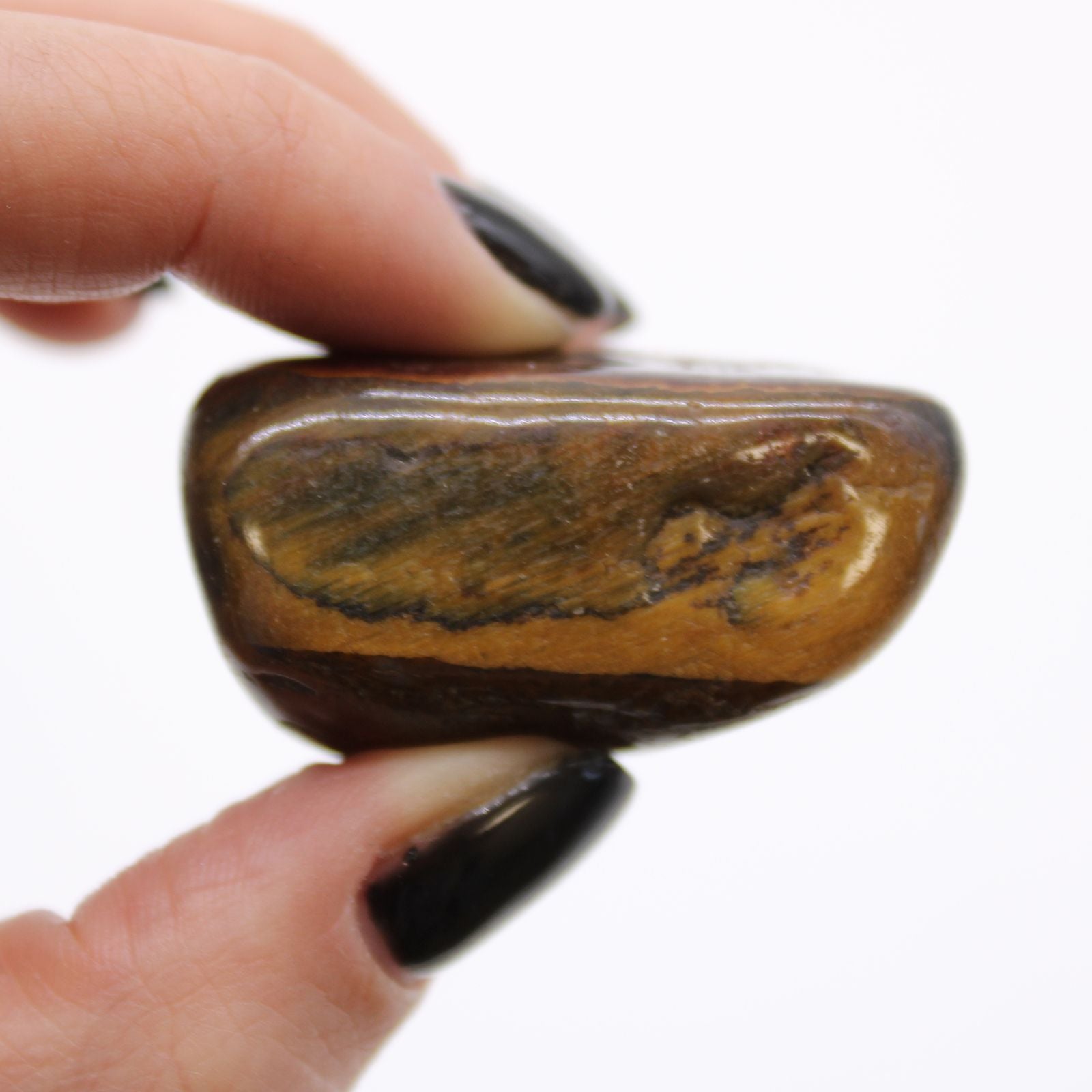
Tiger's eye is a variety of quartz recognizable by its shimmering golden-brown reflection, an optical effect that moves across the surface of the stone depending on the angle of the light.

Tiger's Eye at a Glance

Mineral Group Quartz (chatoyant variety)
Composition Silicon dioxide that has replaced ancient crocidolite fibers
Hardness 7 on the Mohs scale
Crystal System Trigonal
Colors Golden to yellow-brown, characteristic chatoyant effect
Main Origin South Africa, Australia, India, Namibia

History of the stone

The name "tiger's eye" comes from its striking resemblance to a feline eye, an optical phenomenon called chatoyancy. The stone was already used in ancient Egypt as a protective amulet, incorporated into jewelry and funerary objects. Roman soldiers sometimes wore engraved tiger's eyes, believed to protect them in battle. In imperial China, the stone was associated with prosperity and courage in Feng Shui traditions.

Origin & Composition

Tiger's eye is formed by a geological process called pseudomorphism: ancient crocidolite fibers (a blue asbestos) are gradually replaced by silica, while retaining their original parallel fibrous structure. It is this preserved fibrous structure that creates the chatoyant effect when light strikes the stone at a particular angle. Since the original crocidolite has been entirely replaced, the final stone no longer contains asbestos fibers.

Virtues & Symbolism According to Tradition

Traditional Mental Uses

Traditionally, tiger's eye is associated with courage, determination, and action. It is believed to strengthen willpower, support quick decision-making in times of uncertainty, and encourage taking action when faced with procrastination. It is also linked to the confidence needed to face competitive or negotiation situations.

Traditional physical uses

Internal dimension (tradition)

In traditional representations of the energetic body, tiger's eye is associated with the solar plexus chakra and the root chakra, symbolizing grounding and the affirmation of personal will.

Associated astrological sign(s)

In some Western traditions, tiger's eye is sometimes associated with the signs of Leo and Gemini—a symbolic association to be taken as a wink rather than a rule.

Stone associations

Tiger's Eye is traditionally combined in different ways depending on the desired effect:

For courage and action:
– Carnelian: traditional duo associated with vitality and audacity
– Garnet: strengthens determination and force of character

For grounding and protection:
– Hematite: complementary stability
– Obsidian: enhanced protection against external influences

Interview

Physical cleaning: a rinse with clear water and a soft cloth are sufficient, rubbing gently to revive the shimmering effect. With a hardness of 7 on the Mohs scale, tiger's eye is quite resistant for daily use.

Symbolism

  • Courage
  • Determination
  • Action and will
  • Protection

Traditions

Do not confuse with

Tiger's eye is sometimes confused with hawk's eye (blue-grey, untreated) and bull's eye or red tiger's eye (artificially heated to intensify the color). These are actually three varieties of the same stone, depending on the degree of natural transformation or heat treatment applied.

Top provenances

South Africa remains the world's leading producer and historical benchmark for quality, followed by Australia and Namibia.

Frequently Asked Questions

Why does tiger's eye shimmer?

This effect, called chatoyancy, is due to parallel fibers of silica that have replaced an older crocidolite structure, which reflect light in mobile bands when the stone is tilted.

What's the difference between tiger's eye, hawk's eye, and bull's eye?

These are three varieties of the same stone: hawk's eye remains blue-grey (untransformed), tiger's eye has a natural golden-brown hue, and bull's eye results from heat treatment that intensifies its color to reddish-brown.

Is tiger's eye dangerous because of the asbestos it originally contained?

No, the original crocidolite was entirely replaced by silica during the natural pseudomorphosis process; the final stone no longer contains asbestos fibers.

Is tiger's eye durable?

Yes, with a hardness of 7 on the Mohs scale, it is perfectly suitable for daily use in jewelry.

Did you know?

Tiger's eye formed from an ancient deposit of blue asbestos that was gradually transformed into silica over millions of years—a process called pseudomorphism, which completely preserved the original fibrous structure while replacing its chemical composition.

Sources & References

Information cross-referenced from general gemology works and Earth sciences museum resources (National Museum of Natural History, mineralogy reference works).

The information presented here is for cultural, historical, and decorative purposes only. It does not constitute medical advice or a guarantee of therapeutic effect. In case of physical or psychological distress, consult a healthcare professional.