Green and discreet, the stone of growth

Epidote: origin, history, symbolism, and tradition

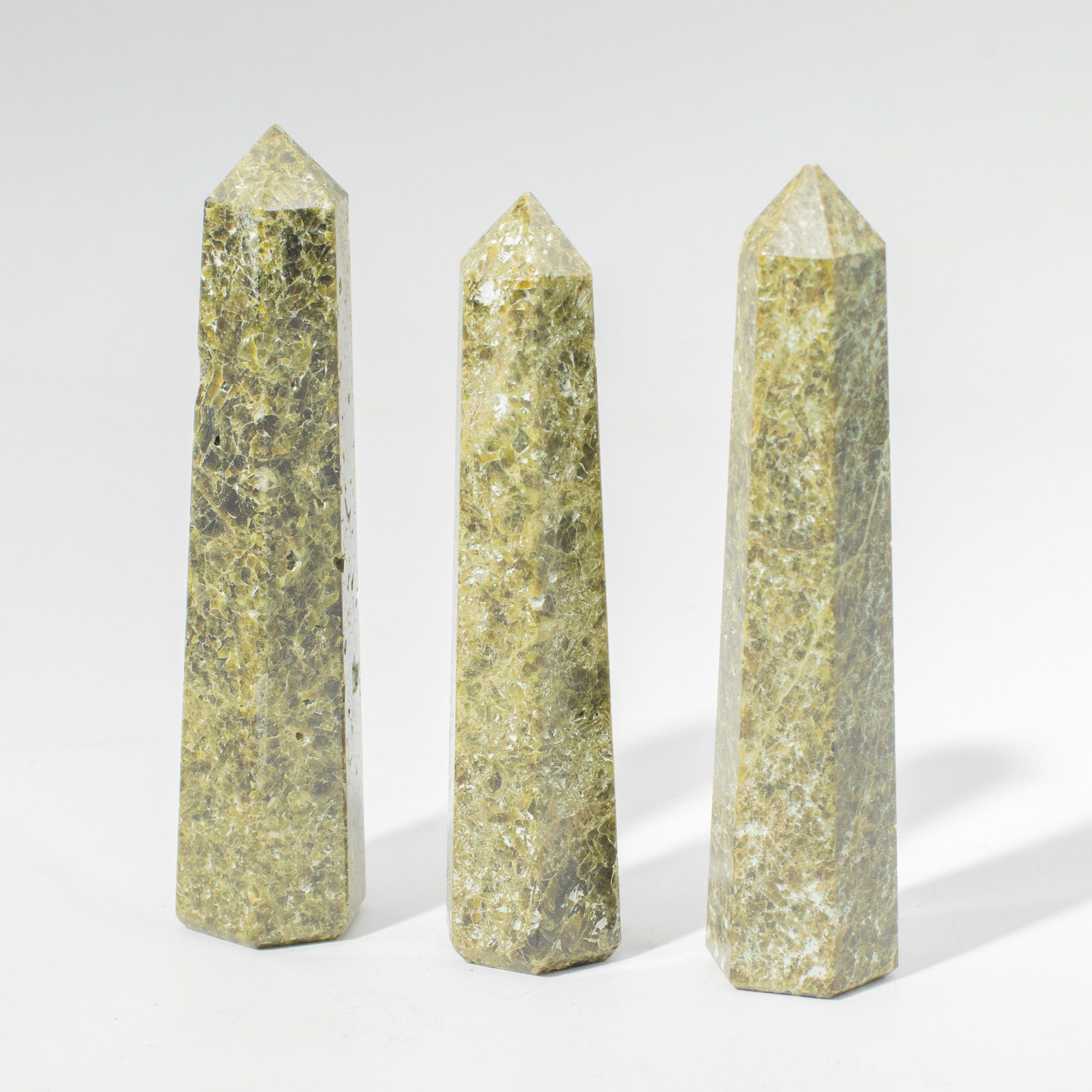
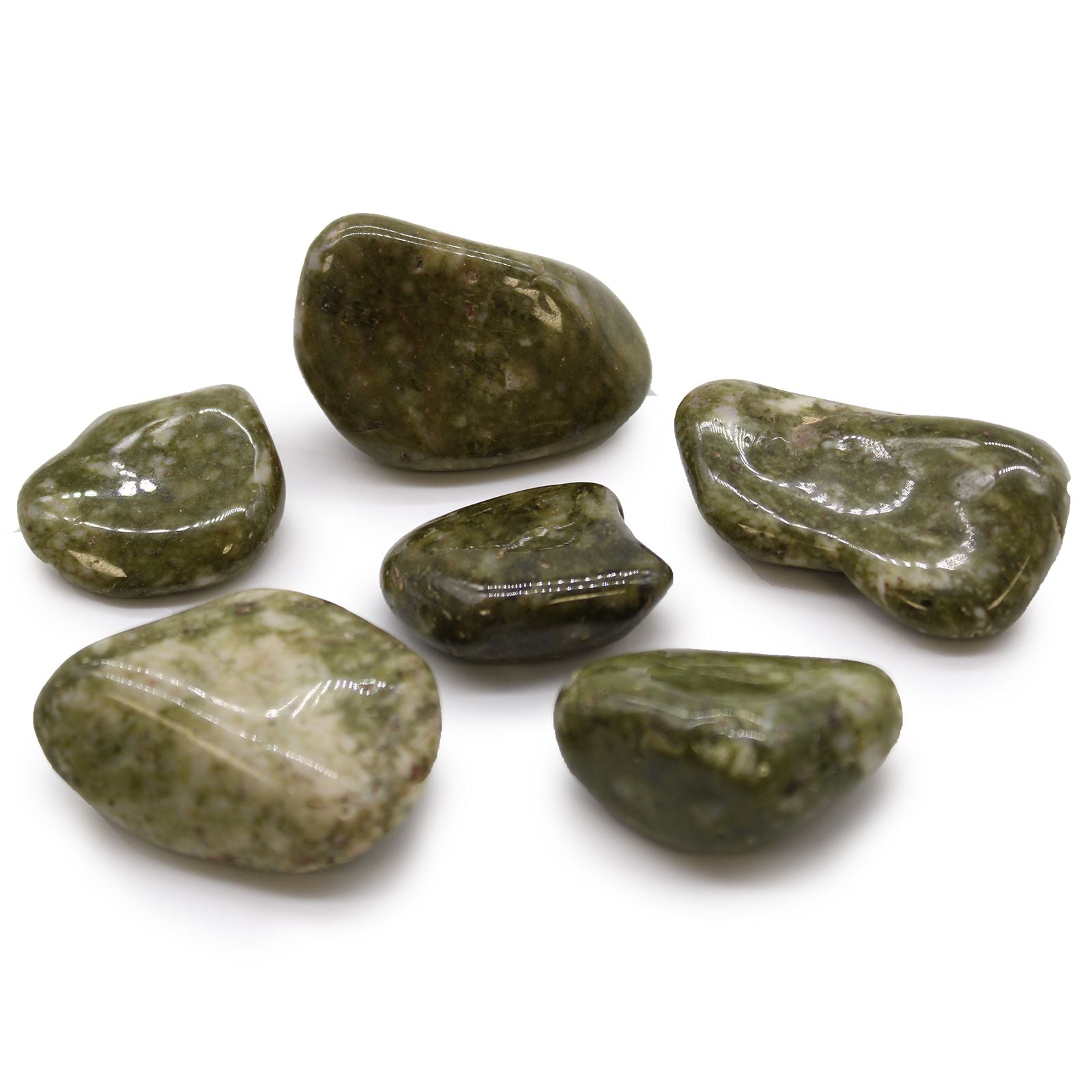
Epidote is a pistachio to olive-green mineral, often found in elongated aggregates associated with quartz. Less known than other green stones, it holds a special place among collector's minerals.

Epidote at a glance

Mineral group Epidote (sorosilicates)
Composition Calcium, aluminum, and iron silicate
Hardness 6 to 7 on the Mohs scale
Crystal system Monoclinic
Colors Pistachio to olive green, sometimes brownish-black
Main origin Austria, Brazil, Pakistan, Norway

History of the stone

The name "epidote" comes from the Greek "epidosis," meaning increase or growth. It was given in 1801 by the French mineralogist René-Just Haüy, in reference to one crystal face always being longer than the others. Austrian Alpine deposits were particularly studied by European mineralogists starting in the 19th century, making epidote an emblematic stone in mineralogical collections of the time.

Origin & Composition

Epidote is a calcium, aluminum, and iron silicate that forms through the metamorphism of calcium-rich rocks. It often appears in elongated aggregates associated with quartz and amphibole in alpine veins, sometimes forming "unakite" specimens when mixed with pink feldspar and quartz.

Virtues & Symbolism According to Tradition

Traditional Mental Uses

Traditionally, epidote is associated with personal growth and inner transformation. It is believed to help in learning from past challenges rather than dwelling on them, to support self-improvement during times of change, and to encourage a constructive outlook on the future after difficult periods.

Traditional physical uses

Internal dimension (tradition)

In traditional representations of the energetic body, epidote is associated with the heart chakra, a symbol of gradual growth and inner transformation.

Associated astrological sign(s)

In some Western traditions, epidote is sometimes associated with the sign of Taurus — a symbolic association to be taken as a nod rather than a rule.

Stone associations

Epidote is traditionally combined in different ways depending on the desired effect:

For personal growth and self-improvement:
– Smoky Quartz: traditional anchor of change and transformation
– Labradorite: ancient association with intuition and renewal

For regeneration and harmony:
– Aventurine: traditional reinforcement of renewal and optimism
– Amazonite: complementary inner harmony

Interview

Physical cleaning: a rinse with clear water and a soft cloth are sufficient. With a hardness of 6 to 7 on the Mohs scale, epidote is quite resistant for regular decorative use.

Symbolism

  • Personal growth
  • Transformation
  • Self-transcendence
  • Renewal

Traditions

Do not confuse with

Epidote is sometimes confused with peridot or green tourmaline due to its color. It is distinguished by often duller, olive-green reflections, and a characteristic structure of elongated aggregates, whereas peridot is brighter and more transparent.

Top provenances

Austria preserves the most studied historical Alpine deposits, while Brazil and Pakistan now supply the majority of the market for collectors and jewelers.

Frequently Asked Questions

Where does the name "epidote" come from?

It comes from the Greek "epidosis" (increase), named in 1801 by the French mineralogist René-Just Haüy, in reference to one crystal face being consistently more developed than the others.

How to differentiate epidote and peridot?

Epidote is often a duller, olive-green color with an elongated aggregate structure, while peridot is brighter and more transparent, with a livelier green hue.

Is epidote a rare stone?

It is a relatively common mineral, but qualities clear and well-formed enough for jewelry remain less common than its opaque, aggregated forms.

Is epidote durable?

With a hardness of 6 to 7 on the Mohs scale, it is suitable for regular decorative use, with similar precautions to quartz.

Did you know?

Epidote owes its name to the fact that one face of its crystal is always more developed than the others, a geometric peculiarity striking enough to have given the entire mineral its name upon its scientific description in 1801.

Sources & References

Information gathered from general gemmology books and Earth sciences museum resources (Muséum national d'Histoire naturelle, reference works in mineralogy).

The information presented here is for cultural, historical, and decorative purposes only. It does not constitute medical advice or a guarantee of therapeutic effect. In case of physical or psychological distress, consult a healthcare professional.