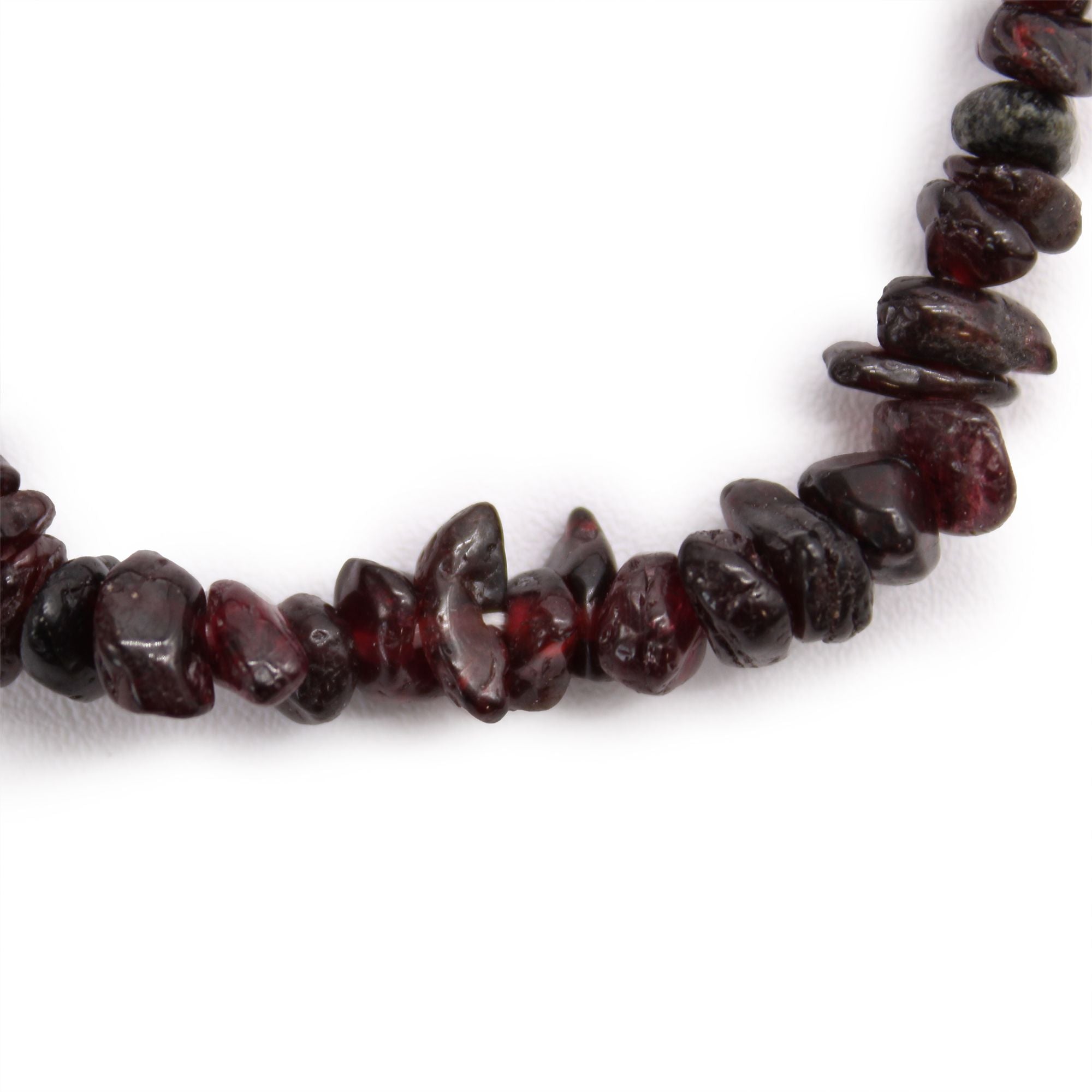
Détail bracelet grenat en pierres naturelles, texture et couleurs des pierres

Deep red, the stone of perseverance

Garnet: Origin, History, Symbolism, and Tradition

Garnet actually refers to an entire group of minerals sharing the same crystalline structure but different chemical compositions, offering a palette of colors ranging from deep red to green and orange.

Garnet in brief

Mineral Group Garnet (silicate group)
Composition Variable silicates depending on the species (iron, aluminum, magnesium)
Hardness 6.5 to 7.5 on the Mohs scale
Crystal system Cubic
Colors Deep red (most common), also green, orange
Main origin India, Madagascar, Mozambique, Czech Republic

History of the stone

The name "garnet" comes from the Latin "granatus," referring to the seeds of the pomegranate fruit, whose color and shape are reminiscent of the stone's small red crystals. Used since the Bronze Age for jewelry and funerary inlays, it was later highly valued in Rome for signet rings. Bohemian garnet, a deep red variety historically extracted in the Czech Republic, achieved immense success during the Victorian era, becoming one of the symbols of 19th-century European jewelry.

Origin & Composition

Garnet is not a single mineral but an entire group of silicates sharing the same cubic crystal structure, with varied chemical compositions: almandine (iron and aluminum) yields the most common deep red, pyrope (magnesium and aluminum) also produces a red hue, while tsavorite and demantoid (chromium) produce sought-after green variants. It forms in metamorphic rocks.

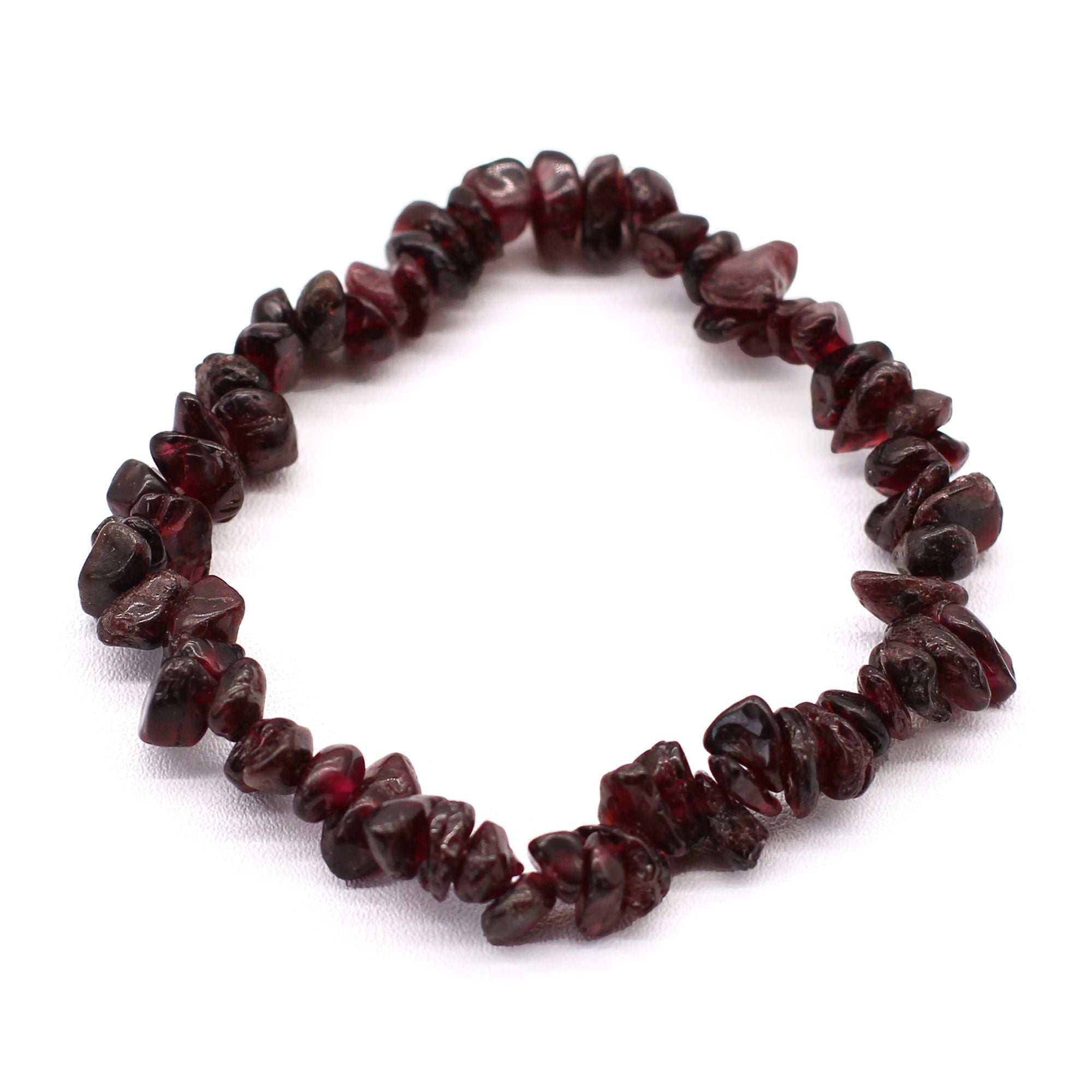
Bracelet en pierres naturelles de grenat, bijou bien-être élastique

Virtues & Symbolism According to Tradition

Traditional Mental Uses

Traditionally, garnet is associated with passion, commitment, and perseverance. It is believed to strengthen one's character and ability to see projects through despite obstacles. Some traditions also recommend it for rekindling motivation during times of doubt or prolonged discouragement.

Traditional physical uses

Internal dimension (tradition)

In traditional representations of the energetic body, red garnet is associated with the root chakra, a symbol of grounding and life force.

Associated astrological sign(s)

In many modern Western traditions, garnet is considered the birthstone associated with the month of January, and sometimes linked to the zodiac sign of Capricorn.

Stone associations

Garnet is traditionally combined in different ways depending on the desired effect:

For passion and commitment:
– Carnelian: traditional duo associated with vitality and audacity
– Tiger's Eye: reinforces determination and self-confidence

For grounding and vital force:
– Red Jasper: traditional strengthening of the connection to the earth
– Obsidian: symbolic protection and stability in the face of challenges

Interview

Physical cleaning: a rinse with clear water and a soft cloth are sufficient. With a hardness of 6.5 to 7.5 on the Mohs scale depending on the variety, garnet is well-suited for daily use in jewelry.

Symbolism

  • Passion
  • Commitment
  • Perseverance
  • Life force

Traditions

Do not confuse with

Red garnet is sometimes confused with ruby. It is distinguished by its characteristic cubic crystal structure and by the absence of red fluorescence under ultraviolet light, unlike ruby which generally fluoresces markedly.

Top provenances

India and Madagascar produce good quality almandine, the Czech Republic maintains its historical heritage of Bohemian garnet, while Mozambique delivers rarer green varieties such as tsavorite.

Frequently Asked Questions

Why is garnet called that?

Its name comes from the Latin "granatus," in reference to the seeds of the pomegranate fruit, whose color and shape are reminiscent of the stone's small red crystals.

Does garnet come in colors other than red?

Yes, the garnet group includes several species with various colors: green (tsavorite, demantoid), orange (spessartite), and even colorless, depending on their precise chemical composition.

How to differentiate garnet and ruby?

Garnet has a cubic crystal structure and does not exhibit red fluorescence under ultraviolet light, unlike ruby which typically fluoresces distinctively.

Is garnet the birthstone for January?
Yes, in several modern Western traditions, garnet is considered the birthstone associated with the month of January.

Bracelet en pierres naturelles de grenat, bijou bien-être élastiqueDétail bracelet grenat en pierres naturelles, texture et couleurs des pierresBracelet en pierres naturelles de grenat, bijou bien-être élastiqueDétail bracelet grenat en pierres naturelles, texture et couleurs des pierres

Did you know?

Bohemian garnet, a deep red variety historically mined in the Czech Republic, was so popular in the Victorian era that it became one of the symbols of 19th-century European jewelry.

Sources & References

Information cross-referenced from general gemology works and Earth sciences museum resources (Muséum national d'Histoire naturelle, reference works in mineralogy).

The information presented here is for cultural, historical, and decorative purposes only. It does not constitute medical advice or a guarantee of therapeutic effect. In case of physical or psychological distress, consult a healthcare professional.