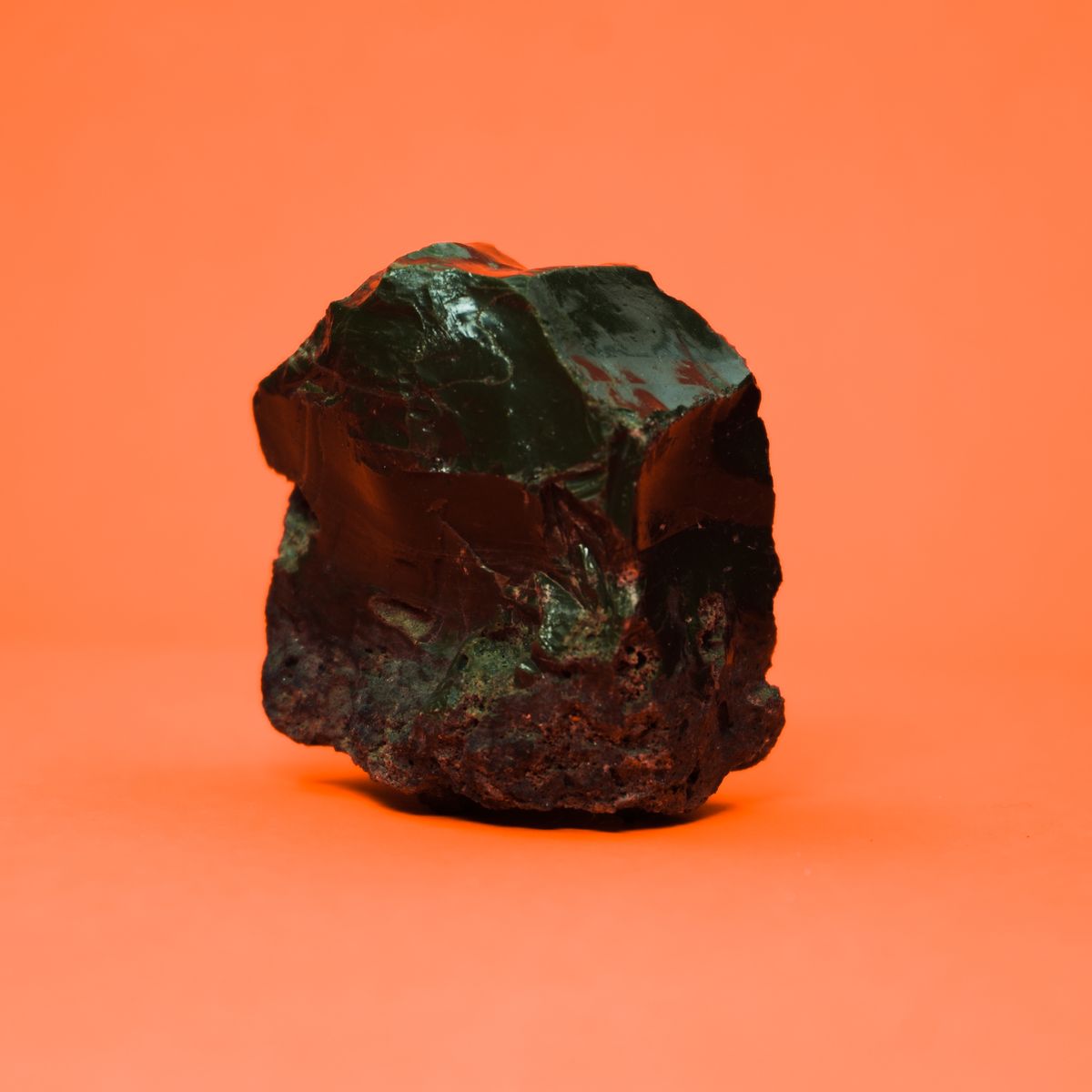
Black and deep, stone of truth and protection

Obsidian: Origin, History, Symbolism, and Tradition

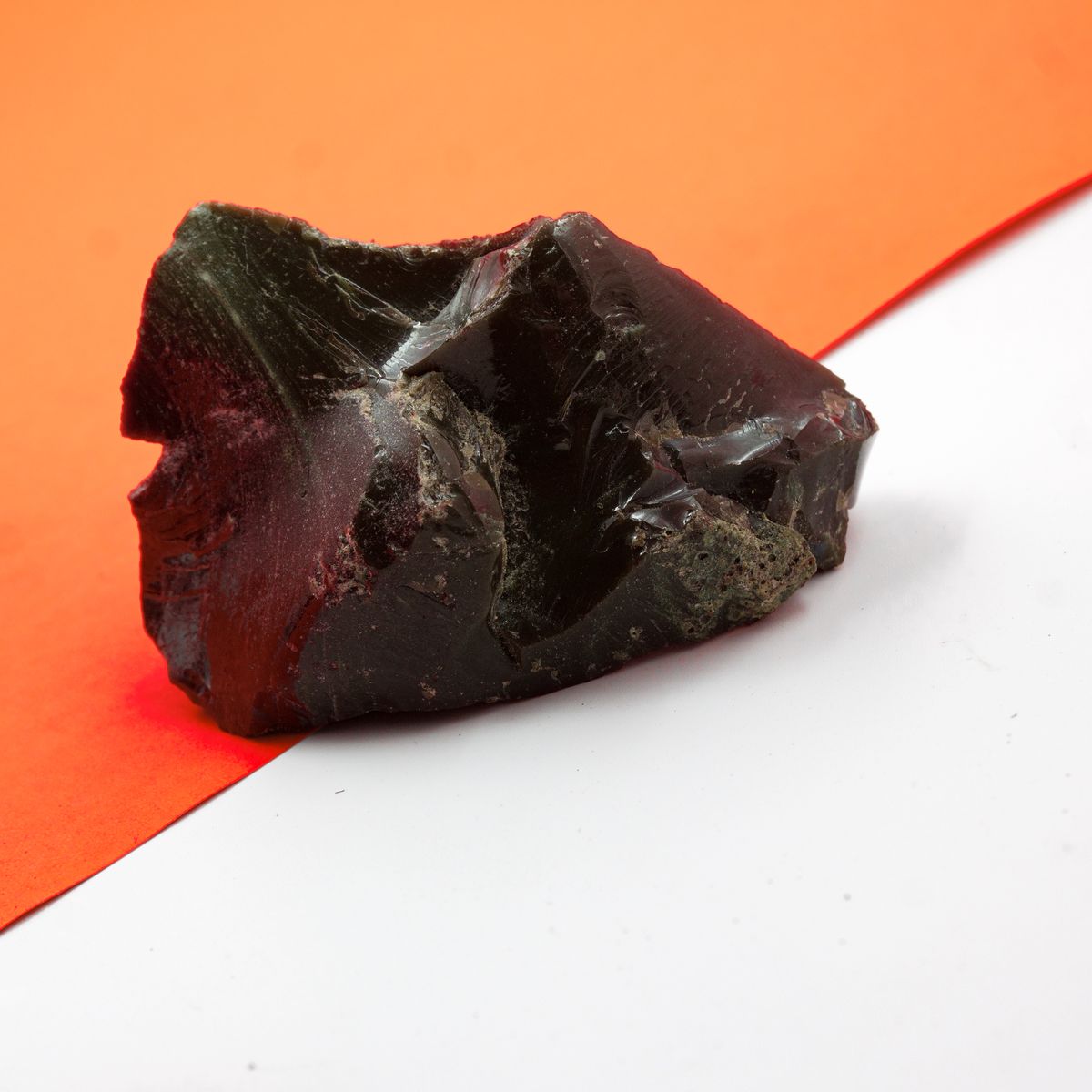
Obsidian is a natural volcanic glass, formed by the extremely rapid cooling of silica-rich lava. Black and shiny, it can also display golden or iridescent reflections depending on the variety.

Obsidian in brief

Mineral group Volcanic glass (vitreous rock)
Composition Amorphous silica from rapid lava cooling
Hardness 5 to 5.5 on the Mohs scale
Crystal system Amorphous (no crystalline structure)
Colors Deep black, sometimes with golden or rainbow reflections
Main origin Mexico, USA, Iceland, Italy

History of the stone

Obsidian has been used since prehistoric times to carve extremely sharp tools and weapons (arrowheads, knives, blades), thanks to its conchoidal fracture, similar to that of glass. The Aztec and Maya civilizations used it extensively: the Aztecs, in particular, fashioned polished obsidian mirrors, associated with the god Tezcatlipoca ("smoking mirror"), as well as prestige objects and ceremonial blades reserved for the elite.

Origin & Composition

Obsidian is not a mineral in the strict sense but a vitreous rock: it forms when silica-rich lava cools so rapidly that no crystals have time to form, creating an amorphous structure comparable to glass. Its black color comes from the presence of suspended minerals (magnetite, hercynite). Some varieties exhibit golden or iridescent reflections due to tiny inclusions of air bubbles or crystallites aligned in layers.

Obsidienne noire polie texture

Virtues & Symbolism According to Tradition

Traditional Mental Uses

Traditionally, obsidian is associated with protection and inner truth. It is believed to reveal hidden thought patterns, help one face uncomfortable truths with clarity, and support breaking free from habits or relationships that no longer serve them. It is also linked to a sense of protection from perceived negative external influences.

Traditional physical uses

Internal dimension (tradition)

In traditional representations of the energetic body, obsidian is associated with the root chakra, a symbol of protection and deep grounding in the face of life's challenges.

Associated astrological sign(s)

In some Western traditions, obsidian is sometimes associated with the signs of Scorpio and Sagittarius — a symbolic association to be taken as a nod rather than a rule.

Stone associations

Obsidian is traditionally combined in different ways depending on the desired effect:

For protection and grounding:
– Black Tourmaline: a classic protection duo
– Hematite: reinforces grounding and stability

For inner clarity:
– Labradorite: traditional association with intuition
– Amethyst: complementary mental calm when facing difficult truths

Interview

Physical cleaning: a rinse with clear water and a soft cloth are sufficient. With a hardness of 5 to 5.5 on the Mohs scale and a glass-like fracture, obsidian remains brittle—handle with care and keep away from impacts.

Symbolism

  • Protection
  • Inner truth
  • Breaking free from old patterns
  • Deep grounding

Traditions

Do not confuse with

Obsidian is sometimes mistaken for artificial black glass. Unlike perfectly uniform industrial glass, natural obsidian often exhibits slight internal variations, visible flow lines when held against the light, or golden and iridescent reflections depending on the variety.

Top provenances

Mexico remains the historical reference, with obsidian having been exploited since pre-Columbian civilizations. The United States (Oregon) produces beautiful rainbow obsidian, while Iceland, a land of active volcanism, offers pieces of remarkable purity.

Frequently Asked Questions

Is obsidian a true mineral?

Technically no: it's a vitreous volcanic rock, a natural glass, because its too rapid cooling prevents the formation of crystals, unlike classic minerals.

Why was obsidian used to make prehistoric tools?

Its conchoidal fracture, similar to that of glass, produces extremely sharp fragments, sometimes finer than a modern scalpel blade.

What is rainbow obsidian?

It's a variety displaying iridescent colored reflections, due to tiny inclusions of air bubbles or crystallites aligned in layers, visible under certain angles of light.

Is obsidian fragile?

It is relatively soft (5 to 5.5 on the Mohs scale) and brittle, with a glass-like fracture — handle with care.

Roche d'obsidienne noire brillantePierre d'obsidienne brute sur fond clairRoche d'obsidienne noire brillantePierre d'obsidienne brute sur fond clair

Did you know?

Obsidian blades, carved by contemporary artisans, are now used by some surgeons due to their exceptional sharpness, which is finer than that of a classic surgical steel scalpel.

Sources & References

Information cross-referenced from general gemology works and earth science museum resources (National Museum of Natural History, reference works in mineralogy).

The information presented here is for cultural, historical, and decorative purposes only. It does not constitute medical advice or a guarantee of therapeutic effect. In case of physical or psychological distress, consult a healthcare professional.