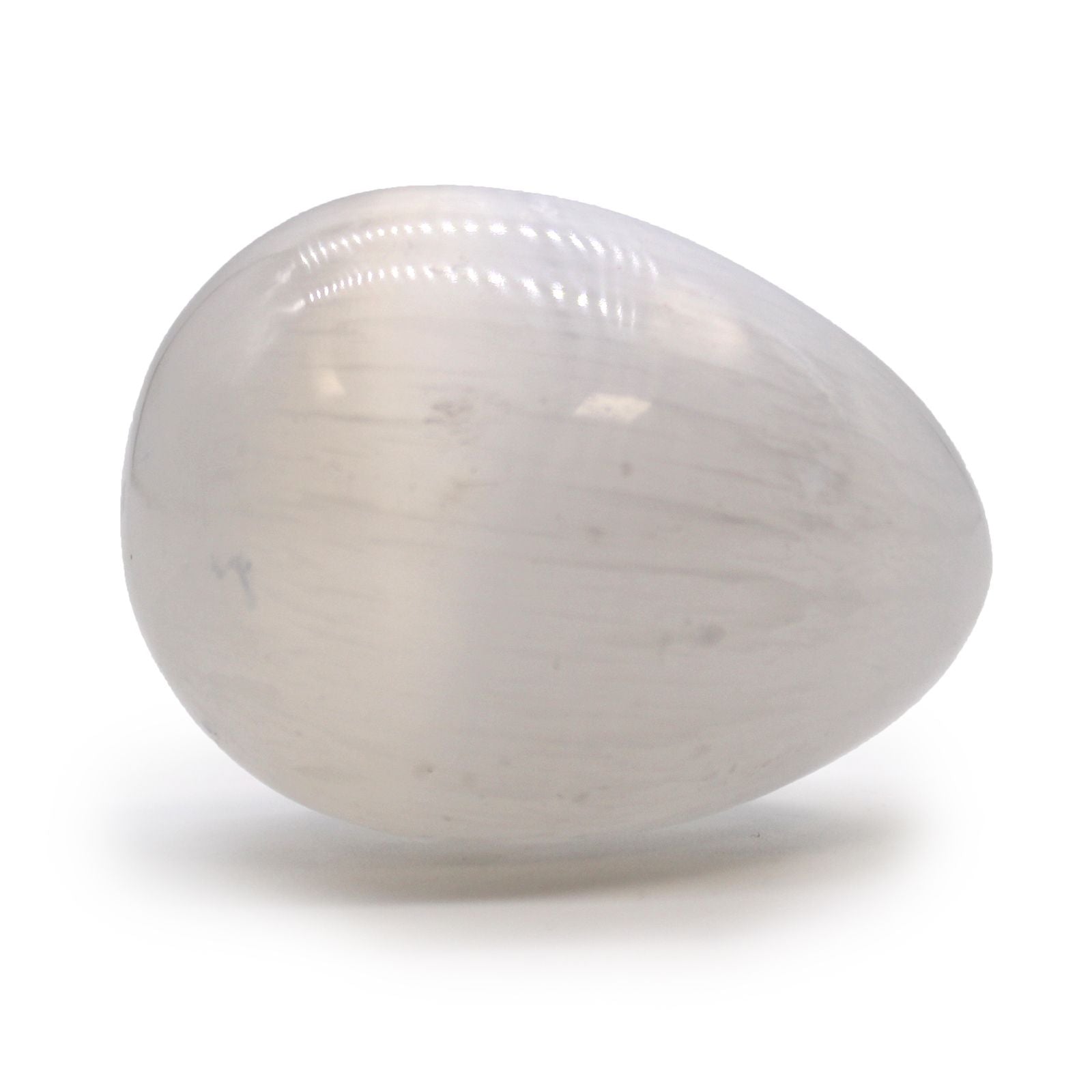
White and luminous, stone of inner clarity

Selenite: Origin, History, Symbolism, and Tradition

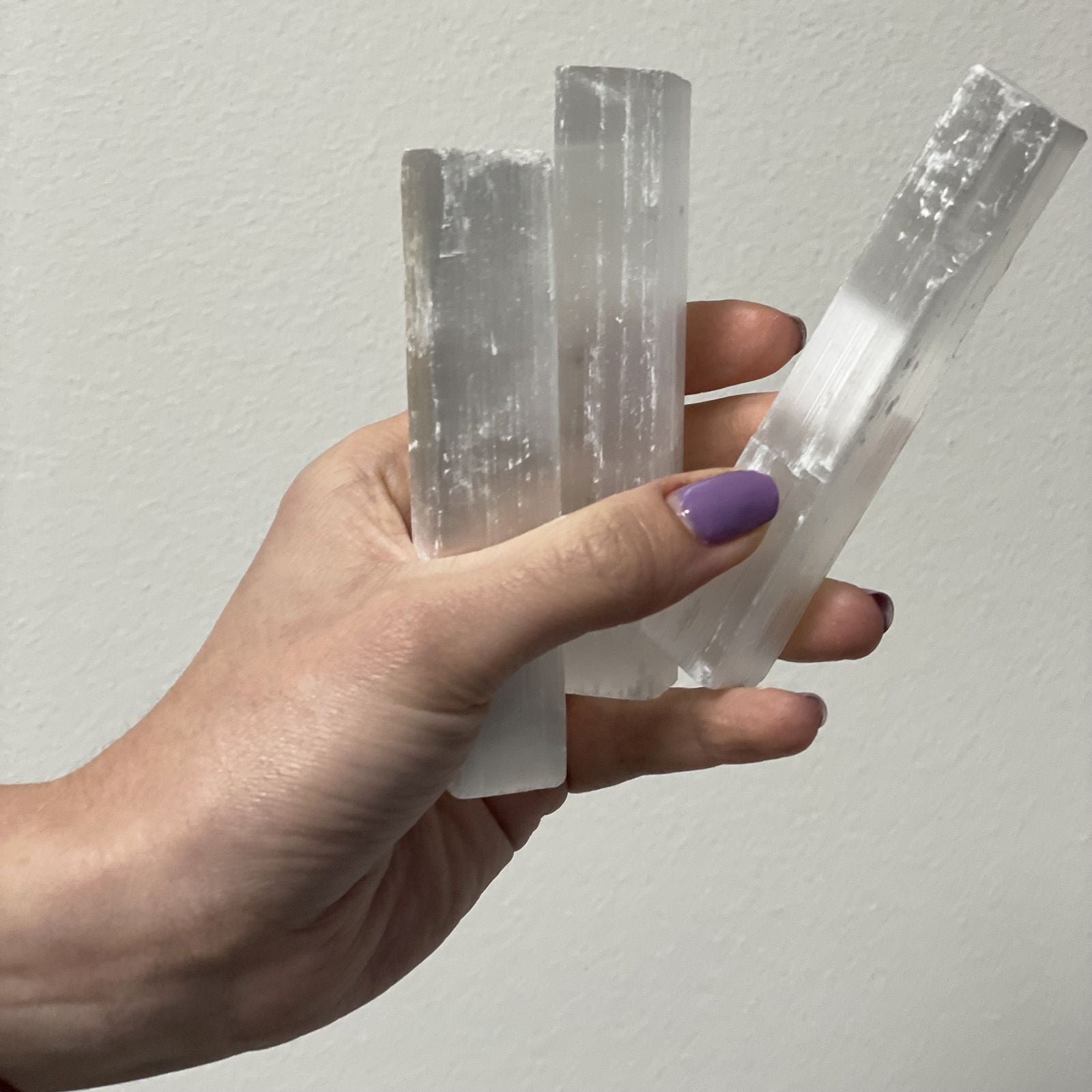
Selenite is a fibrous and translucent variety of gypsum, recognizable by its soft, milky luminosity reminiscent of moonlight.

Selenite at a Glance

Mineral Group Gypsum (calcium sulfate)
Composition Hydrated calcium sulfate
Hardness 2 on the Mohs scale (very soft)
Crystal System Monoclinic
Colors Milky white, translucent, sometimes golden
Main Origin Morocco, Mexico, United States, Australia

History of the stone

The name "selenite" comes from the Greek "selene" (moon), in reference to its soft luminosity. Before the invention of clear glass, Romans cut selenite into thin, translucent sheets to create rudimentary window panes, allowing light to pass through while offering partial privacy. In Morocco, it has long been sculpted into traditional lamps and decorative objects.

Origin & Composition

Selenite is a fibrous and transparent variety of gypsum, formed by the evaporation of calcium sulfate-rich water in sedimentary environments. The largest known deposit in the world is found in the Cave of the Giant Crystals in Naica, Mexico, where some crystals reach several meters in length, having formed over hundreds of thousands of years under exceptional geological conditions.

Virtues & Symbolism According to Tradition

Traditional Mental Uses

Traditionally, selenite is associated with mental clarity and inner peace. It is believed to have the ability to dispel confusion, promote a clear vision of complex situations, and support deep meditation as well as self-connection. It is also associated with the ability to distance oneself from overwhelming emotions.

Traditional physical uses

Internal dimension (tradition)

In traditional representations of the energy body, selenite is associated with the crown chakra, a symbol of clarity and heightened consciousness.

Associated astrological sign(s)

In some Western traditions, selenite is sometimes associated with the zodiac signs of Taurus and Cancer—a symbolic association to be taken as a nod rather than a rule.

Stone associations

Selenite is traditionally combined in different ways depending on the desired effect:

For mental clarity:
– Amethyst: complementary calming and uplifting
– Rock crystal: traditional amplification of intentions

For inner peace:
– Aquamarine: fluidity and gentleness
– Moonstone: complementary cycles and sensitivity

Interview

Warning: never clean selenite with water, as the gypsum it is composed of gradually dissolves on contact with moisture. Dry cleaning only, with a soft cloth or brush, is recommended. With a hardness of only 2 on the Mohs scale, it scratches even on contact with a fingernail and must be handled with great care.

Symbolism

  • Mental clarity
  • Inner peace
  • Symbolic purification of space
  • Elevation of consciousness

Traditions

Do not confuse with

Selenite is sometimes confused with alabaster or white quartz. It is distinguished by its characteristic fibrous and silky appearance, as well as its very low hardness, which makes it scratchable with a fingernail, unlike much harder quartz.

Top provenances

Morocco is renowned for its handcrafted selenite lamps and sculptures, while Mexico is home to the world's most spectacular deposit in the Cave of Naica.

Frequently Asked Questions

Can selenite be cleaned with water?

No, never: the gypsum it is made of gradually dissolves on contact with water; only dry cleaning with a soft cloth is recommended.

Why is selenite so fragile?

With a hardness of only 2 on the Mohs scale, it can be scratched even by a fingernail, making it one of the softest stones used in decoration.

Where are the world's largest selenite crystals located?

In the Cave of the Giant Crystals in Naica, Mexico, where some crystals reach several meters in length, formed over hundreds of thousands of years.

Where does the name "selenite" come from?
It comes from the Greek "selene" (moon), in reference to its soft, milky luminosity, evoking the clarity of moonlight.

Did you know?

Before the invention of transparent glass, the Romans cut selenite into thin, translucent sheets to create rudimentary window panes, allowing light to pass through while offering partial privacy.

Sources & References

Information cross-referenced from general gemology works and Earth sciences museum resources (Muséum national d'Histoire naturelle, reference works in mineralogy).

The information presented here is for cultural, historical, and decorative purposes only. It does not constitute medical advice or a guarantee of therapeutic effect. In case of physical or psychological distress, consult a healthcare professional.