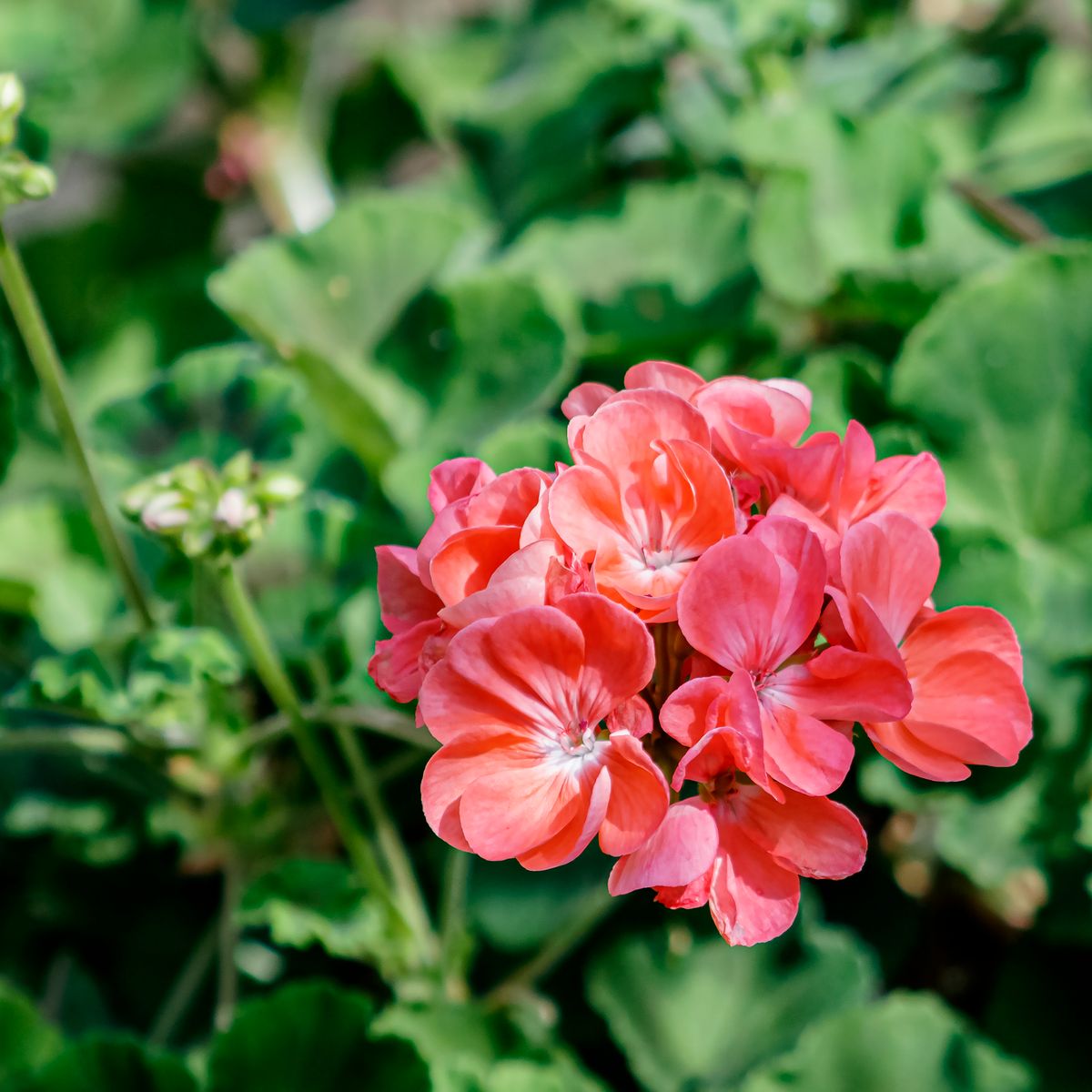
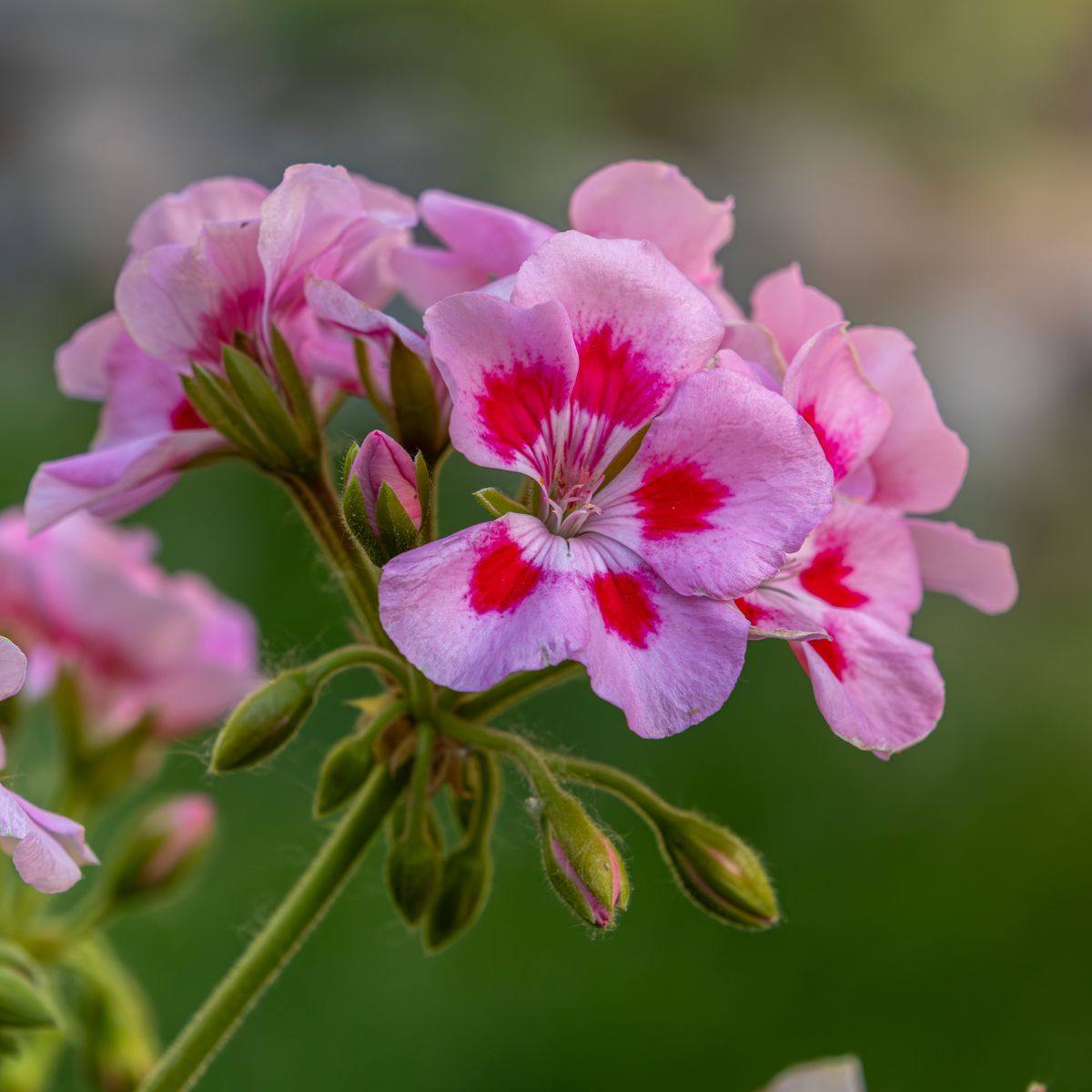
Géranium, gros plan sur les fleurs

Floral and rosy, the delicate scent of Southern African gardens

Geranium: origin, history, symbolism, and tradition

Scented geranium is a plant native to Southern Africa, recognizable by its rose-like floral fragrance and its cut leaves.

Geranium at a glance

Botanical family Geraniaceae
Botanical name Pelargonium graveolens
Part used Leaves and flowering stems
Main active compounds Citronellol, geraniol
Color / appearance Light green cut leaves, pink flowers
Main origin South Africa, Reunion Island, Egypt

History

Native to South Africa, scented geranium was introduced to Europe in the 17th century by European explorers and botanists, who were captivated by its rose-like scent at a lower cost. It became very popular in French perfumery from the 19th century onwards, notably cultivated in the Grasse region.

Géranium, fleurs roses en macro

Virtues & Symbolism according to Tradition

Traditional Mental Uses

Traditionally, geranium is associated with emotional balance and gentleness. It is credited with the ability to soothe tensions and promote a sense of inner harmony.

Traditional Physical Uses

Internal dimension (tradition)

In traditional representations of the energy body, geranium is associated with the heart chakra, a symbol of balance and gentleness.

Associated element(s)

In botanical traditions, geranium is associated with the element Water, echoing its floral sweetness.

Associations

Geranium is traditionally combined in different ways depending on the desired effect:

For relational harmony:
– Rose: traditional floral association
– Ylang-ylang: complementary sensual sweetness

For sweetness:
– Lavender: complementary soothing effect
– Chamomile: floral calm

Symbolism

  • Emotional balance
  • Gentleness
  • Harmony
  • Femininity

Traditions

Do not confuse with

Scented geranium (Pelargonium graveolens) is sometimes confused with common ornamental garden geraniums, which do not have the same fragrance or chemical composition; scented geranium is distinguished by its finely cut leaves and very pronounced scent.

Best Provenances

Reunion Island and Egypt are renowned for their high-quality geranium essential oil.

Frequently Asked Questions

Why does geranium smell like rose?

It shares certain aromatic compounds with rose, notably geraniol, which explains its olfactory proximity, long used in perfumery as a more affordable alternative.

What's the difference between scented geranium and garden geranium?

Scented geraniums have finely cut leaves and a very distinct fragrance, unlike ornamental garden geraniums which do not have this olfactory signature.

Can you cook with geranium leaves?

Yes, traditionally a few leaves are enough to flavor cakes or syrups, their aroma being very powerful.

Do geraniums grow easily?

Yes, in a mild climate, it enjoys sun and well-drained soil, but is sensitive to frost.

Géranium, fleur rose avec feuillage vertGéranium, fleurs roses en extérieurGéranium, fleur rose avec feuillage vertGéranium, fleurs roses en extérieur

Did you know?

Geranium essential oil has long served as a more affordable substitute for rose oil in perfumery, due to their similar olfactory profile and its much lower production cost.

Sources & references

Information cross-referenced from general botany works and traditional aromatic plant resources.

The information presented here is for cultural and traditional purposes only. It does not constitute medical advice or a guarantee of therapeutic effect. In case of physical or psychological distress, consult a healthcare professional. This is especially important during pregnancy, breastfeeding, ongoing medical treatment, or for use in children.