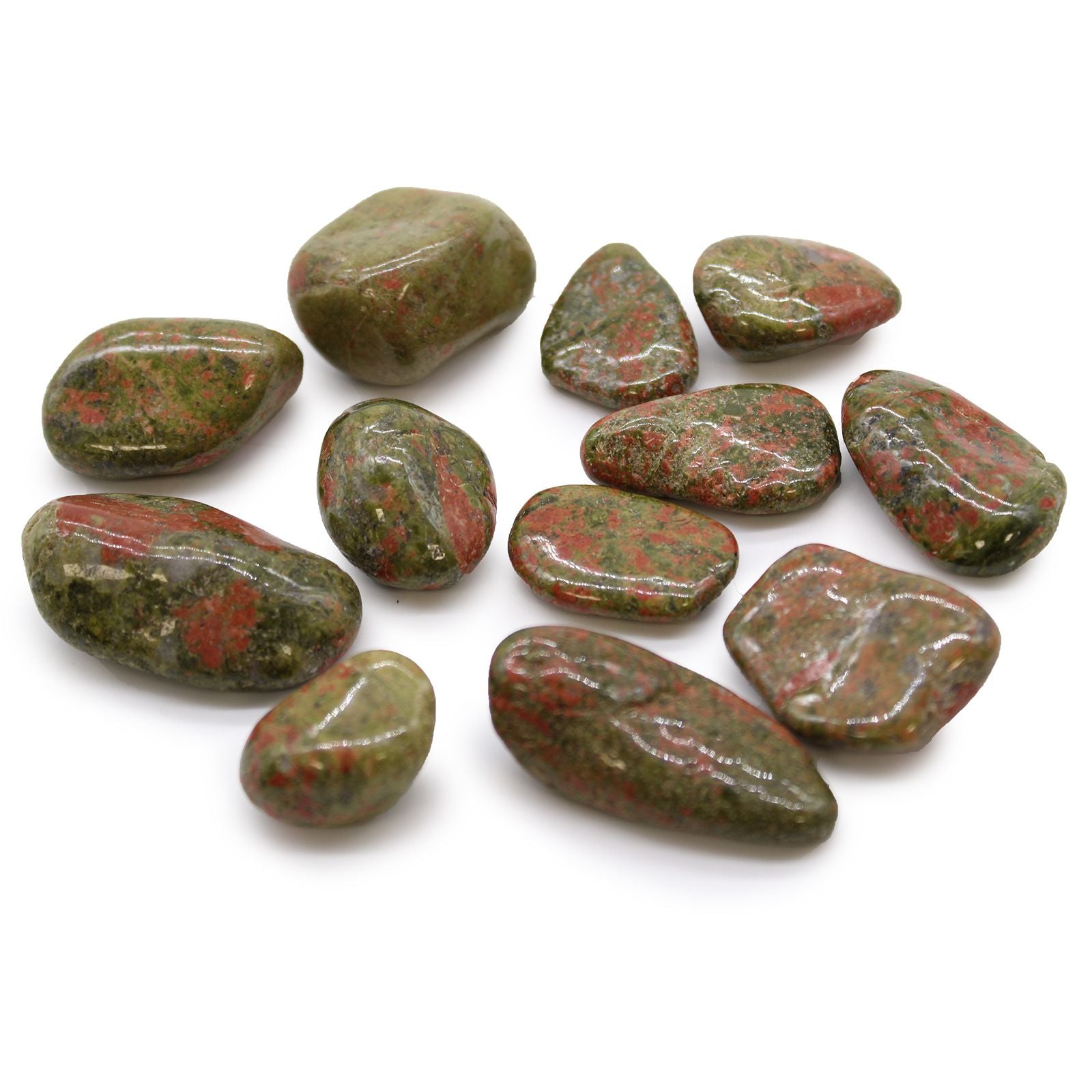
Speckled green and pink, the stone of balance

Unakite: Origin, History, Symbolism, and Tradition

Unakite is a rock composed of pink feldspar, green epidote, and quartz, recognizable by its characteristic mottled pattern. It is one of the few decorative stones that is not a single mineral.

Unakite at a glance

Mineral Group Composite rock (metamorphosed granite)
Composition Pink feldspar, green epidote, and quartz
Hardness 6 to 7 on the Mohs scale
Crystal System Not applicable (composite rock)
Colors Characteristic mottled green and pink
Main Origin United States, South Africa, China, Brazil

History of the stone

Unakite takes its name from the Unaka Mountains, located between North Carolina and Tennessee in the United States, where the rock was first described in the 19th century. It has since been used in geology as a classic pedagogical example of altered granitic metamorphic rock, before gaining popularity in decoration and jewelry.

Origin & Composition

Unlike most of the stones in this catalog, unakite is not a single mineral but a composite rock, the result of the hydrothermal alteration of granite. The original pink feldspar combines with newly formed green epidote and quartz, creating the mottled green and pink pattern so characteristic of this stone.

Virtues & Symbolism According to Tradition

Traditional Mental Uses

Traditionally, unakite is associated with the balance between heart and reason, with patience and gentle perseverance. It is believed to facilitate gradual rather than abrupt changes, and to support reconnection with long-forgotten personal goals.

Traditional physical uses

Internal dimension (tradition)

In traditional representations of the energy body, unakite is associated with the heart chakra, a symbol of balance between emotions and concrete action.

Associated astrological sign(s)

In some Western traditions, unakite is sometimes associated with the sign of Scorpio — a symbolic association to be taken as a nod rather than a rule.

Stone associations

Unakite is traditionally combined in different ways depending on the desired effect:

For emotional balance:
– Rose Quartz: complementary gentleness
– Aventurine: heart harmony

For gentle perseverance:
– Garnet: determination
– Red Jasper: grounding and constancy

Interview

Physical cleaning: a rinse with clear water and a soft cloth are sufficient. With a variable hardness of 6 to 7 on the Mohs scale, unakite is generally quite resistant for daily use.

Symbolism

  • The balance between heart and mind
  • Patience
  • Gentle perseverance
  • Gradual changes

Traditions

Do not confuse with

Unakite is sometimes confused with moss jasper or other mottled green rocks. It can be recognized by its specific pattern of distinct pink and green spots, unlike the more fluid, marbled patterns of moss jasper.

Top provenances

The United States (Virginia) remains the historical reference site, with South Africa and China also producing high-quality pieces.

Frequently Asked Questions

Is unakite a real mineral?

No, unlike most of the stones shown here, unakite is not a single mineral but a composite rock, resulting from the alteration of granite into pink feldspar, green epidote, and quartz.

Where does the name "unakite" come from?

It comes from the Unaka Mountains, located between North Carolina and Tennessee in the United States, where the rock was first described in the 19th century.

Why does unakite have this green and pink pattern?

This pattern results from the hydrothermal alteration of granite: the original pink feldspar combines with neoformed green epidote and quartz, creating this characteristic mixture.

What's the difference between unakite and moss agate?
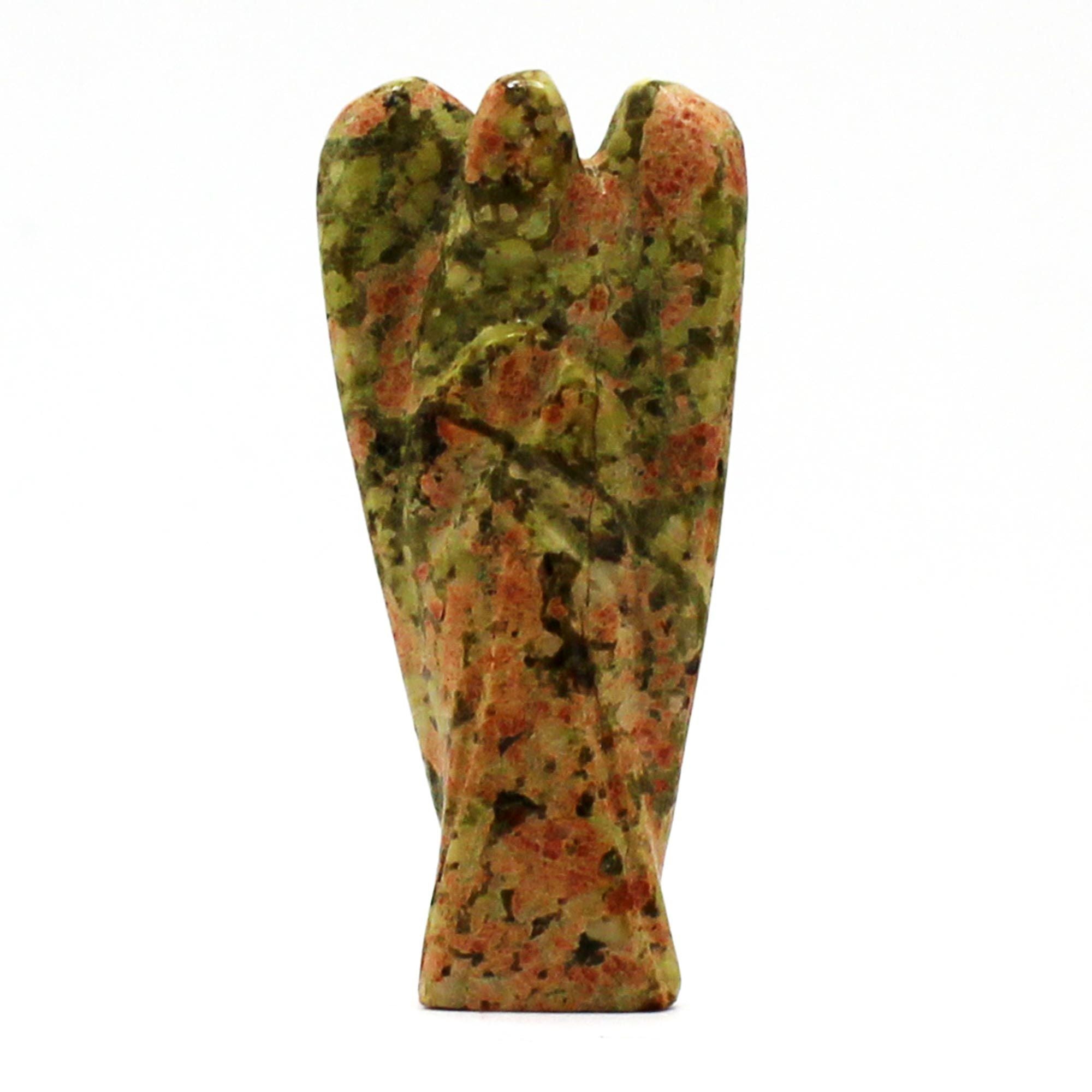
Unakite features distinct pink and green spots resulting from a specific mineral mixture, while moss agate has more fluid, marbled patterns of a different origin.

Did you know?

Unakite is one of the few decorative stones that is not a single mineral but a true composite rock, used since the 19th century as a classic teaching example in geology.

Sources & References

Information cross-referenced from general gemology books and earth science museum resources (National Museum of Natural History, reference works in mineralogy).

The information presented here is for cultural, historical, and decorative purposes only. It does not constitute medical advice or a guarantee of therapeutic effect. In case of physical or psychological distress, consult a healthcare professional.