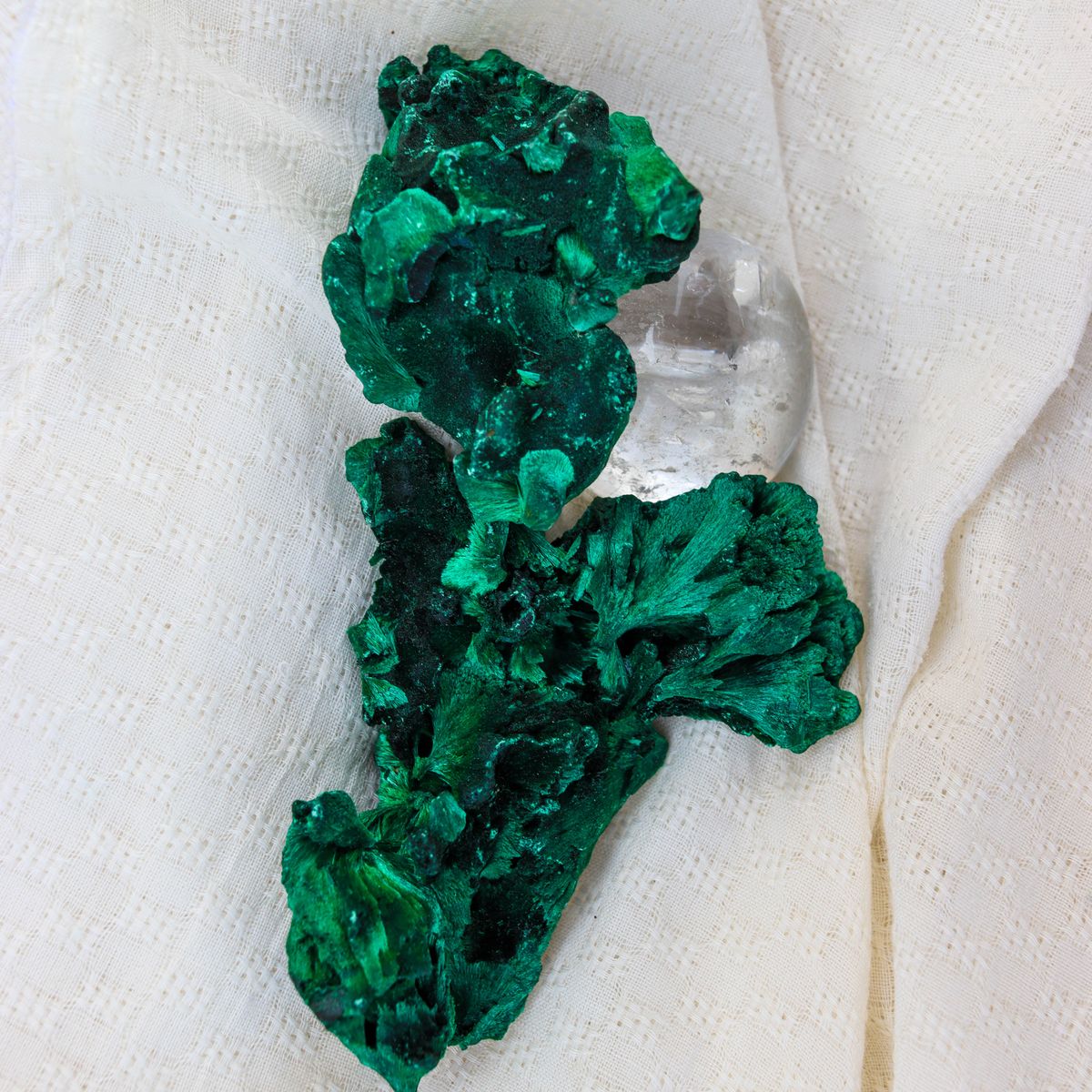
Malachite verte vive sur fond blanc

Green and striped, the stone of transformation

Malachite: Origin, History, Symbolism, and Tradition

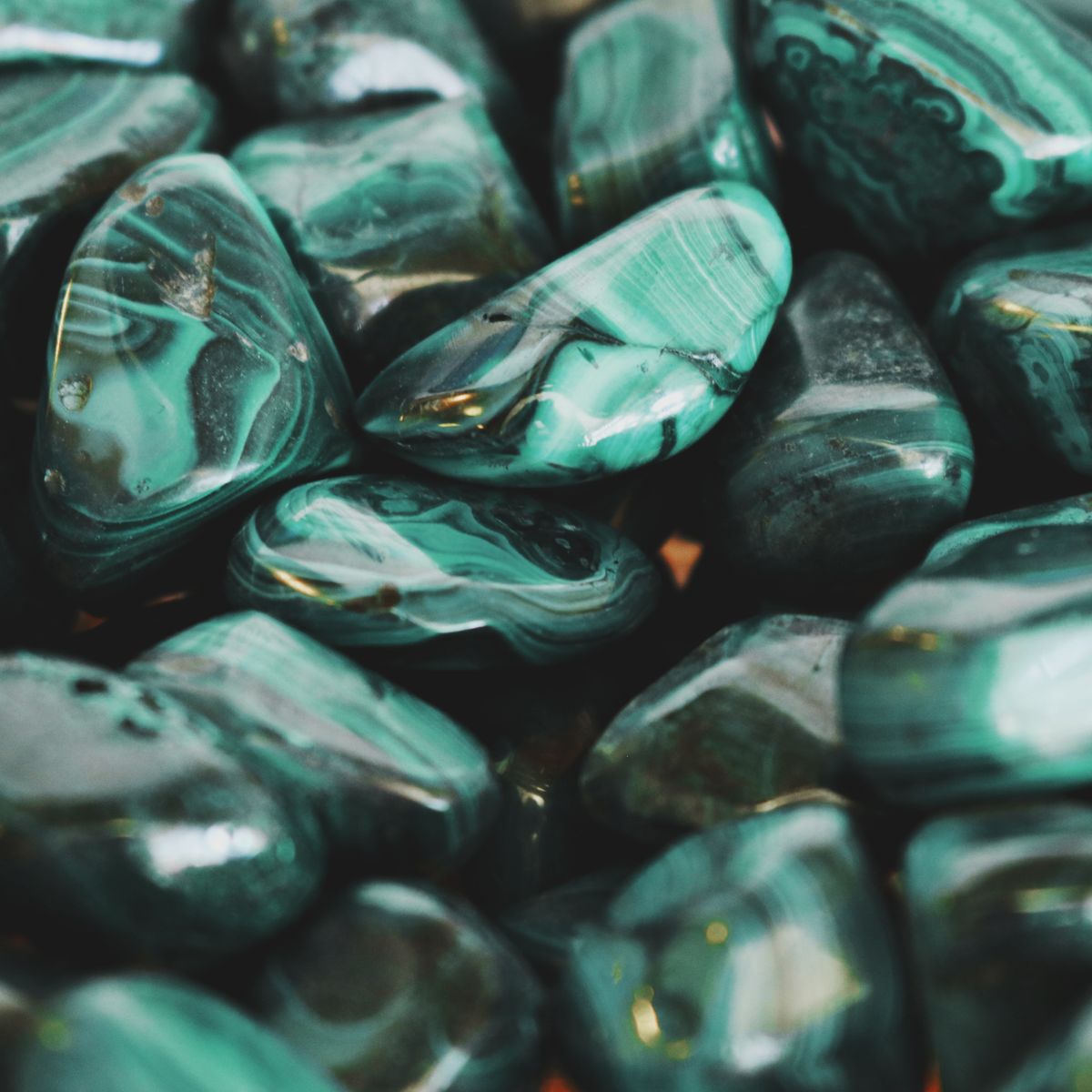
Malachite is a copper carbonate recognizable by its characteristic concentric green bands. Mined since ancient Egypt, it has adorned both amulets and the halls of the Russian imperial palace.

Malachite in brief

Mineral group Copper carbonate
Composition Hydrated copper carbonate
Hardness 3.5 to 4 on the Mohs scale
Crystal system Monoclinic
Colors Green with characteristic concentric bands
Main origin DR Congo, Zambia, Russia, Namibia

History of the stone

Malachite has been mined since ancient Egypt, notably in the Sinai mines as early as 4000 BC, where it was used as a green pigment and eyeshadow. It was also carved into protective amulets for children in ancient Greece. In the 19th century, Imperial Russia extensively exploited deposits in the Urals to adorn its palaces: the famous "Malachite Room" in the Hermitage Palace in Saint Petersburg, entirely covered in this green stone, remains the most spectacular testament to this.

Origin & Composition

Malachite is a hydrated copper carbonate that forms through the alteration of copper deposits. Its characteristic concentric bands result from successive deposits over time, creating unique patterns in each stone, much like the rings of a tree.

Spécimen de malachite sur fond blanc

Virtues & Symbolism According to Tradition

Traditional Mental Uses

Traditionally, malachite is associated with transformation, protection, and the symbolic absorption of negative energies. It is believed to help cope with change more serenely, support important transition periods, and encourage stepping back from difficult situations.

Traditional physical uses

Internal dimension (tradition)

In traditional representations of the energy body, malachite is associated with the heart chakra, a symbol of profound transformation and renewal.

Associated astrological sign(s)

In certain Western traditions, malachite is sometimes associated with the signs of Scorpio and Capricorn – a symbolic association to be taken as a nod rather than a rule.

Stone associations

Malachite is traditionally combined in different ways depending on the desired effect:

For transformation:
– Labradorite: traditional duo associated with change and intuition
– Obsidian: strengthens protection during difficult times

For protection:
– Black Tourmaline: traditional association with protective grounding
– Tiger's Eye: strengthens confidence when facing challenges

Interview

Important point of caution: malachite contains copper and should never be sanded or worked on without protection, as its dust is potentially toxic if inhaled. For routine cleaning of an already polished stone, a quick rinse with cold clear water is possible, but avoid any contact with hot water, vinegar, or acids, which can dissolve the carbonate. With a hardness of only 3.5 to 4 on the Mohs scale, it scratches and chips easily.

Symbolism

  • Transformation
  • Protection
  • Energy absorption
  • Renewal

Traditions

Do not confuse with

Malachite is sometimes imitated with resin or stained glass, reproducing its banding. Real malachite is noticeably heavier and colder to the touch, with irregular concentric patterns, unlike imitations which are often too regular.

Top provenances

The Democratic Republic of Congo provides the bulk of current global production, Zambia supplements the supply, while Russia maintains its historical legacy from the deposits in the Urals.

Frequently Asked Questions

Is malachite dangerous to handle?

Polished stone poses no danger from simple contact, but you should never sand or work with it yourself without protection, as its dust contains copper, which is potentially toxic if inhaled.

Can malachite be cleaned with water?

A quick rinse with cold, clean water is possible, but avoid all contact with hot water, vinegar, or acids, which can dissolve the carbonate and release copper.

Why does malachite have banded patterns?

These concentric bands result from successive deposits of copper carbonate over time, creating unique patterns in each stone.

Is malachite fragile?

Yes, with a hardness of only 3.5 to 4 on the Mohs scale, it scratches and chips easily, so handle with great care.

Malachite sur tissu blancPierres de malachite poliesMalachite sur tissu blancPierres de malachite polies

Did you know?

The legendary "Malachite Room" of the Hermitage Palace in St. Petersburg, adorned with columns and objects entirely covered in Ural malachite, bears witness to the 19th-century Imperial Russia's fascination with this spectacular green stone.

Sources & References

Information cross-referenced from general gemology books and Earth sciences museum resources (Muséum national d'Histoire naturelle, reference works in mineralogy).

The information presented here is for cultural, historical, and decorative purposes only. It does not constitute medical advice or a guarantee of therapeutic effect. In case of physical or psychological distress, consult a healthcare professional.