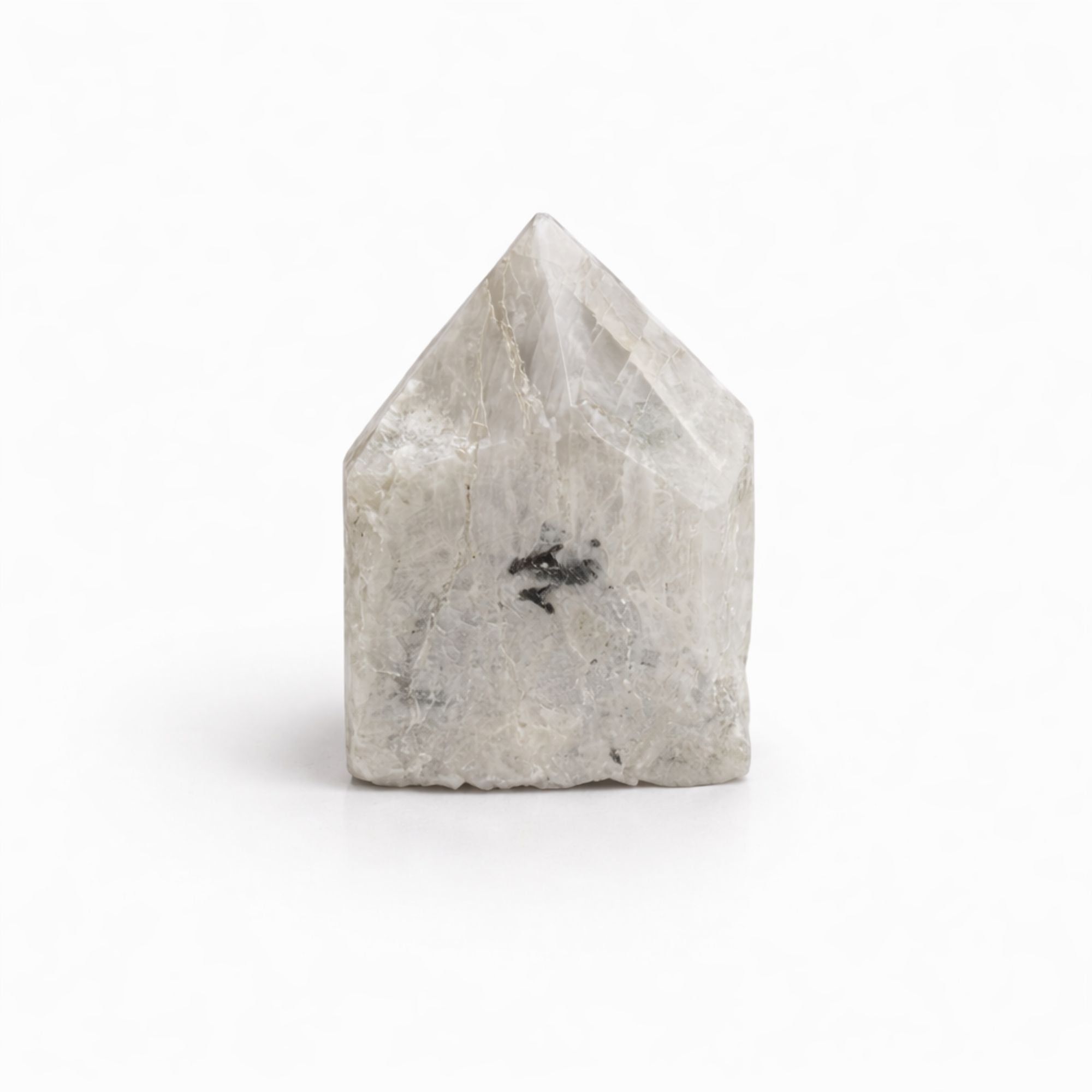
Bluish glow, stone of intuition and new beginnings

Moonstone: Origin, History, Symbolism, and Tradition

Moonstone is a variety of feldspar recognizable by its characteristic bluish glow, which appears to float beneath the stone's surface depending on the angle of light.

Moonstone at a Glance

Mineral Group Feldspar (Adularia)
Composition Potassium aluminium silicate
Hardness 6 to 6.5 on the Mohs scale
Crystal System Monoclinic
Colors Milky white to bluish, characteristic luminous effect
Main Origin Sri Lanka, India, Madagascar, Tanzania

History of the stone

Known and revered since Roman and Greek antiquity, the moonstone was associated with the lunar goddess Diana. Romans believed it formed from solidified rays of moonlight. In India, it has been considered a precious and symbolic stone for centuries, traditionally used in wedding jewelry. At the end of the 19th century, French jeweler René Lalique made it one of the emblematic stones of the Art Nouveau movement.

Origin & Composition

Moonstone is a variety of feldspar called adularia. Its characteristic luminous effect, adularescence, comes from a structure of fine microscopic layers within the crystal, which diffract light and create this mobile bluish glow. There is also a variety called rainbow moonstone, which is more transparent and has multicolored reflections.

Virtues & Symbolism According to Tradition

Traditional Mental Uses

Traditionally, moonstone is associated with intuition, sensitivity, and emotional cycles. It is believed to facilitate the acceptance of changing emotions, support creativity and inspiration, and assist during periods of transition or new beginnings, whether personal or professional.

Traditional physical uses

Internal dimension (tradition)

In traditional representations of the energetic body, moonstone is associated with the sacral chakra and the solar plexus chakra, symbolizing emotional fluidity and cyclical renewal.

Associated astrological sign(s)

In some Western traditions, moonstone is associated with the zodiac sign of Cancer and cited as the birthstone for June—a symbolic association to be taken as a nod rather than a rule.

Stone associations

Moonstone is traditionally combined in different ways depending on the desired effect:

For intuition and sensitivity:
– Labradorite: traditional duo associated with intuition
– Amethyst: complementary calm and elevation

For new beginnings:
– Rose Quartz: emotional softness
– Aquamarine: fluidity and clarity in the face of change

Interview

Physical cleaning: a rinse with clear water and a soft cloth are sufficient. With a moderate hardness of 6 to 6.5 on the Mohs scale, moonstone should be protected from impacts and avoid contact with aggressive chemicals.

Symbolism

  • Intuition
  • Sensitivity
  • New beginnings
  • Emotional fluidity

Traditions

Do not confuse with

Moonstone is sometimes confused with opal due to its play of light. It is distinguished by its bluish glow that seems to float beneath the surface (adularescence), whereas opal produces flashes of several distinct colors; their mineral composition is also entirely different.

Top provenances

Sri Lanka remains the historical benchmark for high-quality blue moonstone, with India and Madagascar also producing beautiful pieces.

Frequently Asked Questions

Why does moonstone have that particular glow?

This effect, called adularescence, comes from the crystal's finely layered structure, which diffracts light, creating a bluish glow that appears to move beneath the surface depending on the angle of observation.

What's the difference between moonstone and opal?

Moonstone exhibits a unique bluish glow that appears to float beneath the surface, while opal produces flashes of several distinct colors; their mineral composition is also completely different.

Are there different types of moonstone?

Yes, the classic white to bluish variety is the best known, but there is also a more transparent rainbow moonstone with multicolored reflections.

Is moonstone afraid of shocks?

Yes, with a moderate hardness of 6 to 6.5 on the Mohs scale, it must be handled with a little more caution than quartz.

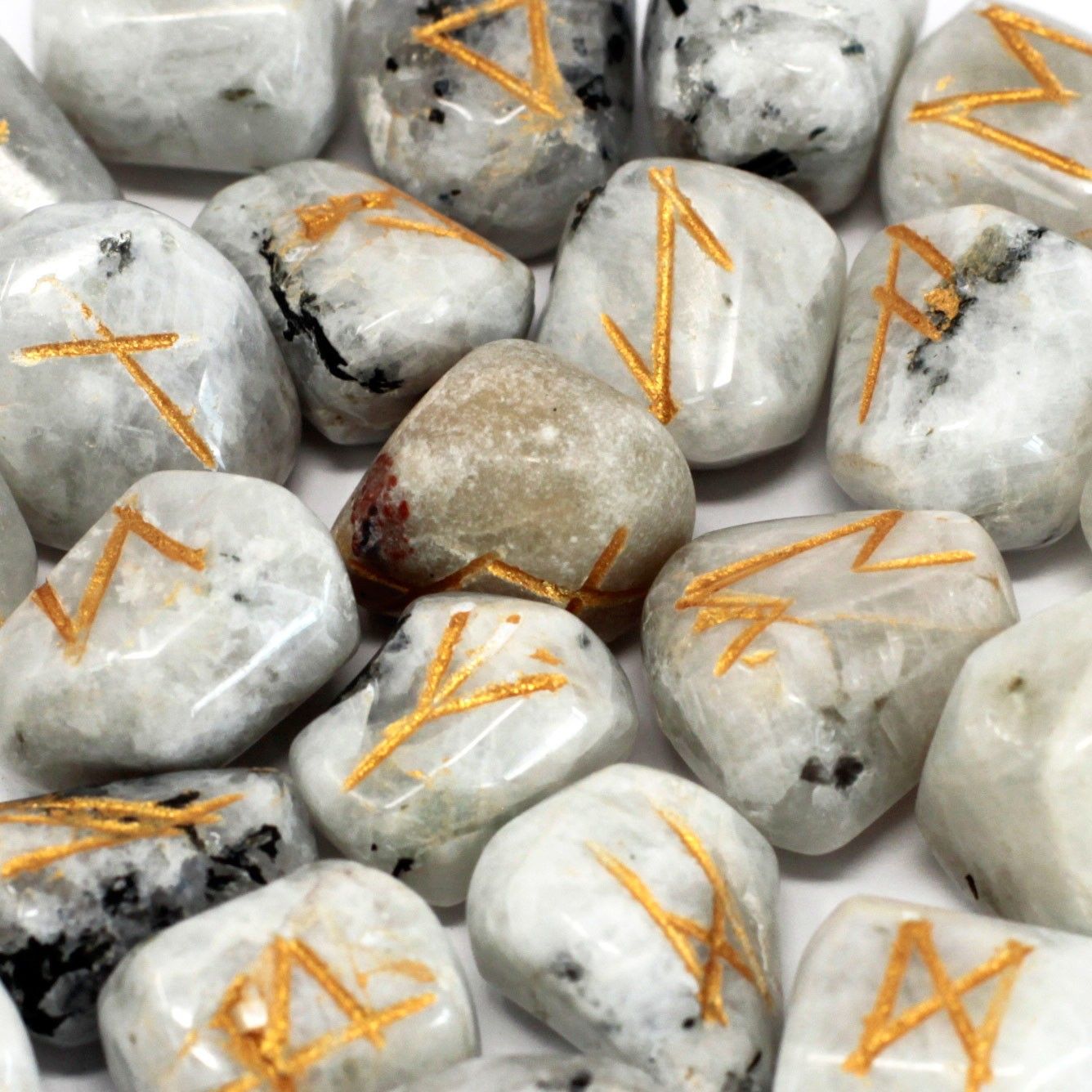
details des runes en pierre de lune avec gravures runiquesdetails des runes en pierre de lune avec gravures runiques

Did you know?

The celebrated French jeweller René Lalique made moonstone one of the emblematic gems of the Art Nouveau movement in the late 19th century, incorporating it into creations with organic, nature-inspired forms.

Sources & References

Information cross-referenced from general gemology works and Earth sciences museum resources (Muséum national d'Histoire naturelle, reference works in mineralogy).

The information presented here is for cultural, historical, and decorative purposes only. It does not constitute medical advice or a guarantee of therapeutic effect. In case of physical or psychological distress, consult a healthcare professional.