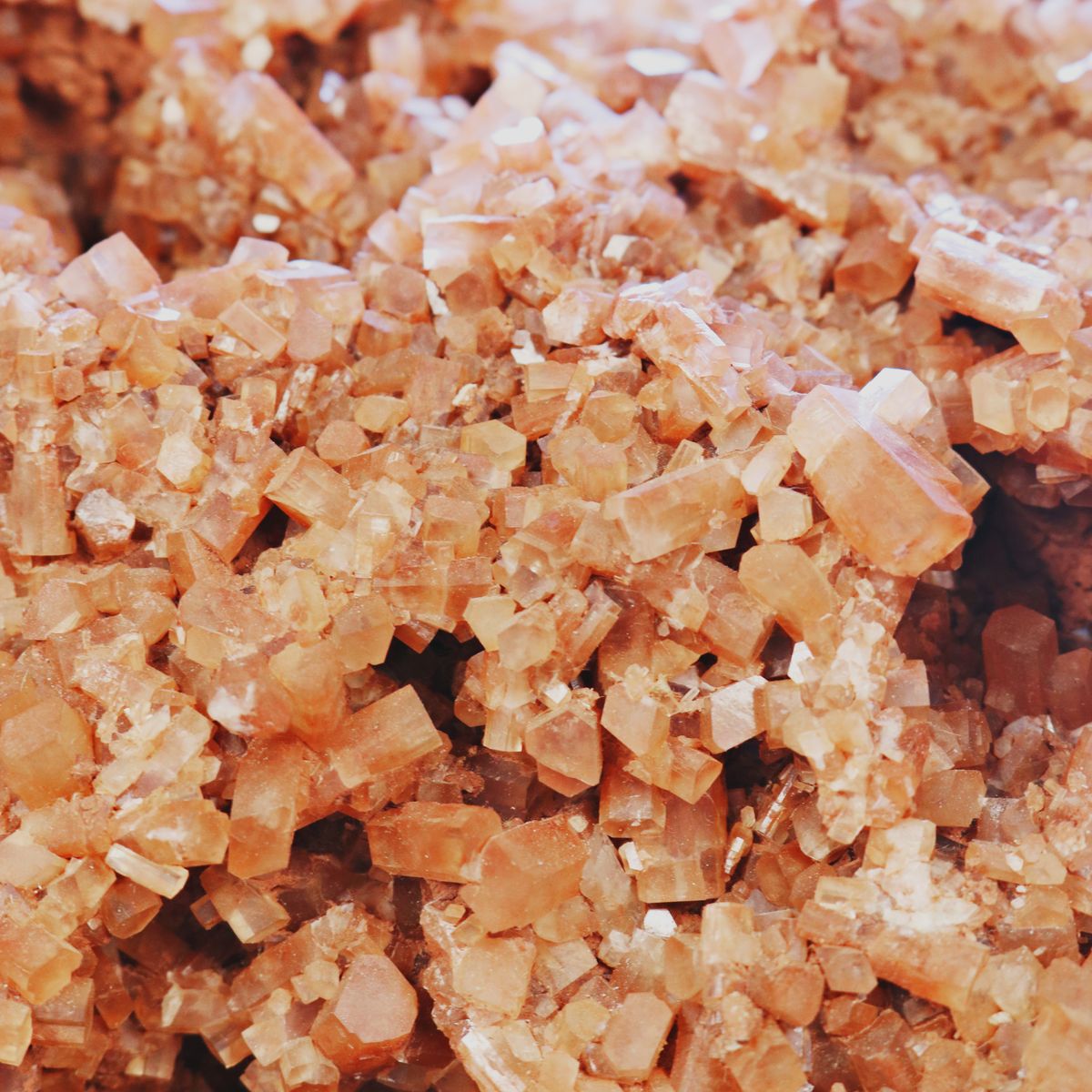
Cristaux de calcite pêche

Multicoloured and luminous, the stone of clarity

Calcite: Origin, History, Symbolism, and Tradition

Calcite is a calcium carbonate available in a very wide range of colors, from transparent colorless to honey yellow, green, and blue. It is one of the most common minerals on Earth.

Calcite at a glance

Mineral group Calcite (carbonates)
Composition Calcium carbonate (CaCO₃)
Hardness 3 on the Mohs scale
Crystal system Trigonal
Colors Very variable: colorless, white, yellow, orange, green, blue, pink
Main origin Mexico, China, Pakistan, Morocco

History of the stone

Known since Antiquity, calcite is one of the most abundant minerals in the Earth's crust, the main component of limestone and marble. Its transparent variety, Iceland spar, was studied as early as the 17th century for its remarkable birefringence: it doubles images observed through it, a property that played a foundational role in early scientific research on polarized light. A legend also attributes to Viking navigators the use of this crystal as a navigational guide on cloudy days.

Origin & Composition

Calcite is a calcium carbonate that forms in sedimentary (caves, hot springs) or hydrothermal environments. Calcite geodes and crystals exhibit a very wide diversity of colors depending on the metallic impurities present during their formation (iron, manganese, copper). This explains why no other mineral offers such a varied color palette.

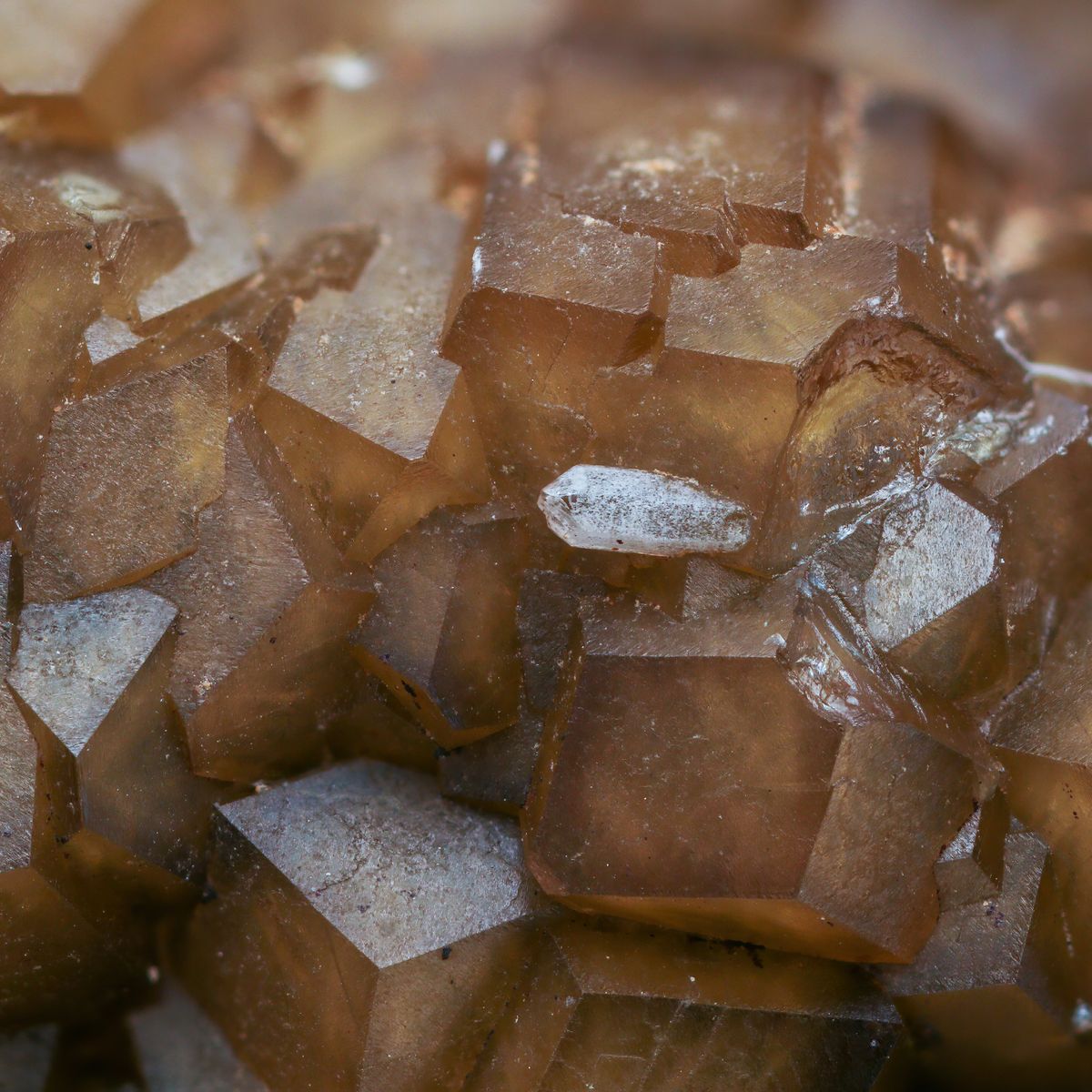
Cristaux de calcite brune translucide

Virtues & Symbolism According to Tradition

Traditional Mental Uses

Traditionally, calcite is associated with amplifying ambient energy and clarifying intentions. It is believed to have the ability to energize a living or working space, dispel procrastination, and support memory and learning abilities. It is also linked to organizing thoughts during periods of intense reflection or decision-making.

Traditional physical uses

Internal dimension (tradition)

In traditional representations of the energy body, each color of calcite is associated with a different chakra: orange calcite with the sacral chakra, green calcite with the heart chakra, blue calcite with the throat chakra—a cultural and aesthetic association linked to the color of each variety.

Associated astrological sign(s)

In some Western traditions, calcite is sometimes associated with the sign of Cancer—a symbolic association to be taken as a nod rather than a rule.

Stone associations

Calcite is traditionally combined in different ways depending on the desired effect:

For revitalization and positive energy:
– Citrine: traditional duo associated with the amplification of positive energy and optimism
– Carnelian: reinforces daily vitality and dynamism

For mental clarity and concentration:
– Fluorite: structuring of thought, classic duo for clarity of mind
– Rock crystal: traditional amplification of set intentions

Interview

Physical cleaning: rinse with clean water only, never use vinegar or acidic products, which react chemically with calcium carbonate and can permanently damage the stone. With a hardness of only 3 on the Mohs scale, calcite scratches very easily and should be handled with care, away from other harder stones.

Symbolism

  • Amplification and clarity
  • Memory and learning
  • Dynamism
  • Ordering thoughts

Traditions

Do not confuse with

Transparent calcite is sometimes confused with quartz. It is distinguished by a much lower hardness (3 compared to 7 for quartz) and effervesces in contact with vinegar, unlike quartz which remains completely inert to acids.

Top provenances

Mexico produces superb colored geodes and crystals, Pakistan is renowned for its high-quality "honey" orange calcites, while China offers a wide variety of formations in terms of size and color.

Frequently Asked Questions

Is calcite a fragile stone?

Yes, with a hardness of only 3 on the Mohs scale, it scratches easily and must be handled with care.

Can you clean calcite with vinegar?

No, definitely not: vinegar is acidic and chemically reacts with calcium carbonate, which can irreversibly damage the stone.

What is "Icelandic spar"?

It's a perfectly transparent variety of calcite that has the particularity of doubling images observed through it, a property that played an important role in early scientific research on light.

Why does calcite come in so many colors?
Its color depends on the metallic impurities present during its formation (iron, manganese, copper), which explains the great diversity of hues observed from one deposit to another.

Cristaux de calcite pêcheCristaux de calcite brune translucideCristaux de calcite pêcheCristaux de calcite brune translucide

Did you know?

Iceland spar reportedly allowed Viking navigators to pinpoint the sun's position even in cloudy weather, thanks to its ability to polarize light — a legend that earned it the nickname "Viking sunstone."

Sources & References

Information cross-referenced from general gemology works and Earth sciences museum resources (Muséum national d'Histoire naturelle, reference works in mineralogy).

The information presented here is for cultural, historical, and decorative purposes only. It does not constitute medical advice or a guarantee of therapeutic effect. In case of physical or psychological distress, consult a healthcare professional.