Deep blue and gold, the stone of royal wisdom

Lapis Lazuli: Origin, History, Symbolism, and Tradition

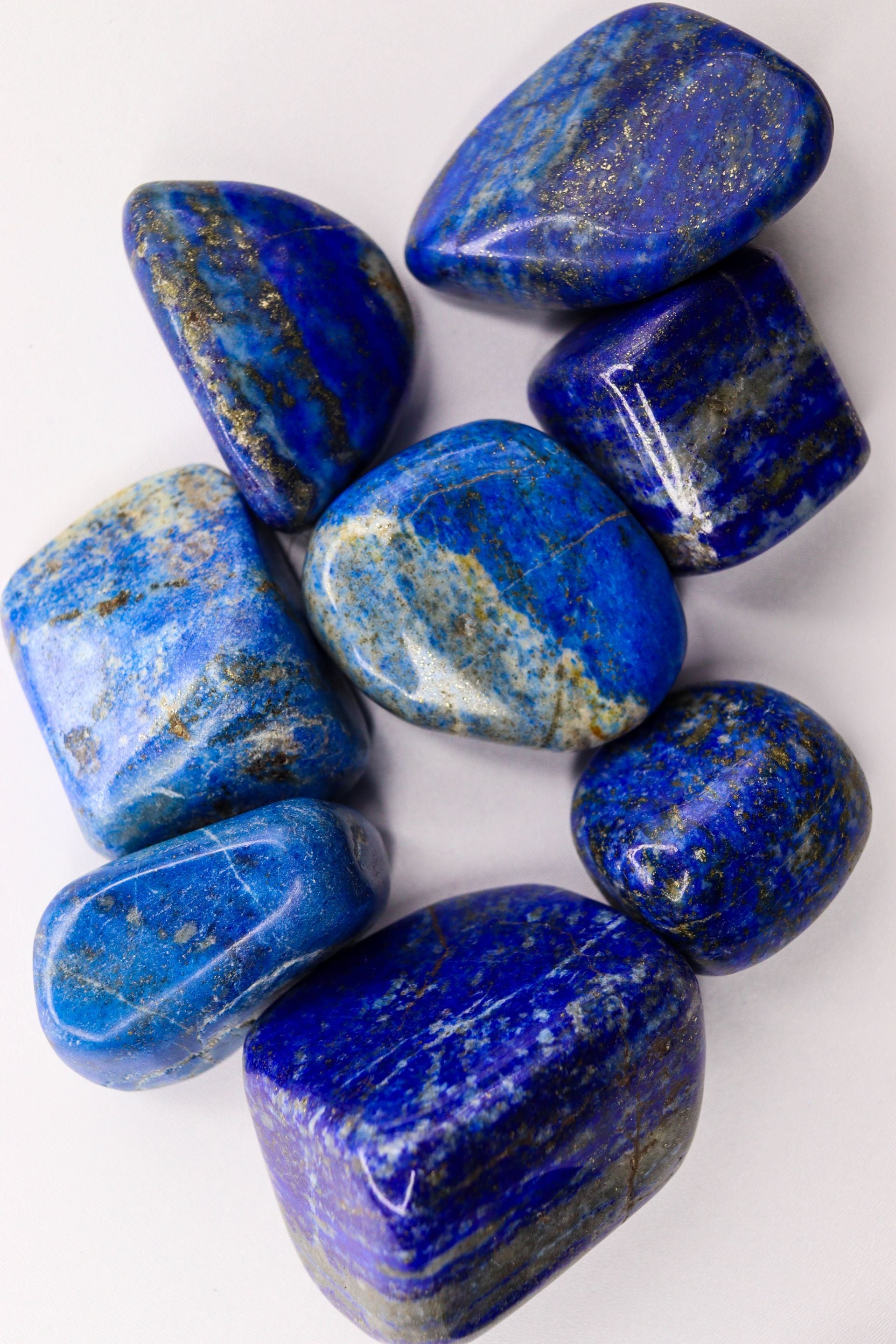
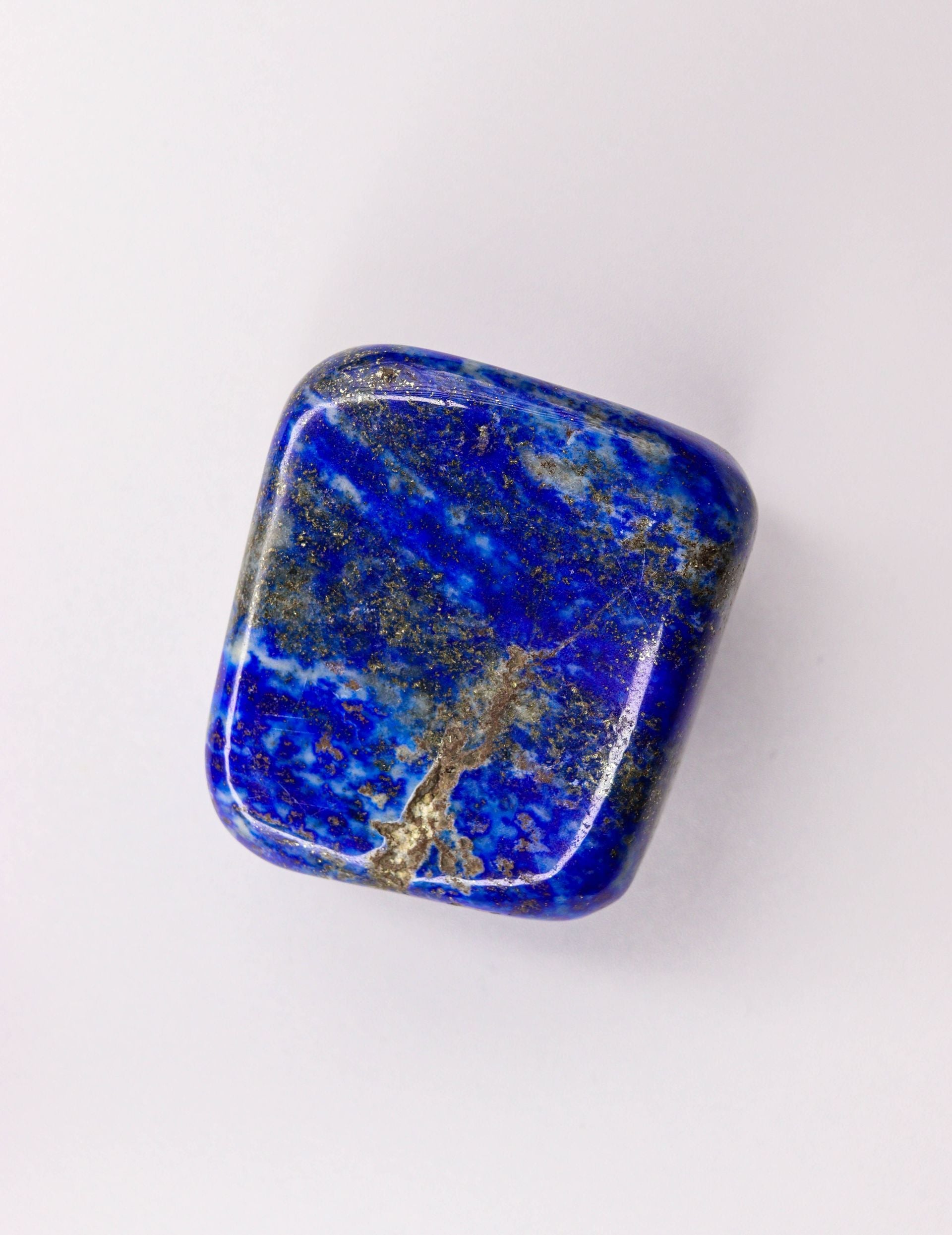
Lapis lazuli is a deep blue rock flecked with golden pyrite inclusions and white calcite veins. Mined for over 6,000 years in Afghanistan, it is among the oldest stones exploited by humanity.

Lapis Lazuli in Brief

Mineral Group Metamorphic rock (lazurite, calcite, pyrite)
Composition Sodium and aluminum silicate, calcite, pyrite
Hardness 5 to 5.5 on the Mohs scale
Crystal System Cubic (lazurite)
Colors Deep blue with golden inclusions and white veins
Main Origin Afghanistan, Chile, Russia

History of the stone

The Afghan deposits in Badakhshan have been exploited almost continuously for over 6,000 years, making them one of the oldest still-active mineral extraction sites in the world. In ancient Egypt, lapis lazuli adorned royal funerary jewelry, notably that of Tutankhamun. During the European Renaissance, it was ground to produce ultramarine blue pigment, one of the most expensive in the history of painting, reserved for the most prestigious commissions due to its rarity and the cost of its importation.

Origin & Composition

Lapis lazuli is not a single mineral but a metamorphic rock composed mainly of lazurite, which gives it its blue color, associated with inclusions of golden pyrite and white calcite. It is formed by the metamorphism of limestone, a slow geological process that explains the rarity of quality deposits.

Virtues & Symbolism According to Tradition

Traditional Mental Uses

Traditionally, lapis lazuli is associated with wisdom, truth, and authentic communication. It is believed to foster clairvoyance in important decisions, support a sincere expression of one's thoughts, and encourage the search for truth rather than pretense in relationships.

Traditional physical uses

Internal dimension (tradition)

In traditional representations of the energy body, lapis lazuli is associated with the third eye chakra and the throat chakra, symbolizing wisdom and expressed truth.

Associated astrological sign(s)

In some Western traditions, lapis lazuli is sometimes associated with the sign of Sagittarius — a symbolic association to be taken as a nod rather than a rule.

Stone associations

Lapis lazuli is traditionally combined in different ways depending on the desired effect:

For wisdom and clairvoyance:
– Amethyst: a traditional duo associated with calm and mental clarity
– Labradorite: an ancient enhancer of intuition

For authentic communication:
– Amazonite: traditionally associated with sincere expression
– Sodalite: enhances clarity in expressing ideas

Interview

Physical cleaning: rinsing with clean water only is sufficient, without acidic or aggressive products. With a hardness of 5 to 5.5 on the Mohs scale and its calcite content, lapis lazuli remains sensitive to shocks and acids, and should be handled with care.

Symbolism

  • Wisdom
  • Truth
  • Authentic communication
  • Clairvoyance

Traditions

Do not confuse with

Lapis lazuli is sometimes confused with sodalite or dyed glass imitations. Real lapis has authentic, irregular golden pyrite inclusions, while glass imitations often show gold flecks that are too regular or merely painted on the surface.

Top provenances

Afghanistan, with the Badakhshan deposits, remains the historical reference for quality. Chile and Russia also provide beautiful quality stones, often at more accessible prices.

Frequently Asked Questions

Why was lapis lazuli so precious during the Renaissance?

When ground, it produced ultramarine blue pigment, one of the most expensive in the history of painting, reserved for the most prestigious commissions due to its rarity and the cost of importing it from Afghanistan.

Is lapis lazuli a single mineral?

No, it's a rock made up of several minerals: lazurite, which gives it its blue color, associated with inclusions of golden pyrite and white calcite.

How to identify real lapis lazuli?

It features authentic and irregular golden pyrite inclusions, whereas glass imitations often display overly regular or merely surface-painted golden dots.

Is lapis lazuli afraid of water?

It is best to avoid prolonged contact with water and acidic products, as its calcite content makes it sensitive to this type of exposure.

Did you know?

The Afghan lapis lazuli deposits, located in the remote Badakhshan region, have been exploited almost continuously for over 6,000 years, making them one of the oldest still-active mineral extraction sites in the world.

Sources & References

Information gathered from general gemology works and Earth sciences museum resources (National Museum of Natural History, reference works in mineralogy).

The information presented here is for cultural, historical, and decorative purposes only. It does not constitute medical advice or a guarantee of therapeutic effect. In case of physical or psychological distress, consult a healthcare professional.