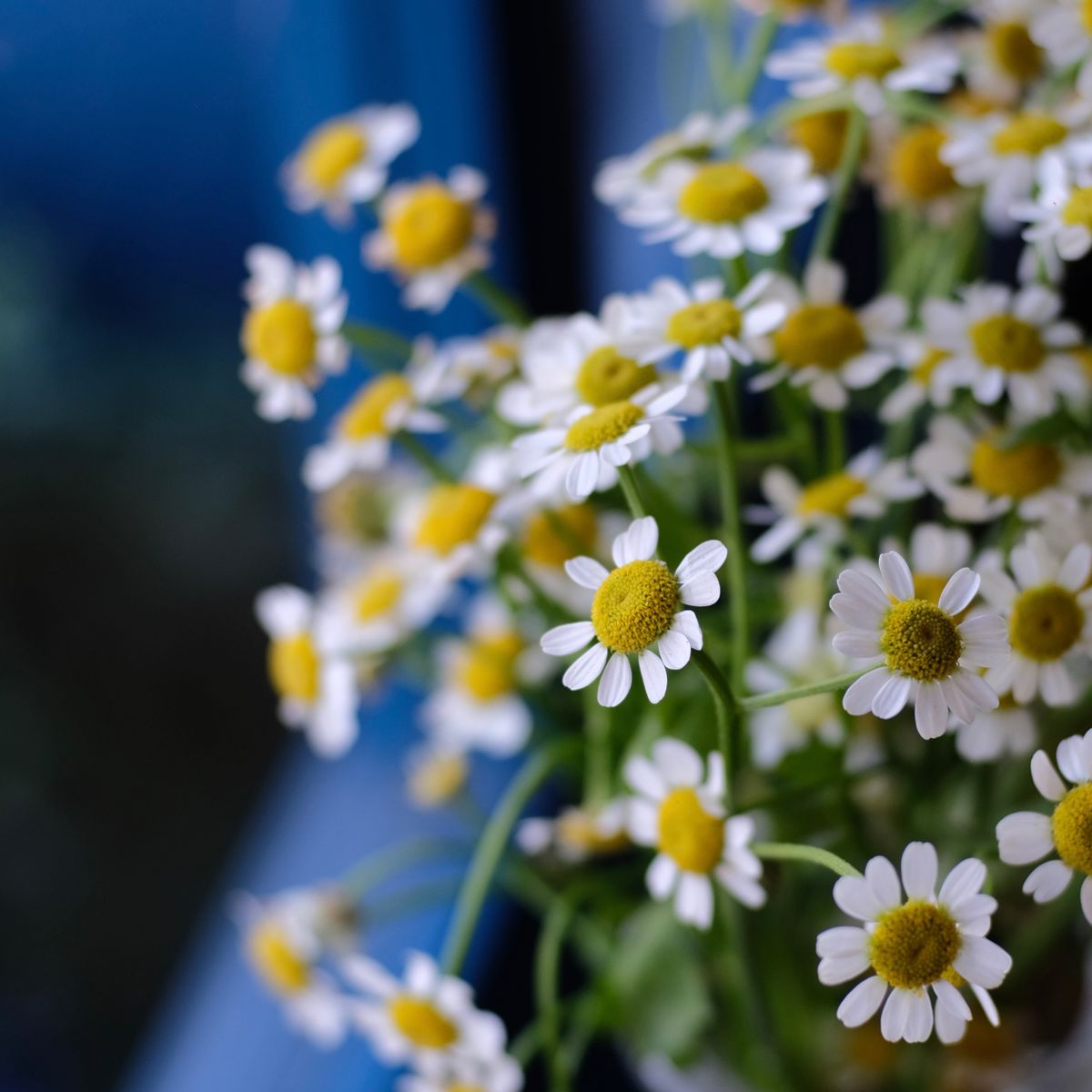
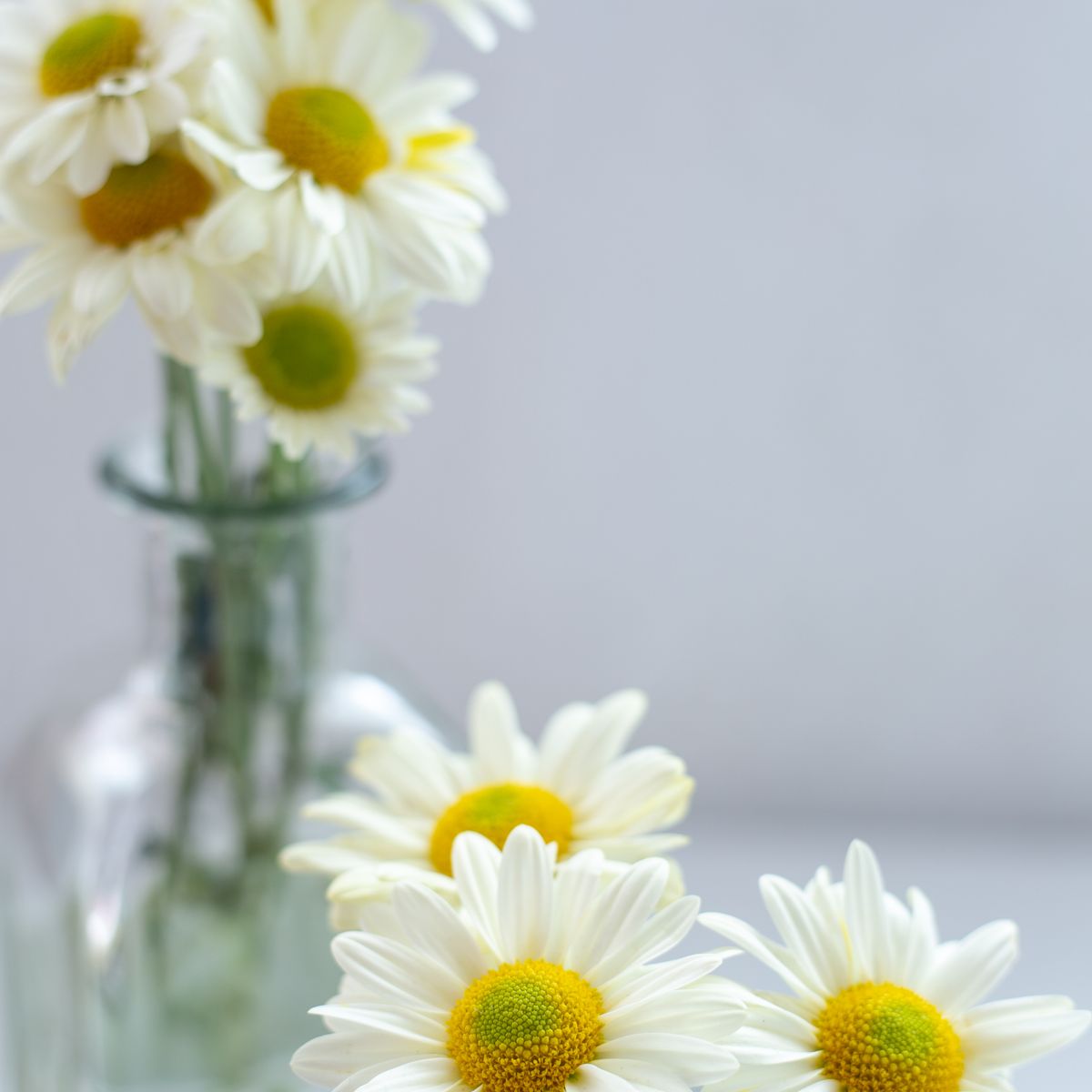
Camomille, fleurs en gros plan

White and gold, the ultimate soothing flower

Chamomile: Origin, History, Symbolism, and Tradition

Chamomile is a small white flower with a yellow center, one of the plants most universally associated with evening calm and relaxation.

Chamomile at a glance

Botanical family Asteraceae
Botanical name Matricaria chamomilla (German chamomile)
Part used Flowers
Main active compounds Chamazulene, apigenin
Color / appearance Small white flowers with yellow centers
Main origin Europe, Western Asia

History

Chamomile has been used since ancient Egypt, where it was dedicated to the sun god Ra because its flower resembled the sun. The Greeks gave it its name, "chamaimelon," meaning "dwarf apple" due to the apple-like scent of its flowers. Since then, it has remained one of the most universally widespread plants in European folk traditions.

Camomille en champ sous le soleil

Virtues & Symbolism according to Tradition

Traditional Mental Uses

Traditionally, chamomile is associated with soothing and gentleness. It is believed to calm nervous agitation and promote sleep, especially in young children according to popular traditions.

Traditional Physical Uses

Internal dimension (tradition)

In traditional representations of the energy body, chamomile is associated with the solar plexus chakra, symbolizing gentleness and appeasement.

Associated element(s)

In botanical traditions, chamomile is associated with the element Water, echoing its soothing gentleness.

Associations

Chamomile is traditionally combined in different ways depending on the desired effect:

For evening soothing:
– Lavender: classic relaxation duo
– Linden: complementary gentleness

For nervous serenity:
– Lemon balm: traditional association
– Passionflower: soothing reinforcement

Symbolism

  • Soothing
  • Gentleness
  • Serenity
  • Peaceful sleep

Traditions

Do not confuse with

German chamomile is sometimes confused with Roman chamomile (Chamaemelum nobile), a related but distinct species, which is more bitter and less rich in chamazulene, and often used for different purposes in aromatherapy.

Best Provenances

Egypt, Germany, and Eastern Europe are renowned for their quality chamomile production.

Frequently Asked Questions

Where does the name "chamomile" come from?

It comes from the Greek "chamaimelon," meaning "dwarf apple," in reference to the apple-like scent of its flowers.

What is the difference between German and Roman chamomile?

They are two closely related but distinct species; Roman chamomile is more bitter and less rich in chamazulene than the German variety.

Why was chamomile consecrated to the god Ra in Egypt?

Its white flower with a golden-yellow heart recalled the solar disk, which naturally associated it with the sun god in Egyptian mythology.

Can chamomile be grown easily?

Yes, it's a low-maintenance plant that grows easily in full sun in most European gardens.

Camomille, pétales blancs et centre jauneFleurs de camomilleCamomille, pétales blancs et centre jauneFleurs de camomille

Did you know?

Chamomile is one of the most scientifically studied medicinal plants in the world, and one of the most consumed herbal teas on all continents.

Sources & references

Information cross-referenced from general botany works and resources on traditional European plants.

The information presented here is for cultural and traditional purposes only. It does not constitute medical advice or a guarantee of therapeutic effect. In case of physical or psychological distress, consult a healthcare professional. This is especially important during pregnancy, breastfeeding, ongoing medical treatment, or for use in children.