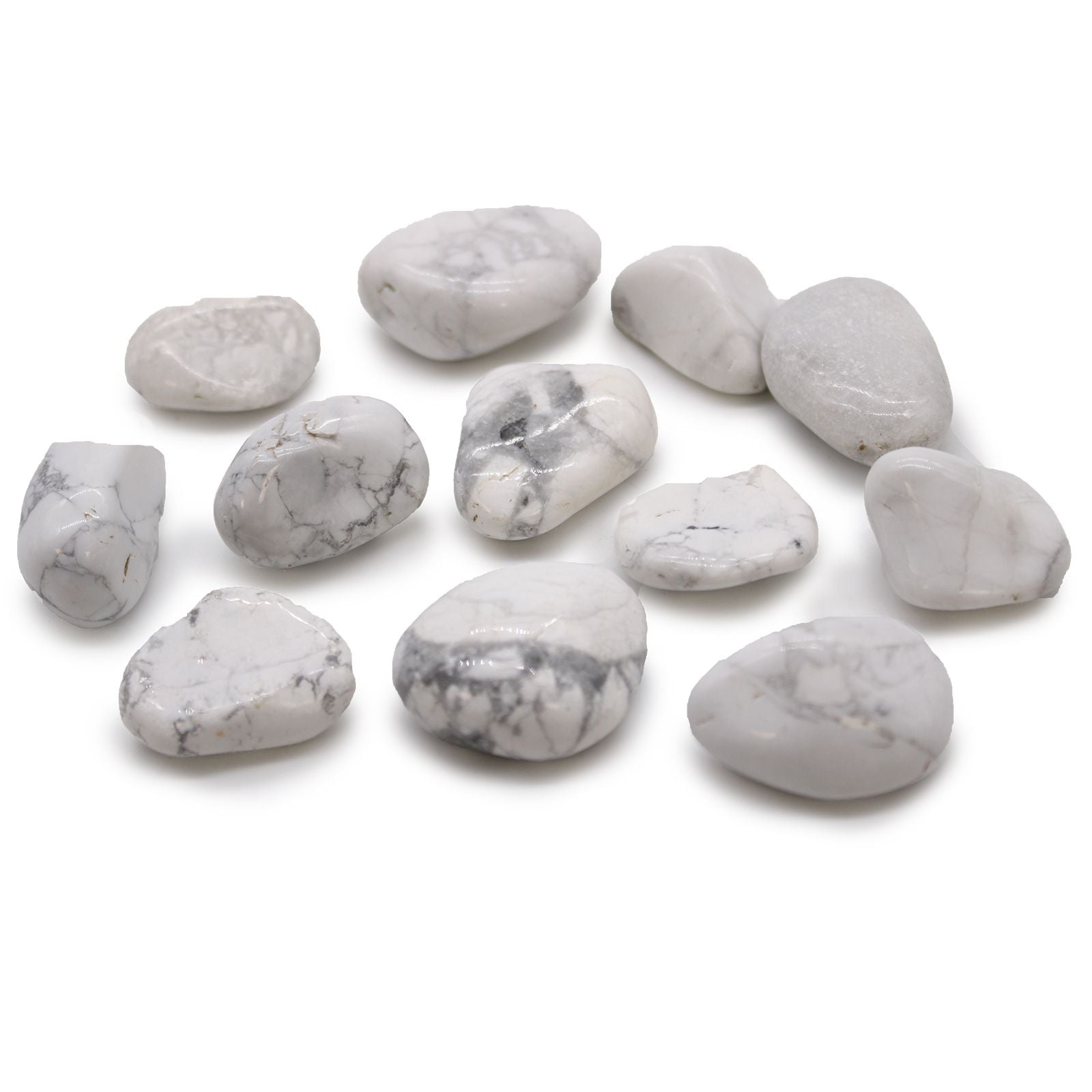
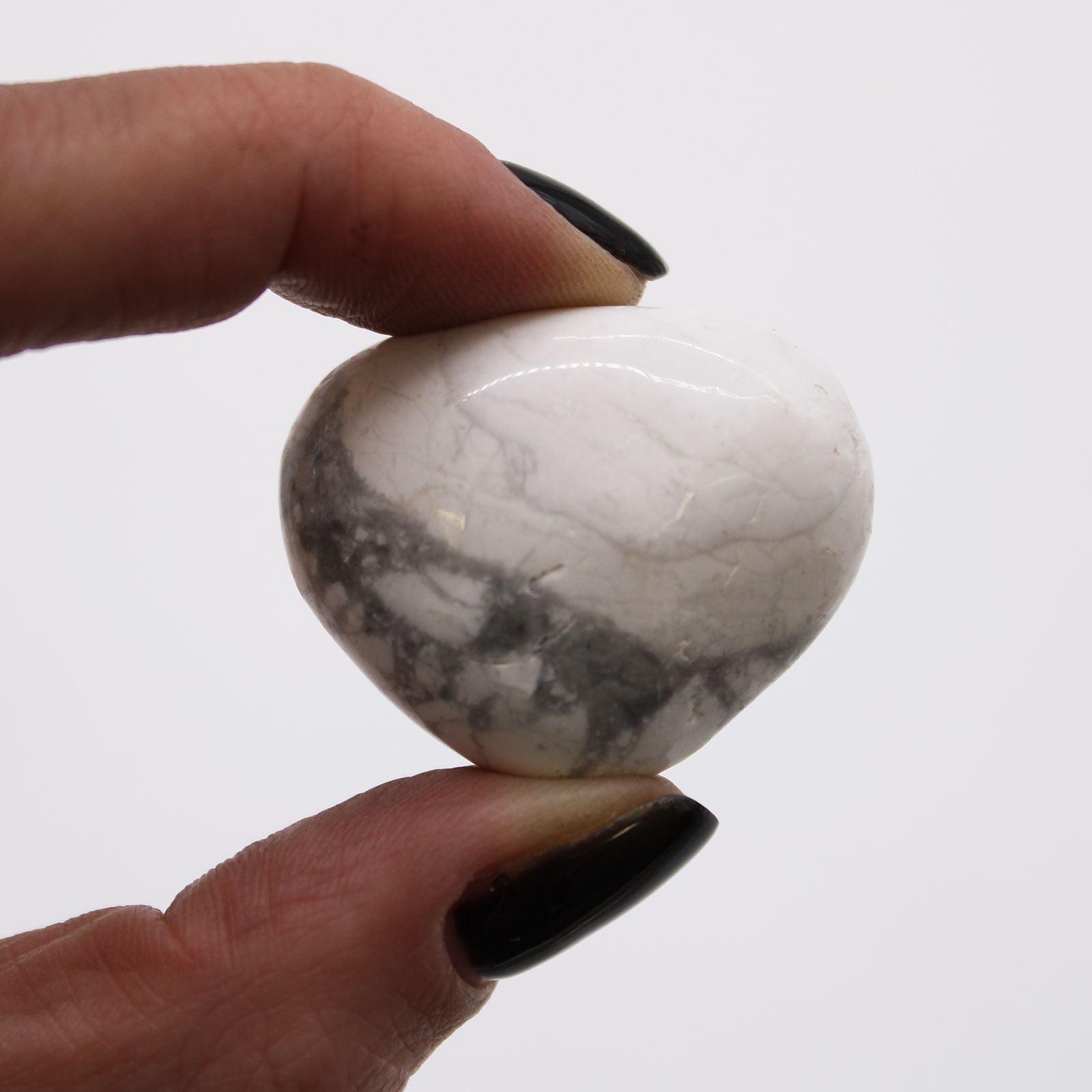
White and veined, the stone of calm

Howlite: Origin, History, Symbolism, and Tradition

Howlite is a white to gray calcium borate, streaked with dark veins reminiscent of marble. Its porous structure also makes it a frequent medium for dyeing, particularly to imitate turquoise.

Howlite in brief

Mineral group Calcium borate
Composition Hydrated calcium silicoborate
Hardness 3 to 3.5 on the Mohs scale
Crystal system Monoclinic
Colors White to gray with dark veins (natural), often artificially dyed
Main origin Canada, United States, Turkey

History of the stone

Howlite was discovered and described in 1868 by Canadian geologist Henry How, who named it. By the 20th century, its porosity, which allows for easy and convincing dyeing, made it a widespread and economical substitute for turquoise in jewelry.

Origin & Composition

Howlite is a hydrated calcium borate that forms in evaporite deposits associated with borax deposits. Its porous structure makes it an excellent medium for artificial dyeing, which explains its very frequent use as an imitation of turquoise, lapis lazuli, or coral in the trade.

Virtues & Symbolism According to Tradition

Traditional Mental Uses

Traditionally, howlite is associated with calmness, patience, and mental appeasement. It is believed to have the ability to reduce anger and inner turmoil, promote more restorative sleep, and support patience in situations that require staying calm despite external tensions.

Traditional physical uses

Internal dimension (tradition)

In traditional representations of the energy body, howlite is associated with the crown chakra, a symbol of calm and connection to inner wisdom.

Associated astrological sign(s)

Howlite is not traditionally associated with any particular astrological sign in common Western classifications.

Stone associations

Howlite is traditionally combined in different ways depending on the desired effect:

For deep calm:
– Amethyst: traditional duo associated with mental appeasement
– Lepidolite: enhances relaxation, a stone also rich in natural lithium

For patience:
– Sodalite: complementary mental clarity
– Fluorite: structuring thoughts in stressful situations

Interview

Physical cleaning: a soft, slightly damp cloth is sufficient. Avoid prolonged contact with water, especially for dyed pieces, as their artificial color may bleed. With a hardness of only 3 to 3.5 on the Mohs scale, howlite scratches easily and should be handled with care.

Symbolism

  • Calm
  • Patience
  • Soothing
  • Inner wisdom

Traditions

Do not confuse with

Howlite is very often dyed to imitate turquoise, lapis lazuli, or coral. True, undyed natural howlite is white to gray with characteristic dark, marble-like veins — any "turquoise" piece sold at a very low price is almost always dyed howlite rather than real turquoise.

Top provenances

Canada, where it was discovered in Nova Scotia, and the United States (California) remain the historical benchmark deposits, with Turkey also supplying significant volumes.

Frequently Asked Questions

Is howlite naturally turquoise?

No, natural howlite is white to grey with dark veins; its turquoise colour, which is very common commercially, almost always comes from artificial dyeing.

Why is howlite often dyed?

Its porous structure easily absorbs dyes, making it a frequent economical substitute for more expensive stones like turquoise or lapis lazuli.

Who discovered howlite?

It was discovered and described in 1868 by Canadian geologist Henry How, who named it.

Is howlite fragile?

Yes, with a hardness of only 3 to 3.5 on the Mohs scale, it scratches easily and must be handled with care.

Did you know?

Almost all of the inexpensive "turquoise" sold in costume jewelry is actually dyed howlite—a fact few buyers are aware of, as the imitation can be so visually convincing.

Sources & References

Information compiled from general gemology works and earth science museum resources (National Museum of Natural History, reference works in mineralogy).

The information presented here is for cultural, historical, and decorative purposes only. It does not constitute medical advice or a guarantee of therapeutic effect. In case of physical or psychological distress, consult a healthcare professional.