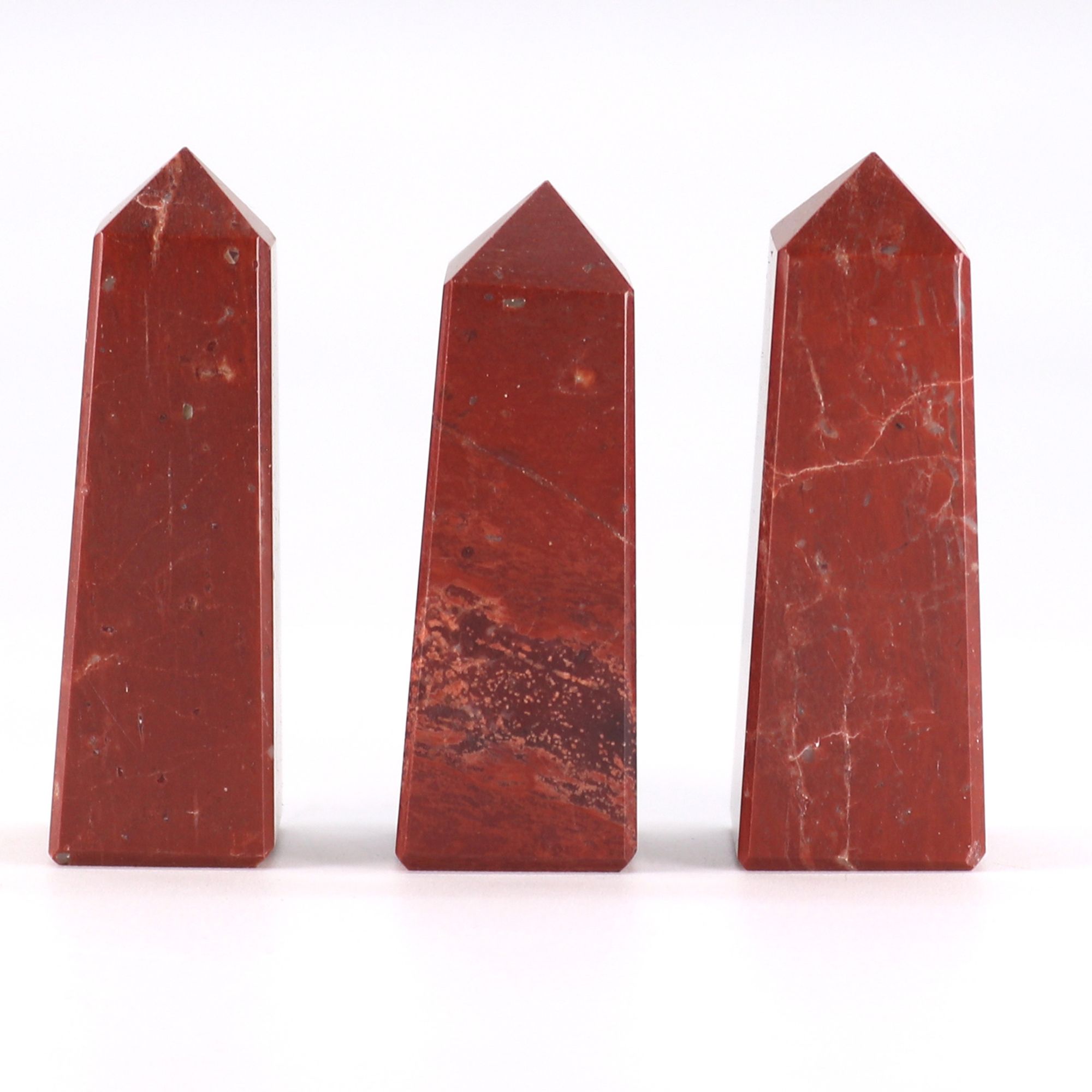
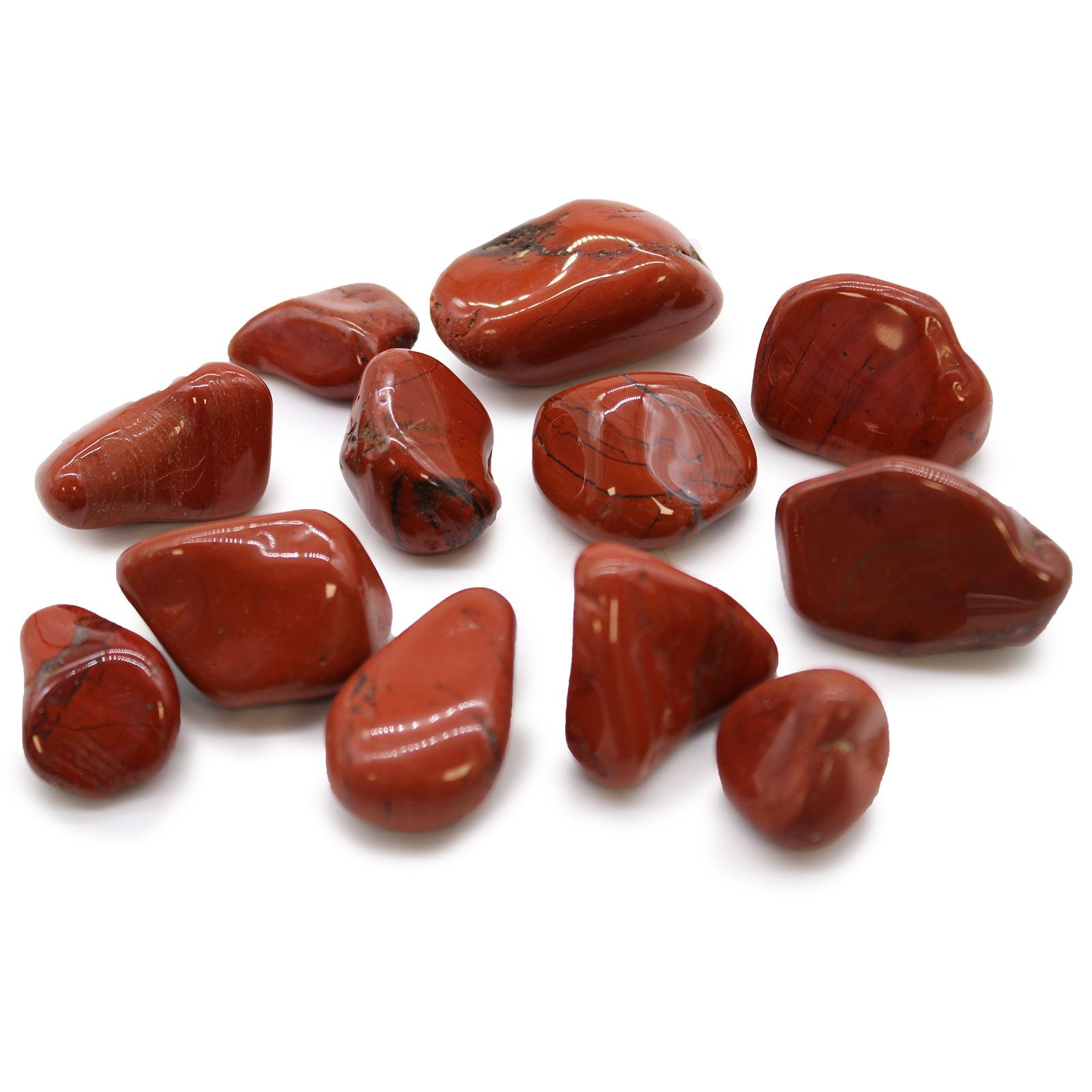
Robust and varied, the nourishing stone

Jasper: Origin, History, Symbolism, and Tradition

Jasper is a completely opaque variety of chalcedony, known for the immense diversity of its colors and patterns: red, yellow, green, speckled, or even in the form of natural landscapes.

Jasper at a glance

Mineral Group Chalcedony (opaque microcrystalline quartz)
Composition Silicon dioxide with numerous impurities
Hardness 6.5 to 7 on the Mohs scale
Crystal System Trigonal (cryptocrystalline)
Colors Highly variable: red, yellow, green, brown, orange, multicolored, always opaque
Main Origin India, Madagascar, Brazil, South Africa

History of the stone

The name "jasper" comes from the Greek "iaspis," via Latin. It has been used since antiquity in Egypt and Mesopotamia for engraving amulets, scarabs, and cylinder seals. Its presence on all continents and its great robustness earned it, in many traditions including some Native American tribes in North America, the reputation of a "nurturing stone," a symbol of constant support accessible to all.

Origin & Composition

Jasper is a completely opaque variety of chalcedony that can contain up to 20% mineral impurities (iron oxides, clay, organic matter) during its formation. This high proportion of impurities creates an unparalleled diversity of colors and patterns among minerals, from "landscape" jasper evoking natural horizons to the characteristic spots of Dalmatian jasper.

Virtues & Symbolism According to Tradition

Traditional Mental Uses

Traditionally, jasper is associated with stability, deep grounding, and mental endurance. It is believed to support long and demanding periods, fostering tenacity and constancy rather than hasty action. Some traditions also recommend it for navigating periods of doubt with greater inner strength.

Traditional physical uses

Internal dimension (tradition)

In traditional representations of the energetic body, jasper is associated with the root chakra, a symbol of deep grounding and connection to the earth.

Associated astrological sign(s)

Jasper is not traditionally associated with a single zodiac sign, as its multiple color varieties each have their own symbolic correspondences according to different traditions.

Stone associations

Jasper is traditionally combined in different ways depending on the desired effect:

For deep grounding:
– Obsidian: a traditional duo associated with protection and stability
– Hematite: reinforces grounding and concentration

For endurance and tenacity:
– Garnet: traditional association with perseverance
– Carnelian: reinforces long-term vitality

Interview

Physical cleaning: a rinse with clear water and a soft cloth are sufficient. With a hardness of 6.5 to 7 on the Mohs scale, jasper is very resistant and requires few special precautions for daily use.

Symbolism

  • Stability
  • Anchoring
  • Endurance
  • Tenacity

Traditions

Do not confuse with

Jasper is sometimes confused with agate, both belonging to the chalcedony family. It is distinguished by its complete opacity, whereas agate remains translucent in places, with concentric bands visible through its transparency.

Top provenances

India offers the greatest diversity of varieties, Madagascar and Brazil produce quality colorful pieces, and South Africa is renowned for its characteristic "Guinea Fowl" spotted jasper.

Frequently Asked Questions

Why are there so many varieties of jasper?

Jasper can contain up to 20% mineral impurities during its formation, creating an immense diversity of colors and patterns, from landscape jasper to dalmatian-like spots.

How to differentiate jasper and agate?

Jasper is completely opaque, whereas agate remains translucent in places, with concentric bands visible in transparency.

Is jasper a rare stone?

No, it is one of the most widespread varieties of quartz in the world, present on every continent, which has earned it its reputation as a nourishing and accessible stone.

Is jasper durable?

Yes, with a hardness of 6.5 to 7 on the Mohs scale, it is perfectly suited for daily wear and is low maintenance.

Did you know?

Landscape jasper, whose internal patterns evoke scenes of hills or horizons, owes its unique appearance to successive mineral deposits solidified in layers, naturally creating compositions that appear painted.

Sources & References

Information gathered from general gemology books and Earth Sciences museum resources (National Museum of Natural History, reference books in mineralogy).

The information presented here is for cultural, historical, and decorative purposes only. It does not constitute medical advice or a guarantee of therapeutic effect. In case of physical or psychological distress, consult a healthcare professional.