Deep blue, stone of logic and clarity

Sodalite: Origin, History, Symbolism, and Tradition

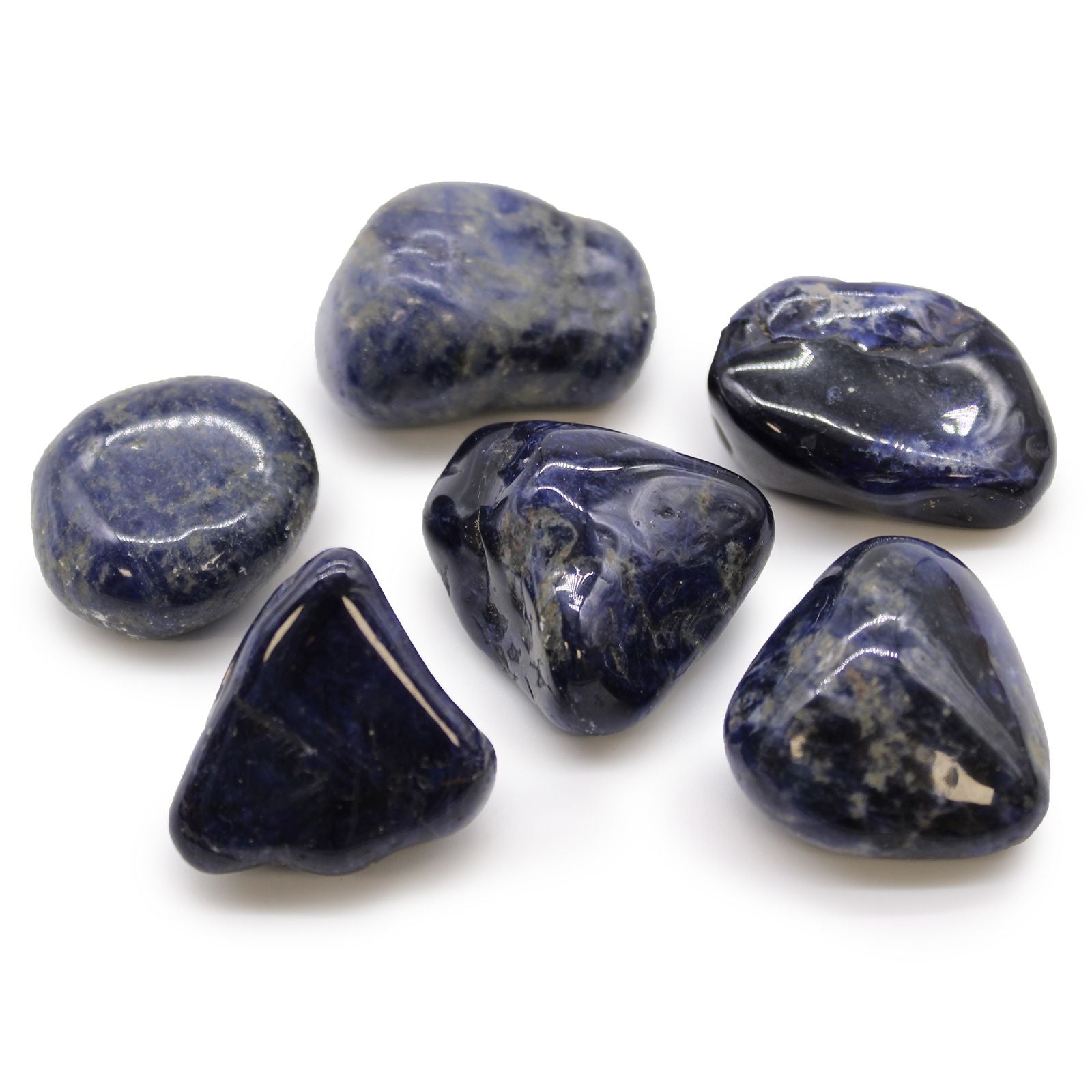
Sodalite is a sodium aluminum silicate recognizable by its deep blue color, often veined with white, and was long confused with lapis lazuli.

Sodalite at a glance

Mineral Group Feldspathoid (sodium and aluminum silicate)
Composition Chlorinated aluminum and sodium silicate
Hardness 5.5 to 6 on the Mohs scale
Crystal System Cubic
Colors Deep blue to blue-violet, often streaked with white
Main Origin Brazil, Canada, Namibia, India

History of the stone

Sodalite was scientifically discovered in Greenland at the beginning of the 19th century, but its large-scale exploitation only truly began after the discovery of significant deposits in Ontario, Canada, in 1891. Canadian sodalite was used to decorate prestigious buildings in London for a royal visit in 1901, helping to popularize this stone, which was still relatively unknown in Europe at the time.

Origin & Composition

Sodalite is a sodium aluminum silicate belonging to the feldspathoid group. It forms in igneous rocks rich in sodium and poor in silica. Its characteristic deep blue color comes from color centers linked to sulfur present in its crystal structure, and it is often traversed by white calcite veins.

Virtues & Symbolism According to Tradition

Traditional Mental Uses

Traditionally, sodalite is associated with logic, mental clarity, and objective communication. It is believed to facilitate the rational expression of ideas, support learning and study, and strengthen confidence in one's intellectual abilities, particularly during exam periods or complex decision-making.

Traditional physical uses

Internal dimension (tradition)

In traditional representations of the energy body, sodalite is associated with the throat chakra and the third eye chakra, symbolizing clarity of expression and perception.

Associated astrological sign(s)

In some Western traditions, sodalite is sometimes associated with the sign of Sagittarius—a symbolic association to be taken as a nod rather than a rule.

Stone associations

Sodalite is traditionally combined in different ways depending on the desired effect:

For mental clarity:
– Fluorite: structuring thought
– Lapis Lazuli: deep blue duo associated with wisdom

For communication:
– Amazonite: sincere expression
– Aquamarine: verbal fluidity

Interview

Physical cleaning: a rinse with clear water and a soft cloth are sufficient. With a hardness of 5.5 to 6 on the Mohs scale, sodalite must be protected from significant impacts.

Symbolism

  • Logic
  • Clarity of thought
  • Objective communication
  • Intellectual confidence

Traditions

Do not confuse with

Sodalite is sometimes confused with lapis lazuli due to its blue hue. It is distinguished by its white calcite veins rather than the golden pyrite inclusions typical of lapis lazuli, and generally lacks the same deep, velvety luster.

Top provenances

Brazil is the current leading global producer, while Canada (Ontario) remains historically associated with the discovery of the first major exploited deposits.

Frequently Asked Questions

What's the difference between sodalite and lapis lazuli?

Sodalite presents white veins of calcite, while lapis lazuli typically contains golden inclusions of pyrite; their mineral composition is also different, lapis being a rock composed of several minerals.

Since when has sodalite been mined?

It was scientifically discovered in Greenland at the beginning of the 19th century, but large-scale exploitation only truly began after the discovery of significant deposits in Canada in 1891.

Why is sodalite associated with logic?

This traditional association comes from its deep blue hue, often symbolically linked to mental clarity and structured thought in several Western traditions.

Is sodalite durable?

With a hardness of 5.5 to 6 on the Mohs scale, it needs to be handled with a little care, away from significant impacts.

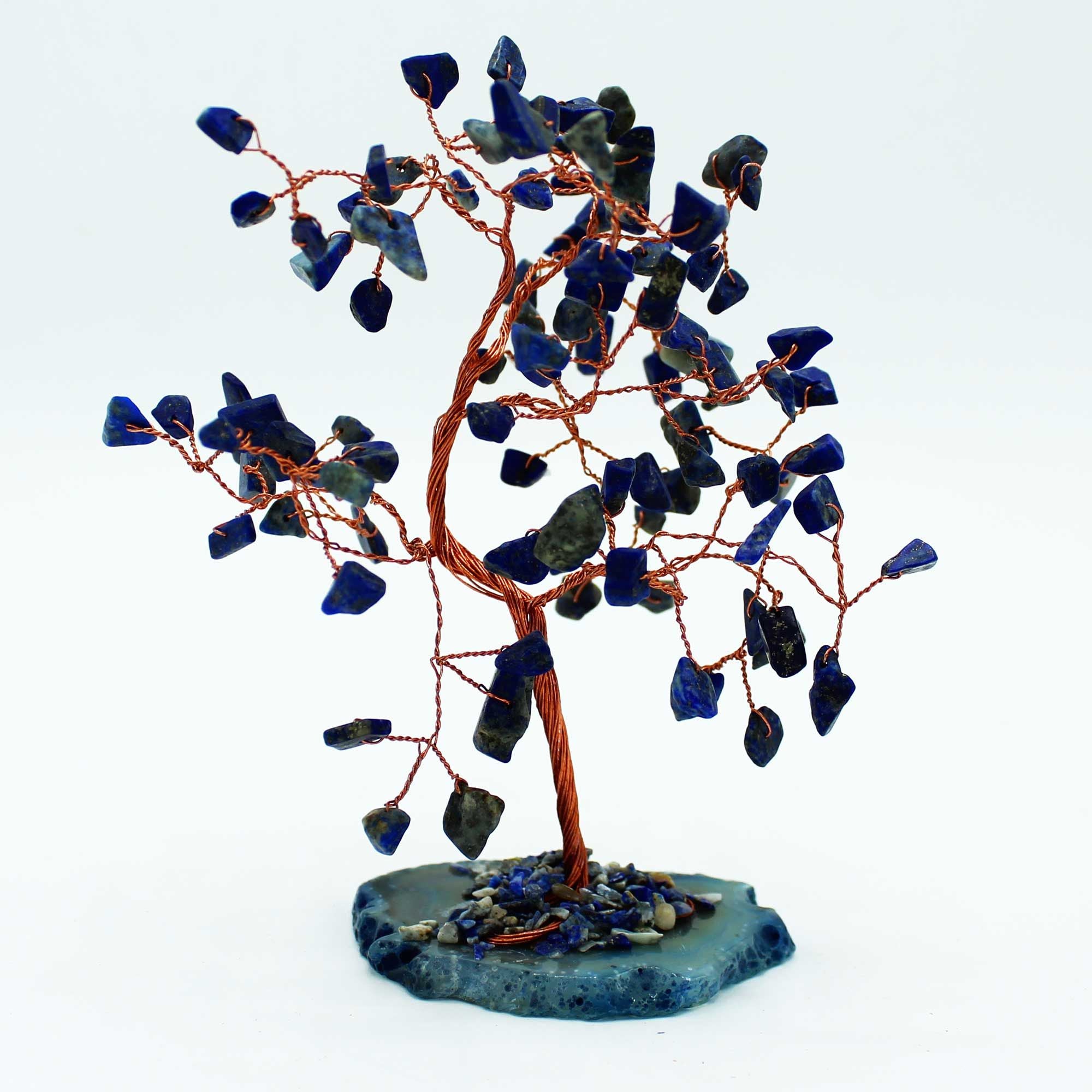
Arbre en sodalite avec pierres bleues profondes sur base en agate bleue, branches métalliques formant un arbre décoratifArbre en sodalite avec pierres bleues profondes sur base en agate bleue, branches métalliques formant un arbre décoratif

Did you know?

Canadian sodalite was used to decorate prestigious buildings in London for a royal visit in 1901, helping to popularize this stone, which was still little known in Europe at the time.

Sources & References

Information cross-referenced from general gemology works and Earth sciences museum resources (Muséum national d'Histoire naturelle, reference works in mineralogy).

The information presented here is for cultural, historical, and decorative purposes only. It does not constitute medical advice or a guarantee of therapeutic effect. In case of physical or psychological distress, consult a healthcare professional.