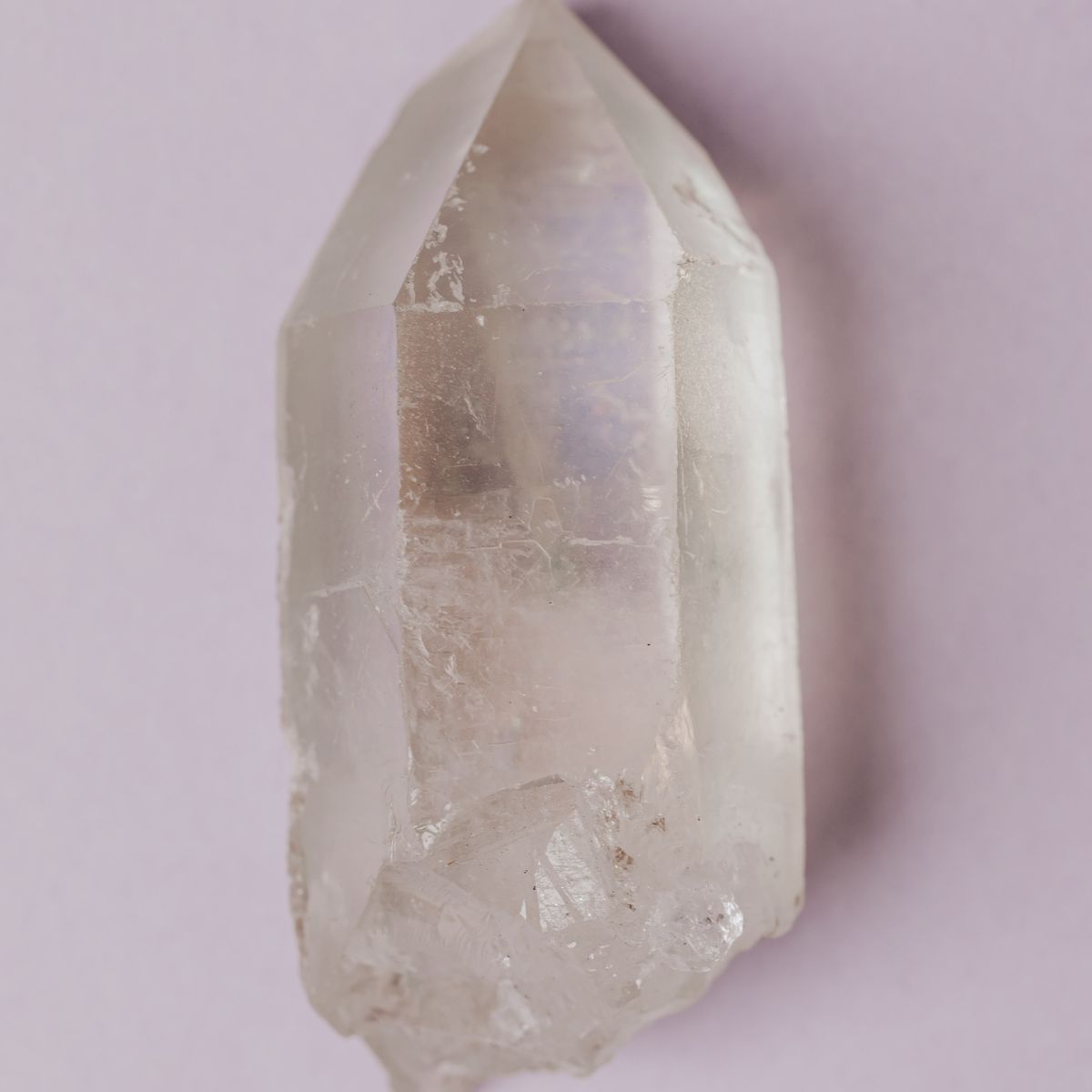
Collection de cristaux de roche sur fond gris

Transparent and universal, quartz in its purest form

Rock Crystal: Origin, History, Symbolism, and Tradition

Rock crystal is the purest form of quartz, perfectly transparent and colorless. Considered a universal stone, it holds a special place among the varieties of quartz.

Rock crystal at a glance

Mineral group Quartz
Composition Pure silicon dioxide (SiO₂)
Hardness 7 on the Mohs scale
Crystal system Trigonal
Colors Colorless, transparent
Main origin Brazil, Madagascar, Alps, United States

History of the stone

The name "crystal" comes from the Greek "krystallos," meaning ice: the ancient Greeks believed this stone was eternally frozen ice. From prehistoric times, it was cut to make tools and arrowheads due to the sharpness of its splinters. In Imperial China, perfectly spherical rock crystal balls were used in certain traditions for reflection and contemplation. Alpine deposits gave rise to a traditional profession, that of the crystal hunter (cristallier), still practiced today in some French and Swiss mountain valleys.

Origin & Composition

Rock crystal is the purest form of quartz: a crystallized silica without coloring impurities, which explains its perfect transparency. It forms in hydrothermal veins and alpine geodes, sometimes as giant crystals several tens of centimeters long in Brazil and Madagascar.

Virtues & Symbolism According to Tradition

Traditional Mental Uses

Traditionally, rock crystal is associated with clarity of mind and the amplification of intentions. Considered in many folk traditions as a reference stone, it is believed to enhance concentration, clarify thought, and symbolically amplify the qualities of other stones with which it is associated.

Traditional physical uses

Internal dimension (tradition)

In traditional representations of the energy body, rock crystal is associated with all chakras, particularly the crown chakra, a symbol of purity and universal clarity.

Associated astrological sign(s)

Unlike many other stones, rock crystal is not traditionally associated with any particular astrological sign: it is considered a universal stone, suitable for everyone.

Stone associations

Rock crystal is traditionally combined in different ways depending on the desired effect:

For general amplification:
– Amethyst: traditional reinforcement of calm and mental clarity
– Citrine: symbolic amplification of abundance and optimism

For clarity and purity:
– Fluorite: complementary structuring of thought
– Selenite: duo associated with purity and symbolic lightness

Interview

Physical cleaning: a rinse with clear water and a soft cloth are sufficient. With a hardness of 7 on the Mohs scale, rock crystal is very resistant and perfectly suitable for daily use.

Symbolism

  • Clarity
  • Purity
  • Amplification
  • Universality

Traditions

Do not confuse with

Rock crystal is sometimes confused with glass or plastic imitations. It can be distinguished by its coolness to the touch (good thermal conductivity) and often exhibits slight natural inclusions, whereas glass remains warm and perfectly homogeneous.

Top provenances

Brazil and Madagascar produce perfectly clear giant crystals, while the French and Swiss Alps provide historical crystals that are particularly sought after by collectors.

Frequently Asked Questions

Why is rock crystal so transparent?

Because it is pure quartz, without the metallic impurities that color other varieties such as amethyst or citrine.

How to identify real rock crystal?

It remains cool to the touch due to its good thermal conductivity, unlike glass or plastic which remain warm, and often has slight natural inclusions.

Is rock crystal fragile?

No, with a hardness of 7 on the Mohs scale, it is quite durable for daily use in jewelry or decoration.

Where does the name "crystal" come from?
It comes from the Greek "krystallos," meaning ice; the ancient Greeks believed that this stone was ice eternally frozen.

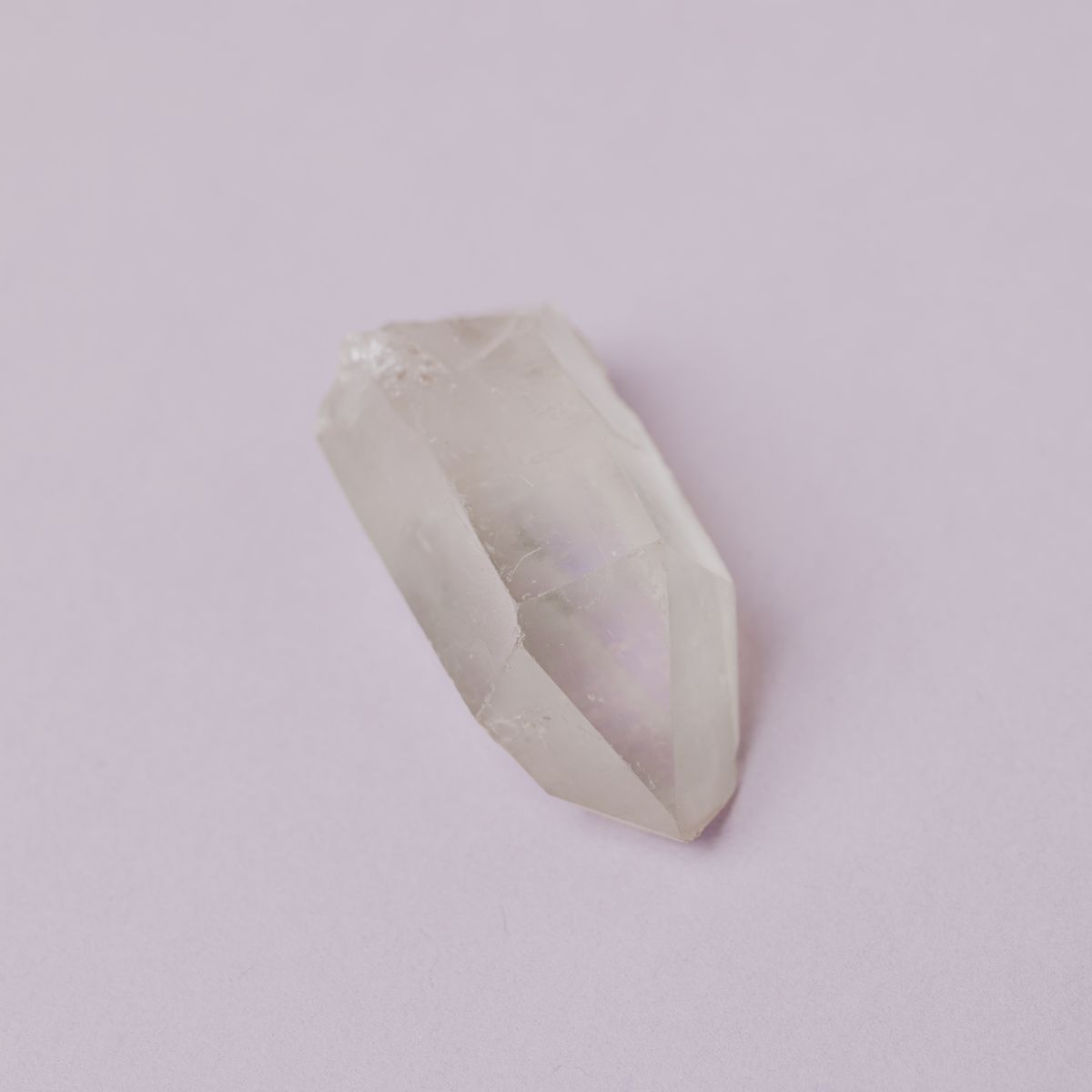
Cristal de roche sur surface pastelCristal de roche transparent, photo minimalisteCristal de roche sur surface pastelCristal de roche transparent, photo minimaliste

Did you know?

Alpine rock crystals, renowned for their purity and exceptional size, have long been harvested by "crystalliers," a mountain profession still practiced today in some French and Swiss valleys.

Sources & References

Information cross-referenced from general gemology works and Earth sciences museum resources (Muséum national d'Histoire naturelle, reference works in mineralogy).

The information presented here is for cultural, historical, and decorative purposes only. It does not constitute medical advice or a guarantee of therapeutic effect. In case of physical or psychological distress, consult a healthcare professional.