Sparkling and optimistic, the stone of happy chance

Aventurine: Origin, History, Symbolism, and Tradition

Aventurine is a variety of quartz recognizable by its characteristic shimmer, due to fine mineral inclusions. The green variety is the most common, but it also exists in white, reddish-brown, blue, and orange.

Aventurine at a Glance

Associated astrological sign(s)

In some Western traditions, aventurine is sometimes associated with the sign of Aries — a symbolic association to be taken as a nod rather than a rule.

Stone associations

Aventurine is traditionally combined in different ways depending on the desired effect:

For luck and abundance:
– Citrine: traditional duo associated with prosperity and optimism
– Pyrite: symbolic reinforcement of material abundance and success

For heart soothing:
– Rose Quartz: complementary emotional gentleness
– Amazonite: harmony and sincere communication

Interview

Physical cleaning: a rinse with clear water and a soft cloth are sufficient. With a hardness of 7 on the Mohs scale, aventurine is quite resistant for daily use, but avoid violent impacts that could crack the stone at the inclusions.

Symbolism

  • Luck and opportunity
  • Optimism
  • Self-confidence
  • Renewal

Traditions

Do not confuse with

Green aventurine is sometimes confused with jade due to its color. However, it has a characteristic sparkle (aventurescence) due to its mica inclusions, which is absent in jade, as jade has a duller, denser, and more uniform appearance.

Top provenances

India remains the world's leading producer, renowned for its artisanal cutting expertise. Brazil produces beautiful green and blue pieces, while Russia maintains historical deposits in the Urals.

Frequently Asked Questions

Where does the name "aventurine" come from?

It comes from the Italian "a ventura" (by chance), following the accidental discovery in the 18th century by Venetian glassmakers of a shimmering glass containing copper flakes, a name subsequently given to the natural mineral exhibiting a similar effect.

Why does aventurine sparkle?

This shimmer, called aventurescence, is due to small inclusions of mica (fuchsite) or iron oxides that reflect light within the stone.

What is the difference between green aventurine and jade?

Aventurine has a characteristic sparkle due to its mica inclusions, while jade has a duller, denser, and more uniform appearance.

Is aventurine a durable stone?

Yes, with a hardness of 7 on the Mohs scale, it is well suited for daily use in jewelry.

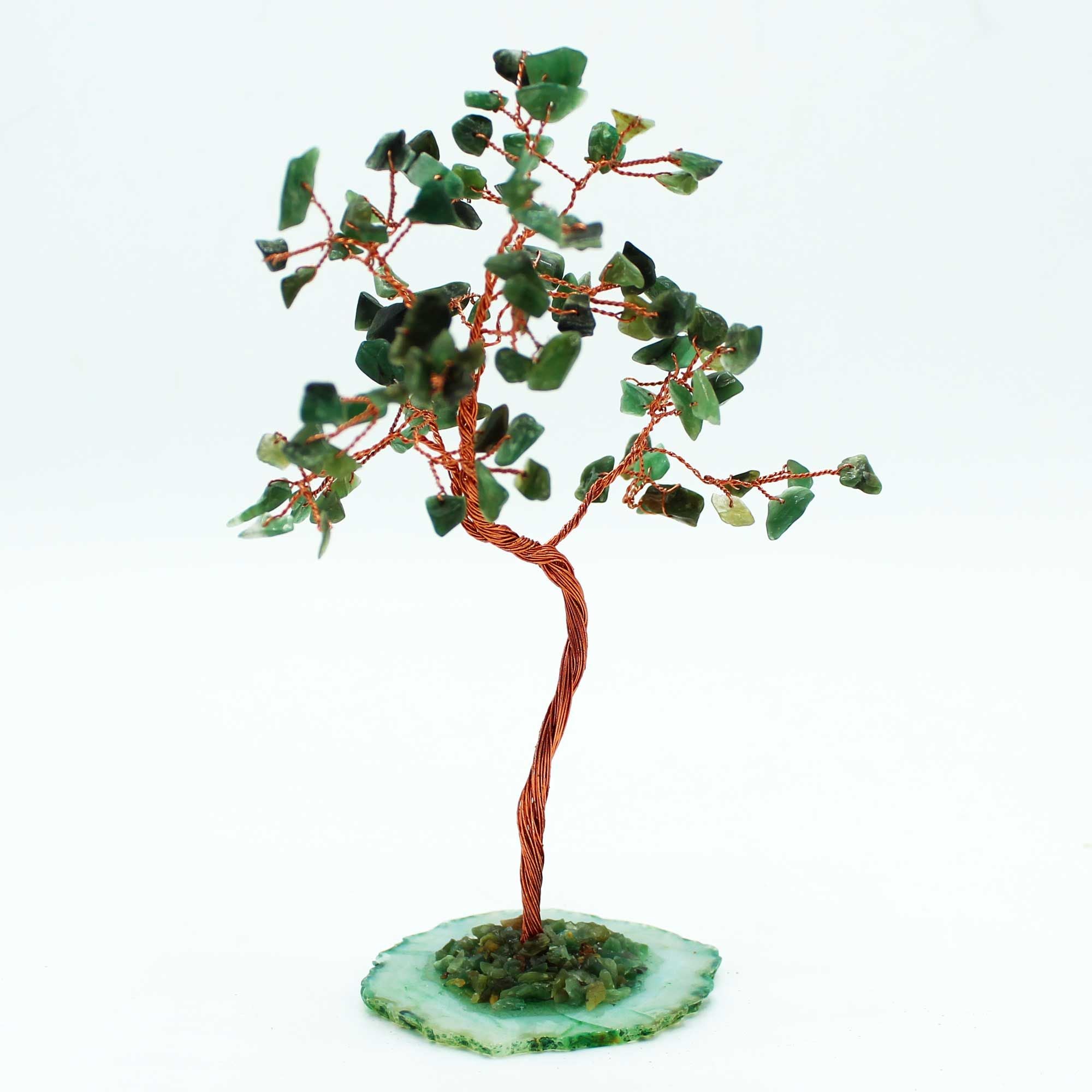
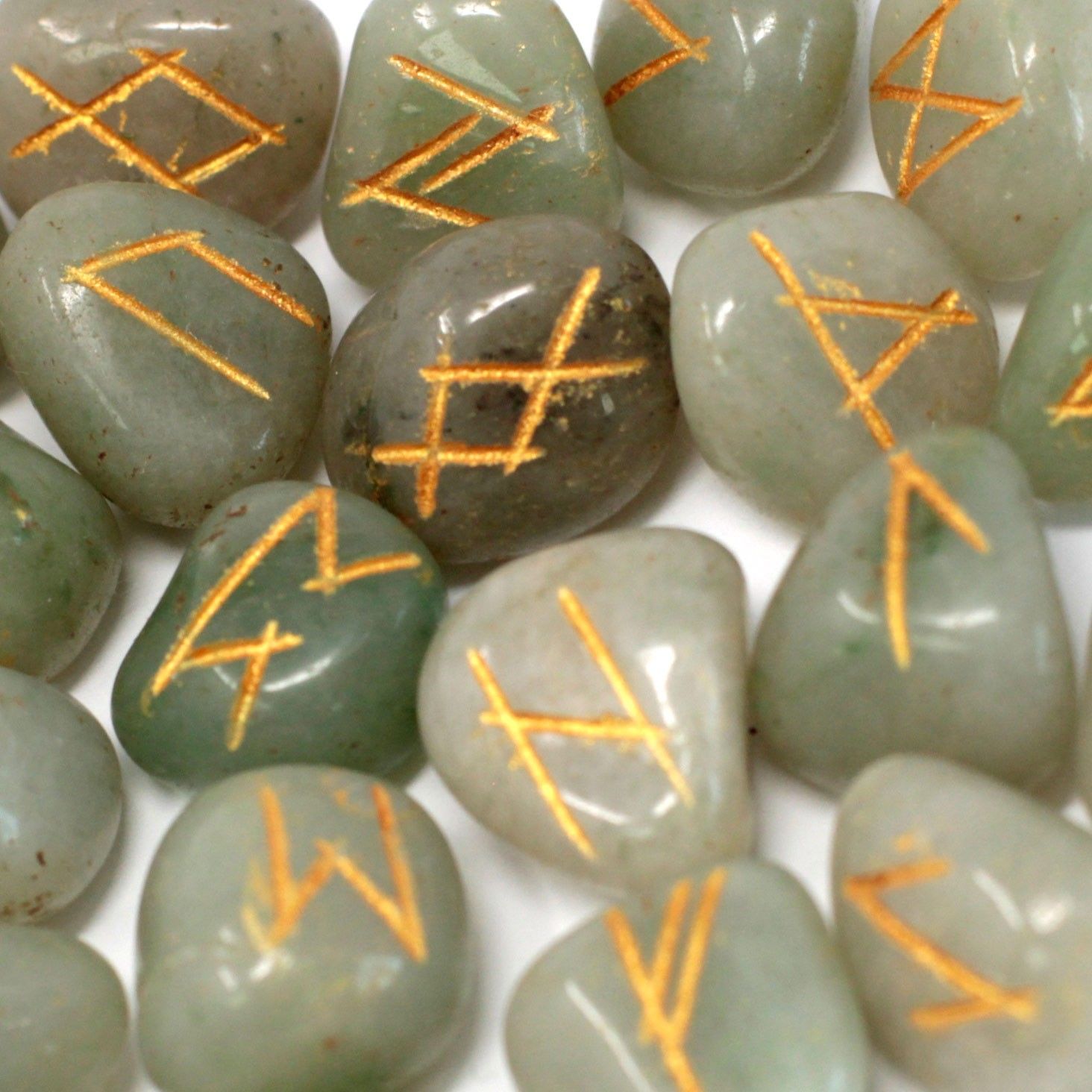
Arbre en aventurine verte avec base en agate verte, branches métalliques et pierres symbolisant croissance et abondancepierres runiques aventurine avec gravuresArbre en aventurine verte avec base en agate verte, branches métalliques et pierres symbolisant croissance et abondancepierres runiques aventurine avec gravures

Did you know?

The name "aventurine" first referred to a shimmering artificial glass accidentally invented in Venice, before being adopted to designate the natural mineral exhibiting a similar visual effect.

Sources & References

Information cross-referenced from general gemology books and Earth Sciences museum resources (National Museum of Natural History, reference works in mineralogy).

The information presented here is for cultural, historical, and decorative purposes only. It does not constitute medical advice or a guarantee of therapeutic effect. In case of physical or psychological distress, consult a healthcare professional.

Search

Products

Mineral Group Quartz (aventurescent variety)