Orange and energetic, the stone of movement

Carnelian: Origin, History, Symbolism, and Tradition

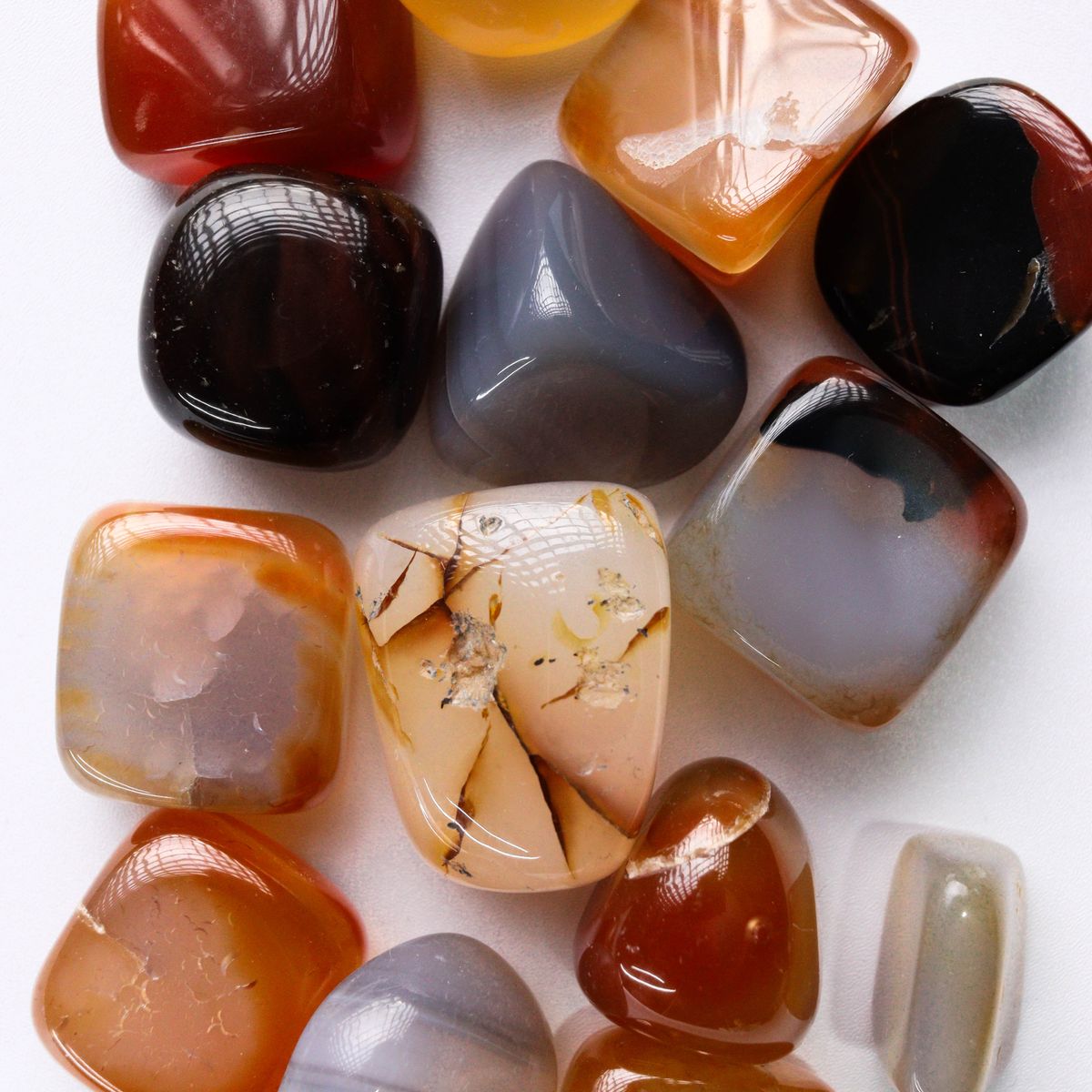
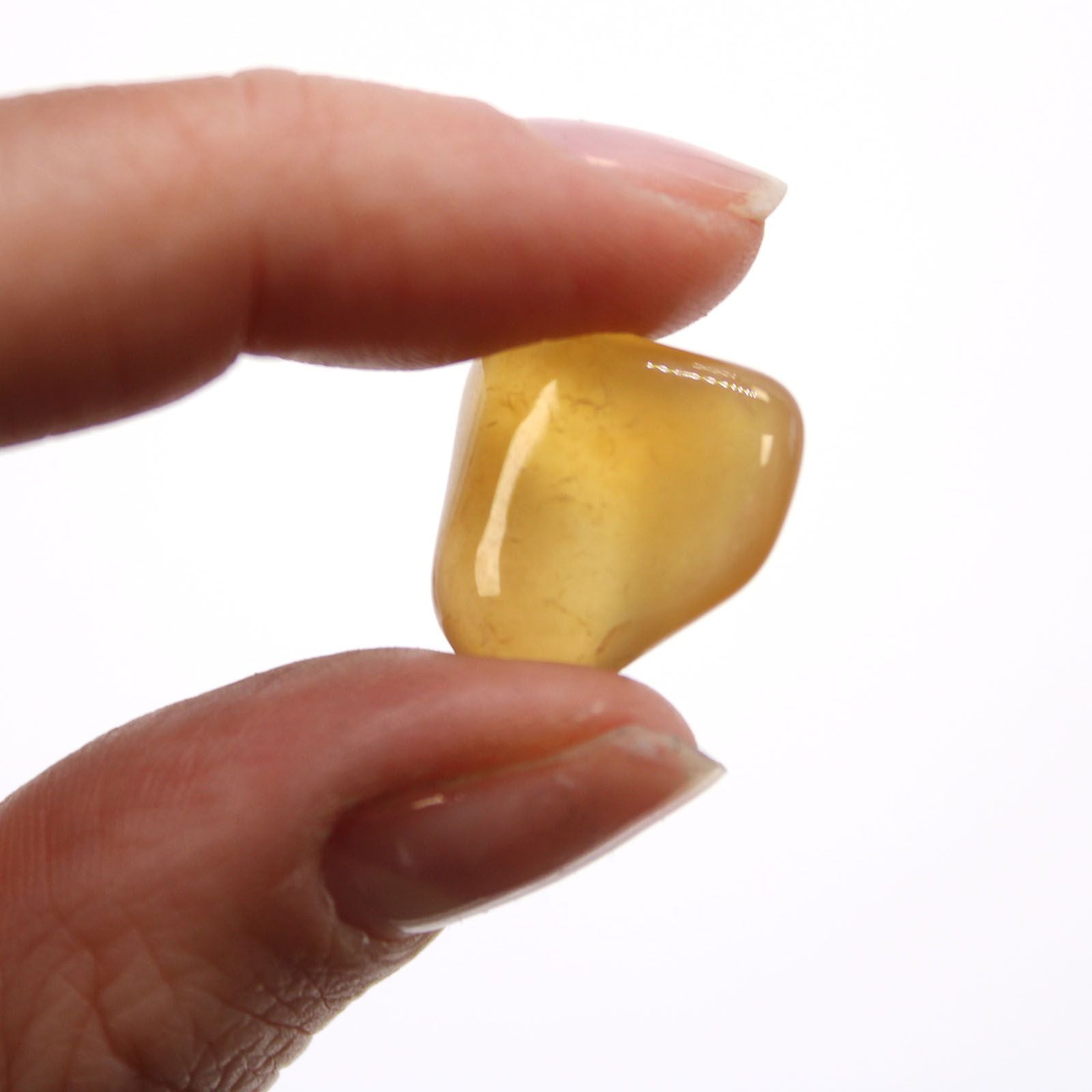
Carnelian is a translucent variety of chalcedony, ranging in color from orange to reddish-brown. It has been used since ancient Egyptian and Roman times, particularly for engraving personal seals.

Carnelian at a glance

Mineral Group Chalcedony
Composition Silicon dioxide, iron oxides
Hardness 6.5 to 7 on the Mohs scale
Crystal System Trigonal (cryptocrystalline)
Colors Orange to reddish-brown
Main Origin India, Brazil, Uruguay, Madagascar

History of the stone

Carnelian has been used since ancient Egypt, where it was fashioned into funerary amulets, particularly in the form of the Knot of Isis (tiet), believed to protect the deceased according to the funerary beliefs of the time. Mesopotamian civilizations used it to engrave cylinder seals. In Rome, it was particularly prized for signet rings: sealing wax does not adhere to its polished surface, making it an ideal stone for reusable personal seals. It was subsequently widely distributed in the medieval Arab-Muslim world, highly valued for rings and transmitted via trade routes.

Origin & Composition

Carnelian is a variety of chalcedony whose orange to reddish-brown hue comes from iron oxides present in its microcrystalline structure. It forms in cavities of volcanic rocks or by the alteration of ferruginous nodules. Unlike jasper, it retains a slight translucency that partially allows light to pass through.

Virtues & Symbolism According to Tradition

Traditional Mental Uses

Traditionally, carnelian is associated with vitality, courage, and motivation. It is believed to encourage taking action, overcoming procrastination, and supporting creativity in projects that require energy and boldness. Some traditions also recommend it for regaining enthusiasm after a period of discouragement.

Traditional physical uses

Internal dimension (tradition)

In traditional representations of the energetic body, carnelian is associated with the sacral chakra, symbolizing creativity, vitality, and life force.

Associated astrological sign(s)

In some Western traditions, carnelian is sometimes associated with the zodiac signs of Leo and Virgo — a symbolic association to be taken as a nod rather than a rule.

Stone associations

Carnelian is traditionally combined in different ways depending on the desired effect:

For vitality and energy:
– Citrine: a traditional duo associated with positive energy and enthusiasm
– Red Jasper: strengthens connection to the earth and physical strength

For creativity and boldness:
– Tiger's Eye: a traditional association with courage and determination
– Garnet: strengthens passion and commitment to action

Interview

Physical cleaning: a rinse with clear water and a soft cloth are sufficient. With a hardness of 6.5 to 7 on the Mohs scale, carnelian is quite resistant for everyday use in jewelry.

Symbolism

  • Vitality
  • Courage
  • Motivation
  • Creativity

Traditions

Do not confuse with

Carnelian is sometimes confused with red jasper due to its similar hue. It is distinguished by its partial translucency, which allows light to pass through, whereas red jasper remains completely opaque.

Top provenances

India, with the historical deposits in Gujarat exploited since antiquity, remains the global benchmark. Brazil and Uruguay also produce beautiful pieces with vibrant hues.

Frequently Asked Questions

Why did the Romans use carnelian for seals?

Because sealing wax wouldn't stick to its polished surface, making it a stone of choice for engraving reusable personal seals.

How to tell the difference between carnelian and red jasper?

Carnelian is translucent (light passes through it partially), whereas red jasper remains totally opaque.

Is carnelian always orange?

Its color ranges from pale orange to deep reddish-brown, depending on the concentration of iron oxides present during its formation.

Is carnelian sensitive to shocks?

With a hardness of 6.5 to 7 on the Mohs scale, it is quite durable for everyday use in jewelry.

Assortiment de pierres polies sur fond blancAssortiment de pierres polies sur fond blanc

Did you know?

In ancient Egypt, carnelian was associated with the goddess Isis and often carved into a knot-shaped amulet (the tiet), believed to symbolically accompany the deceased in their passage to the afterlife according to the funerary beliefs of the time.

Sources & References

Information compiled from general gemology works and Earth Sciences museum resources (National Museum of Natural History, reference works in mineralogy).

The information presented here is for cultural, historical, and decorative purposes only. It does not constitute medical advice or a guarantee of therapeutic effect. In case of physical or psychological distress, consult a healthcare professional.